Artificial Intelligence Environmental Impacts Act of 2026
Sponsor
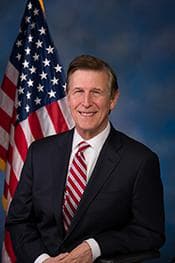
Full profile: /officials/B001292
Source: Congress.gov · FEC
Cosponsors (22)
Members who have signed on to support this bill since introduction. Source: Congress.gov.
- Nanette Diaz Barragán (D-CA-44)Original· 2026-06-08
- Adriano Espaillat (D-NY-13)· 2026-06-15
- Alma S. Adams (D-NC-12)· 2026-06-15
- Mike Levin (D-CA-49)· 2026-06-15
- Mike Quigley (D-IL-5)· 2026-06-15
- Daniel S. Goldman (D-NY-10)· 2026-06-23
- Eleanor Holmes Norton (D-DC)· 2026-06-23
- Mary Gay Scanlon (D-PA-5)· 2026-06-23
- Rashida Tlaib (D-MI-12)· 2026-06-23
- Steve Cohen (D-TN-9)· 2026-06-23
- Suhas Subramanyam (D-VA-10)· 2026-06-23
- Suzanne Bonamici (D-OR-1)· 2026-06-23
- Andrea Salinas (D-OR-6)· 2026-06-24
- James P. McGovern (D-MA-2)· 2026-06-24
- Sean Casten (D-IL-6)· 2026-06-25
- Adelita S. Grijalva (D-AZ-7)· 2026-06-29
- John Garamendi (D-CA-8)· 2026-07-06
Latest Action
The most recent step in the bill's legislative path. Committee Activity below shows referrals and reports; the full action-by-action history including floor proceedings lives at Congress.gov →
Referred to the Committee on Science, Space, and Technology, and in addition to the Committee on Energy and Commerce, for a period to be subsequently determined by the Speaker, in each case for consideration of such provisions as fall within the jurisdiction of the committee concerned.
2026-06-08
Source: Congress.gov
Committee Activity
Currently in
- House Committee on Energy and CommerceReferred To · 2026-06-08
- House Committee on Science, Space, and TechnologyReferred To · 2026-06-08
Plain-English Summary
The EPA would study how artificial intelligence data centers and their power plants affect the environment, while the National Institute of Standards and Technology would bring together experts to discuss these impacts. The EPA would also create a system for companies to report how much energy and resources their AI operations use and what environmental damage they cause. This affects tech companies running AI services, energy providers, and communities near data centers.
AI-assisted summary generated from the official bill metadata (title, subjects, actions) sourced from Congress.gov. Cached and reviewed. Always verify against the official text linked below.
Subjects
Full Bill Text
Verbatim text published on Congress.gov via GovInfo. Use Cmd+F / Ctrl+F to search within this excerpt.
[Congressional Bills 119th Congress] [From the U.S. Government Publishing Office] [H.R. 9183 Introduced in House (IH)] <DOC> 119th CONGRESS 2d Session H. R. 9183 To require the Administrator of the Environmental Protection Agency to carry out a study on the environmental impacts of artificial intelligence data centers and associated energy infrastructure, to require the Director of the National Institute of Standards and Technology to convene a consortium on such environmental impacts, and to require the Administrator to develop a reporting system for the reporting of the environmental impacts of artificial intelligence, and for other purposes. _______________________________________________________________________ IN THE HOUSE OF REPRESENTATIVES June 8, 2026 Mr. Beyer (for himself and Ms. Barragan) introduced the following bill; which was referred to the Committee on Science, Space, and Technology, and in addition to the Committee on Energy and Commerce, for a period to be subsequently determined by the Speaker, in each case for consideration of such provisions as fall within the jurisdiction of the committee concerned _______________________________________________________________________ A BILL To require the Administrator of the Environmental Protection Agency to carry out a study on the environmental impacts of artificial intelligence data centers and associated energy infrastructure, to require the Director of the National Institute of Standards and Technology to convene a consortium on such environmental impacts, and to require the Administrator to develop a reporting system for the reporting of the environmental impacts of artificial intelligence, and for other purposes. Be it enacted by the Senate and House of Representatives of the United States of America in Congress assembled, SECTION 1. SHORT TITLE. This Act may be cited as the ``Artificial Intelligence Environmental Impacts Act of 2026''. SEC. 2. FINDINGS. Congress finds the following: (1) Multiple estimates indicate that the amount of computational power being used for artificial intelligence applications has increased rapidly over the last decade. (2) According to the Department of Energy, data center energy demand has tripled in the last decade and is expected to double or triple again by 2028. (3) Accelerating use of artificial intelligence greatly increases energy consumption due to the power utilization of computer hardware required for training and operating artificial intelligence models, despite ongoing efficiency gains in both artificial intelligence models and hardware. (4) Rapid growth in data center infrastructure supporting artificial intelligence and other computing-intensive technologies, including cooling systems and backup power equipment, can contribute to air and water pollution, increased energy demand, increasing water scarcity, and land-use changes. (5) According to the Department of Energy, hyperscale facilities are projected to consume between 16,000,000,000 and 33,000,000,000 gallons annually by 2028. (6) Resource and energy-intensive manufacturing processes are required for the hardware that runs artificial intelligence and other computing-intensive technologies, leading to significant environmental impacts. (7) Electricity prices have already risen significantly as demand from data centers grows, and are projected to continue rising rapidly. (8) According to the Energy Information Agency, between January, 2025, and December, 2025, household electricity prices increased by as much as 13 percent nationwide. (9) Prices are projected to rise by another 25 percent in certain places over the next five years due to increased demand from data centers. (10) Yearly increases in electronic waste (known as ``e- waste'') pose environmental and health risks and will likely be exacerbated by outdated and discarded hardware used for artificial intelligence and other computing-intensive technologies. (11) Certain applications of artificial intelligence may have direct and indirect positive environmental impacts, including optimizing systems for energy efficiency, developing renewable energy, advancing planetary systems research, enabling discovery of new materials, and automatically monitoring environmental changes. Applications of artificial intelligence also have direct and indirect negative environmental…
Show the remaining 1,797 wordsHide the remaining 1,797 words
impacts, including rebound effects, behavioral impacts, and accelerating high-pollution activities. (12) Different communities and regions will experience disparate effects from data center infrastructure, with risks ranging from higher energy costs to more adverse environmental effects, and with certain communities at greater risk from cumulative negative impacts, such as low-income communities, Black and Brown communities, Indigenous communities, and rural communities. (13) Various options exist to reduce the negative environmental impacts of artificial intelligence, including using more energy-efficient and water-efficient models, hardware, and data centers, using renewable and co-located energy, and examining the impacts of artificial intelligence applications. (14) Promoting transparency on energy use and environmental impacts and developing and maintaining accurate environmental impact metrics may help mitigate negative environmental impacts of the rapid growth in artificial intelligence use, while promoting artificial intelligence uses with net positive environmental impacts. SEC. 3. DEFINITIONS. In this Act: (1) Administrator.--The term ``Administrator'' means the Administrator of the Environmental Protection Agency. (2) Artificial intelligence.--The term ``artificial intelligence'' has the meaning given the term in section 5002 of the National Artificial Intelligence Initiative Act of 2020 (15 U.S.C. 9401). (3) Artificial intelligence data center.--The term ``artificial intelligence data center'' means any facility, or group of facilities that-- (A) is located on a single site or on contiguous, adjacent, or otherwise connected sites; (B) has a maximum rated power capacity or total peak power load in excess of 50 megawatts; and (C) houses and operates infrastructure for the purpose of artificial intelligence inference, training, pre-training, fine-tuning, or deployment at scale. (4) Artificial intelligence model.--The term ``artificial intelligence model'' means a component of an information system that implements artificial intelligence technology and uses computational, statistical, or machine-learning techniques to produce outputs from a given set of inputs. (5) Artificial intelligence system.--The term ``artificial intelligence system'' means any data system, software, hardware, application, tool, or utility that operates in whole or in part using artificial intelligence. SEC. 4. STUDY ON ENVIRONMENTAL AND ENERGY-RELATED IMPACTS OF ARTIFICIAL INTELLIGENCE. (a) In General.--Not later than 1 year after the date of enactment of this Act, the Administrator, in collaboration with the Secretary of Energy, the Director of the National Institute of Standards and Technology, the Director of the Office of Science and Technology Policy, the Secretary of the Interior, and the Federal Energy Regulatory Commission, shall carry out, submit to Congress, and make publicly available a report describing the results of, a comprehensive study on the environmental and energy-related impacts of artificial intelligence and related infrastructure. (b) Requirements.--The study required under subsection (a) shall include an examination of the following issues and a forecast for how those issues are expected to change during the 2-year, 5-year, and 10- year periods beginning on the date on which the study is completed: (1) Full lifecycle impacts of artificial intelligence.--The energy and water use, effects on air and water quality, effects on local ecosystems, local noise and light impacts, energy cost impacts, and the direct, indirect, and value chain greenhouse gas emissions associated with the full lifecycle of artificial intelligence, including effects and impacts associated with-- (A) hardware needed for artificial intelligence, including the extraction of raw materials, manufacturing, electronic waste, and transportation between all stages associated with that hardware; (B) the design, development, deployment, and use of artificial intelligence models; and (C) the operation of artificial intelligence data centers to power artificial intelligence, including effects relating to-- (i) energy infrastructure, including new or existing grid infrastructure, behind-the-meter primary onsite power sources, and backup onsite power sources; (ii) water use, high-temperature water discharge, and the use of chemical biocides; (iii) land use for artificial intelligence data centers and related energy infrastructure, particularly with respect to scenic, historical, and cultural landscapes and units of the National Park System or locations included on the National Register of Historic Places; and (iv) cooling systems and other infrastructure. (2) Design and location.--The effect that design and deployment decisions for artificial intelligence models and associated artificial intelligence data centers have on the impacts described in paragraph (1), including design and deployment decisions with respect to-- (A) the artificial intelligence model to be used; (B) hardware; (C) location; (D) energy mix; (E) behind-the-meter generation; (F) the use of power purchase agreements; (G) demand flexibility; (H) cooling system methodology; and (I) artificial intelligence data center user ownership and leasing arrangements. (3) Disaster resilience.--The impacts of artificial intelligence data centers on disaster resilience, including with respect to local water and energy stress during extreme weather events. (4) Positive impacts.--The potential positive environmental and energy-related impacts associated with applications of artificial intelligence, which may include optimizing systems for energy efficiency, developing renewable energy, advancing planetary systems research, enabling discovery of new materials, and automatically monitoring environmental changes. (5) Negative impacts.--The negative environmental and energy-related impacts associated with applications of artificial intelligence and related infrastructure, which may include direct impacts from data center construction and operation, higher local energy costs, rebound effects, behavioral impacts, and accelerating high-pollution activities, such as fossil fuel extraction. (6) Updated study results.--The results of the updated data center study carried out under section 453(e)(2) of the Energy Independence and Security Act of 2007 (42 U.S.C. 17112(e)(2)). (7) Other environmental and energy-related impacts.--Other environmental and energy-related impacts, as determined by the Administrator, in consultation with the heads of Federal agencies described in subsection (a). (c) Public Input.-- (1) Public comment required.--In conducting the study required under subsection (a), the Administrator shall solicit and consider public comments. (2) Public hearings.--Not later than 1 year after the date of enactment of this Act, the Administrator shall convene public hearings with respect to the environmental and energy- related impacts of artificial intelligence and related infrastructure in each region of the Environmental Protection Agency to capture unique regional considerations. SEC. 5. ARTIFICIAL INTELLIGENCE ENVIRONMENTAL AND ENERGY-RELATED IMPACTS CONSORTIUM. (a) In General.--The Director of the National Institute of Standards and Technology shall, in consultation with the Administrator, the Secretary of Energy, and such others as the Director considers appropriate, convene a consortium of stakeholders, including members from Indian Tribes, units of local government, academia, civil society, and industry, to identify the future measurements, methodologies, standards, and other appropriate needs, in order to measure and report the full range of environmental and energy-related impacts of artificial intelligence. (b) Location.--The Director may determine the location of the consortium within the National Institute of Standards and Technology. (c) Goals.--The goals of the consortium shall include the following: (1) Facilitating consistent, comparable reporting on the environmental impacts of the full lifecycle of artificial intelligence models and artificial intelligence systems. (2) According to technical feasibility, the development or cataloging of open-source software and hardware tools and other resources designed to facilitate the measurement of environmental impacts of artificial intelligence models and artificial intelligence systems. (3) Providing recommendations on how to mitigate the negative environmental impacts and deploy the positive use cases, of artificial intelligence. (d) Composition.--The consortium shall-- (1) be composed of representatives with equal representation between each stakeholder group; and (2) include at least 3 representatives each from-- (A) geographically distinct Tribal communities within which artificial intelligence data centers reside; and (B) geographically distinct cities or counties within which artificial intelligence data centers reside. SEC. 6. SYSTEM FOR REPORTING OF ENVIRONMENTAL AND ENERGY-RELATED IMPACTS OF ARTIFICIAL INTELLIGENCE. (a) Definition of Covered Entity.--In this section, the term ``covered entity'' means an entity that operates an artificial intelligence data center. (b) Reports to EPA.--A covered entity shall annually submit to the Administrator a report that describes the full range of environmental impacts of the artificial intelligence data centers of the relevant entity in accordance with this section. (c) Report Requirements.-- (1) In general.--The Administrator, in consultation with the Director of the National Institute of Standards and Technology, the Secretary of Energy, the consortium convened under section 5, and such other entities as the Administrator considers appropriate, shall develop requirements for covered entities to report under subsection (b) the full range of environmental impacts of artificial intelligence data centers, which shall-- (A) include guidelines on how to calculate and report-- (i) the resource consumption and intensity with respect to energy use, including electricity use and capacity, resource mix, power sourced from the grid, power sourced from on-site generation, power sourced from backup systems, power usage effectiveness, performance per watt, energy reuse, and carbon intensity per task; (ii) the resource consumption and intensity with respect to water use; (iii) local air and water pollution; (iv) electronic waste associated with the full lifecycle of artificial intelligence models and hardware; (v) local noise and light pollution impacts; and (vi) other positive and negative impacts of artificial intelligence use, as determined by the Administrator; (B) require sufficient detail to allow the Administrator to verify the accuracy and completeness of the submission; and (C) require reports to be prepared in a manner that enables public disclosure under subsection (d). (2) Public comment.--Before finalizing the requirements under paragraph (1), the Administrator shall solicit comments from the public on a draft version of the requirements. (3) Publication.--The Administrator shall make available to the public all requirements developed under paragraph (1). (d) Availability.--The Administrator shall, to the maximum extent practicable, make the information reported pursuant to subsection (b) available on a publicly available website, except for any information that is exempt from disclosure pursuant to section 552(b)(4) of title 5, United States Code. (e) Enforcement.--If a covered entity fails to comply with the reporting requirements under this section, the Administrator shall seek corrective action and, if no reports under subsection (b) are submitted within 6 months of the date on which a report was due, may issue an administrative penalty in an amount determined by the Administrator that is based on-- (1) the total size of the applicable facilities of the covered entity for which reports have not been submitted; and (2) the length of noncompliance. (f) Savings Provision.--Nothing in this section abridges, alters, or modifies the obligations of the Administrator to disclose information pursuant to any other applicable law, including section 552 of title 5, United States Code (commonly known as the ``Freedom of Information Act''). SEC. 7. REPORT TO CONGRESS. After the Director of the National Institute of Standards and Technology convenes the consortium under section 5 and not later than 2 years after the date on which the Administrator completes development of the requirements for reporting under section 6(c), the Administrator, the Secretary of Energy, and the Director of the National Institute of Standards and Technology shall jointly submit to Congress a report detailing the following: (1) The main findings of the consortium convened under section 5. (2) A description of the information reported under section 6. (3) Recommendations for legislative or administrative action to mitigate the negative impacts of artificial intelligence. (4) Recommend use-cases for artificial intelligence in environmental applications based on net-benefit assessments. <all>
Related legislation
Bills by the same sponsor or covering overlapping subjects.
- HR10249Kids Safety on Set Act of 2026Referred to Committee · 2026-09-03
- HR10120National Flood Impact Reduction and Resilience Act of 2026Referred to Committee · 2026-08-20
- HR10014Restoring Accountability in Appropriations ActReferred to Committee · 2026-08-03
- HR9977Homebuilding Materials Tariff Relief ActReferred to Committee · 2026-07-30