HR9290Referred to Committee
Supreme Court Justice Circuit Riding Act
Introduced
In Committee
3
Passed One Chamber4
Passed Both5
Signed into Law119th
Congress
2026-06-11
Introduced
4
Cosponsors
HR
ⓘType
Sponsor
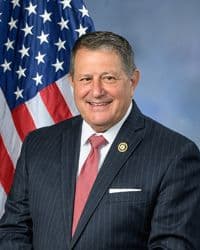
Joseph D. Morelle
Democrat · NY · Representative
Votes with party: 97.3% (658 recorded votes)
Top industries funding sponsor:
- Progressive Groups$100k
Full profile: /officials/M001206
Source: Congress.gov · FEC
Cosponsors (4)
Members who have signed on to support this bill since introduction. Source: Congress.gov.
Latest Action
The most recent step in the bill's legislative path. Committee Activity below shows referrals and reports; the full action-by-action history including floor proceedings lives at Congress.gov →
Committee Activity
Currently in
- House Committee on the JudiciaryReferred To · 2026-06-11
Plain-English Summary
The proposal would assign Supreme Court justices to specific federal court circuits, changing how the judicial system is currently organized. This would affect how cases move through the federal court system and could alter the relationship between the Supreme Court and lower courts across different regions of the country.
AI-assisted summary generated from the official bill metadata (title, subjects, actions) sourced from Congress.gov. Cached and reviewed. Always verify against the official text linked below.
Subjects
Law
Full Bill Text
Verbatim text published on Congress.gov via GovInfo. Use Cmd+F / Ctrl+F to search within this excerpt.
[Congressional Bills 119th Congress] [From the U.S. Government Publishing Office] [H.R. 9290 Introduced in House (IH)] <DOC> 119th CONGRESS 2d Session H. R. 9290 To amend title 28, United States Code, to provide for the allotment of Supreme Court justices to circuits, and for other purposes. _______________________________________________________________________ IN THE HOUSE OF REPRESENTATIVES June 11, 2026 Mr. Morelle (for himself, Ms. Williams of Georgia, Mr. Mullin, and Mrs. Ramirez) introduced the following bill; which was referred to the Committee on the Judiciary _______________________________________________________________________ A BILL To amend title 28, United States Code, to provide for the allotment of Supreme Court justices to circuits, and for other purposes. Be it enacted by the Senate and House of Representatives of the United States of America in Congress assembled, SECTION 1. SHORT TITLE. This Act may be cited as the ``Supreme Court Justice Circuit Riding Act''. SEC. 2. FINDINGS. The Congress finds as follows: (1) Circuit riding, the system of the Supreme Court justices traveling the country to serve as judges of the various Federal circuit courts, was an essential component of the Supreme Court's practice for the first 121 years of its history. See David R. Stras, Why Supreme Court Justices Should Ride Circuit Again, 651 MINN. L. REV. 1710, 1711 (2007); see also Stuart v. Laird, 5 U.S. (1 Cranch) 299 (1803) (rejecting constitutional objections to circuit riding). That practice ended in 1911. (2) For the justices, the practice of circuit riding exposed the justices to life outside of Washington and brought them closer to the American public. (3) Today's justices, in contrast, spend roughly 9 months a year cloistered in the Supreme Court building in Washington, DC, rendering decisions and issuing opinions on some of the most consequential issues of the day. See Stras, supra, at 1711. (4) The principal historical arguments against circuit riding regarded burdensome travel and a burgeoning docket. Both concerns have dissipated. Modern-day travel is convenient and the Supreme Court's docket has shrunk considerably. According to an analysis by Adam Feldman, a lawyer and political scientist who publishes empirical work on the Supreme Court, the Supreme Court's workload has steadily declined since the 1960s. Indeed, by the mid-2010s, the Supreme Court was deciding fewer cases than it has since the Civil War and Reconstruction. Adam Feldman, Looking Back to Make Sense of the Court's (Relatively) Light Workload, EMPIRICAL SCOTUS (Jan. 9, 2018). (5) Today, the public's confidence in the Supreme Court is near historic lows. Joseph Copeland, Favorable views of Supreme Court remain near historic low, PEW RSCH CTR. (Aug. 8, 2024). Most Americans cannot even name a single Supreme Court justice. See Emily Birnbaum, Poll: More than half of Americans can't name a single Supreme Court justice, ROLL CALL (Aug. 28, 2018). (6) For these reasons, restoring the practice of circuit riding would help to restore the public's trust in the justices, bring them closer to the people, and expose them to life outside of the secluded confines of Washington, DC. As then-professor (now judge) David Stras observed, ``[a] modern form of circuit riding would ensure that justices gain exposure to a wider array of legal issues, the laws of various States, and the difficulties faced by lower courts in implementing the Court's sweeping (and sometimes confounding) rulings'' Stras, supra, at 1711. SEC. 3. ALLOTMENT OF SUPREME COURT JUSTICES TO CIRCUITS. (a) In General.--Section 42 of title 28, United States Code is amended to read as follows: ``Sec. 42. Allotment of Supreme Court justices to circuits ``(a) In General.--The Chief Justice of the United States and the associate justices of the Supreme Court shall from time…
Show the remaining 416 wordsHide the remaining 416 words
to time be allotted as circuit justices among the circuits by order of the Supreme Court. The Chief Justice shall make such allotments for any recess during the period beginning on July 1 and ending on October 1, or while the court is otherwise in vacation. A justice may be assigned to more than one circuit, and two or more justices may be assigned to the same circuit. ``(b) Process.--A justice of the Supreme Court allotted as a circuit justice to a United States Court of Appeals shall serve consistent with the following: ``(1) The justice shall sit on not less than 1 panel of the Court of Appeals. ``(2) The justice shall sit on one or more panels of the United States Courts of Appeals for not less than 10 days of oral argument during each year. ``(3) To the greatest extent practicable, a justice shall not sit with the same judge for more than 10 days of oral argument during any two-year period. ``(4) The justice shall engage in such service during the time period specified in subsection (a), pursuant to the regulations provided in subsection (d). ``(5) No more than one justice may sit on a panel in order to fulfill the requirements of this section. ``(6) The justice is ineligible to vote on or participate in an en banc rehearing of any matter. ``(7) The justice is eligible to vote for panel rehearing to the extent that they were a member of the original panel. ``(8) The justice may not render such service by video argument or teleconference. ``(c) Scheduling.--The chief judge of each circuit shall schedule proceedings such that the justices may fulfill the requirements of this section. ``(d) Reimbursement of Necessary Expenses.--Provision shall be made for payment of reasonable travel, lodging, and other expenses incurred by the justices, and any staff accompanying a justice, in fulfilling the requirements of this section consistent with section 5702 of title 5, United States Code.''. (b) Disqualification.--Section 455(b) of title 28, United States Code, is amended by adding at the end the following: ``(6) For any consideration of a matter after the justice has participated as a circuit justice.''. (c) Regulations.--Not later than 180 days after the date of enactment of this Act, the Chief Justice, in consultation with the Judicial Conference of the United States shall, after appropriate public notice and opportunity for comment, issue relevant regulations for the process of allotting circuit justices among the circuits in accordance with this Act. <all>
Related legislation
Bills by the same sponsor or covering overlapping subjects.
- HR10451Emergency Grant Aid for College Students ActReferred to Committee · 2026-09-16
- HR10171Improving Health Through Integrated Food and Nutrition Services at Federally Qualified Health Centers ActReferred to Committee · 2026-08-27
- HR10058Summer Meals and Learning Act of 2026Referred to Committee · 2026-08-06
- HR10032No Payoffs for Pardons ActReferred to Committee · 2026-08-03