Web of Biological Data Act of 2026
Sponsor
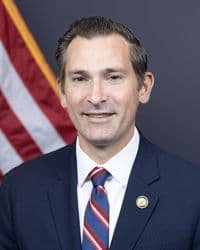
- Conservative Groups$36,747k
- Veterans$2,500k
- Abortion Rights$2,234k
Full profile: /officials/V000139
Source: Congress.gov · FEC
Cosponsors (2)
Members who have signed on to support this bill since introduction. Source: Congress.gov.
Latest Action
The most recent step in the bill's legislative path. Committee Activity below shows referrals and reports; the full action-by-action history including floor proceedings lives at Congress.gov →
Committee Activity
Currently in
- House Committee on Science, Space, and TechnologyReferred To · 2026-06-11
Plain-English Summary
The federal government would create a centralized database that researchers can access to conduct biological studies using advanced computer tools like artificial intelligence, making it easier for scientists to analyze large amounts of biological data without having to gather information from multiple sources. This would help speed up biological research across universities, hospitals, and private companies by giving them a single organized place to find and use existing data. The Department of Energy would be responsible for setting up and managing this resource.
AI-assisted summary generated from the official bill metadata (title, subjects, actions) sourced from Congress.gov. Cached and reviewed. Always verify against the official text linked below.
Subjects
Full Bill Text
Verbatim text published on Congress.gov via GovInfo. Use Cmd+F / Ctrl+F to search within this excerpt.
[Congressional Bills 119th Congress] [From the U.S. Government Publishing Office] [H.R. 9307 Introduced in House (IH)] <DOC> 119th CONGRESS 2d Session H. R. 9307 To require the Secretary of Energy to establish a centralized resource for access to data to facilitate biological research through enabling advanced computational methods such as artificial intelligence, and for other purposes. _______________________________________________________________________ IN THE HOUSE OF REPRESENTATIVES June 11, 2026 Mr. Van Epps (for himself and Mr. Auchincloss) introduced the following bill; which was referred to the Committee on Science, Space, and Technology _______________________________________________________________________ A BILL To require the Secretary of Energy to establish a centralized resource for access to data to facilitate biological research through enabling advanced computational methods such as artificial intelligence, and for other purposes. Be it enacted by the Senate and House of Representatives of the United States of America in Congress assembled, SECTION 1. SHORT TITLE. This Act may be cited as the ``Web of Biological Data Act of 2026''. SEC. 2. WEB OF BIOLOGICAL DATA. (a) Definitions.--In this section: (1) Advisory board.--The term ``advisory board'' means the advisory board established under subsection (h). (2) Director.--The term ``Director'' means the Director of the National Laboratory selected under subsection (b)(1)(A). (3) National laboratory.--The term ``National Laboratory'' has the meaning given the term in section 2 of the Energy Policy Act of 2005 (42 U.S.C. 15801). (4) Secretary.--The term ``Secretary'' means the Secretary of Energy. (5) Web.--The term ``Web'' means the Web of Biological Data established under subsection (b)(1)(A). (b) Establishment.-- (1) In general.--Not later than 180 days after the date of enactment of this Act, the Secretary shall-- (A) through a competitive process, award a grant to a National Laboratory to establish a centralized data resource, to be known as the ``Web of Biological Data'', to facilitate biological research through advanced computational methods such as artificial intelligence; and (B) establish a research and development program to further data science relating to generating, storing, curating, and managing biological data. (2) Contents.--The Web shall-- (A) serve as a single point of entry for researchers to access different sources of biological data, especially those funded by the Federal Government, by directly hosting data or providing access to existing databases; (B) have metrics and metadata to indicate data quality, including usability, interoperability, and completeness; and (C) include tiered levels of cybersecurity safeguards and access controls to protect different types of biological data assets hosted in or connected to the Web. (c) Duties of Director.--As part of establishing the Web, the Director may-- (1) enter into data sharing agreements, memoranda of understanding, or other relevant contracts with other Federal departments and agencies to integrate biological datasets into the Web that are not hosted by the Department of Energy; (2) enter into cost-sharing agreements with nongovernmental entities to fund the Web; (3) establish partnerships with other Federal departments and agencies, academia, industry, and international partners and allies to optimize usability and performance of the Web; and (4) carry out any other activities determined necessary by the Secretary to advance United States biological data curation and sharing. (d) Implementation Plan.--Not later than 1 year after the date of enactment of this Act, the Director, in consultation with the Secretary, shall submit to the Committee on Energy and Natural Resources of the Senate and the Committee on Science, Space, and Technology of the House of Representatives an implementation plan for the Web that describes-- (1) how the Director and the Secretary shall implement this section; (2) a plan for working with Federal departments and agencies-- (A) to acquire data that was collected through Federal funding; and (B) to digitize…
Show the remaining 1,207 wordsHide the remaining 1,207 words
biological samples that are currently owned or funded by the Federal Government; (3) the type of initial projects that shall be pursued under the program established under subsection (b)(1)(B); (4) a plan for exploring and implementing cost-sharing agreements, including with philanthropy and industry, to assist in cost-sharing for the Web; (5) a cybersecurity plan for the Web; and (6) how the Director will leverage partnerships with other Federal departments and agencies, academia, and industry. (e) Phase I.--Not later than 2 years after the date of enactment of this Act, the Director shall-- (1) test an initial version of the Web, which shall-- (A) focus on specific biological data subtypes selected in consultation with the advisory board, representatives from other Federal departments and agencies, and external stakeholders from industry and academia; (B) include a single point-of-entry interface for biological data that-- (i) optimizes user experience and data management; (ii) is built around human-centered design principles; (iii) is built with the capability to expand to other datasets and biological datatypes beyond the initial version; and (iv) is built with tiered security access; (C) include initial frameworks, developed in collaboration with the National Institute of Standards and Technology, for application programming interfaces focusing on hosting an initial list of biological data subtypes; and (D) include appropriate cybersecurity and access safeguards to protect data accessible by the Web, including limiting access to adversarial countries and countries that do not participate in reciprocal data sharing, as determined by the Secretary; (2) as part of developing the initial version of the Web described in paragraph (1)-- (A) work with Federal departments and agencies to acquire data that was collected through Federal funding; (B) develop cost-sharing agreements, including with philanthropic and industry members, to fund the Web; and (C) work with biotechnology stakeholders to test and evaluate the initial version and implement any needed changes to ensure usability; (3) select initial research projects to fund under the research and development program established under subsection (b)(1)(B); and (4) submit a report to the committees described in subsection (j) on the implementation of this subsection and plans for carrying out subsection (f). (f) Phase II.-- (1) In general.--Not later than 5 years after the date of enactment of this Act, the Director shall expand the Web-- (A) to be accessible to United States researchers; (B) to accommodate different types of biological data; and (C) to be capable of adapting and expanding based on the emergence of new biological data. (2) Features.--The expanded version of the Web described in paragraph (1) shall have the following features: (A) A fully realized single point-of-entry interface that-- (i) is connected to any dataset or database that hosts federally funded data; (ii) hosts biological data not already stored by other Federal databases; and (iii) hosts relevant bioinformatic tools for optimized access and analysis. (B) A full suite of interoperability frameworks associated with different types of biological data, metadata, and appropriate ontologies. (C) An online interface that optimizes usability, including the ability to rapidly search through metadata across databases. (D) Incorporation of human-centered design principles into user interfaces. (E) A standard quality and format for the hosted biological data that is appropriate for training artificial intelligence models. (F) Restrictions on data sharing with countries described in subsection (e)(1)(D). (G) Appropriate cybersecurity requirements and tiered safeguards related to the sensitivity of data to prevent misuse of data. (3) Other activities.--In the 3-year period following the 2-year period described in subsection (e), the Secretary shall continue-- (A) to carry out the activities described in subparagraphs (A) and (B) of paragraph (2) of that subsection; and (B) to carry out the research and development program established under subsection (b)(1)(B). (g) Independent Assessment of Cybersecurity.--The Director shall seek to enter into a contract with an external entity to conduct a biannual independent assessment of the cybersecurity safeguards and access controls of the Web. (h) Advisory Board.-- (1) In general.--Not later than 180 days after the Secretary selects a National Laboratory under subsection (b)(1)(A), the Secretary shall establish an advisory board to oversee the implementation of the Web and ensure that the Web maximizes the usability of biological datasets across sectors. (2) Chair.--The Chair of the advisory board shall be the Director. (3) Members.--The advisory board shall consist of 11 additional members, of whom-- (A) 4 shall be representatives of industry; (B) 2 shall be representatives of academia; (C) 2 shall be representatives of National Laboratories (excluding the National Laboratory selected under subsection (b)(1)(A)); and (D) 3 shall be representatives of relevant Federal departments and agencies, as determined by the Director, of whom one or more shall be a subject-matter expert on biosecurity research. (4) FACA exemption.--Chapter 10 of title 5, United States Code, shall not apply to the advisory board. (i) Collaboration.--In developing the Web, the Director shall collaborate with-- (1) Federal departments and agencies involved in biosafety and biosecurity capabilities to assist with implementation of proper cybersecurity and biosecurity safeguards; (2) the National Artificial Intelligence Research Resource of the National Science Foundation to ensure integration of well-curated biological data with cutting-edge foundational artificial intelligence tools; (3) the National Institute of Standards and Technology to ensure that-- (A) the data included in the Web is formatted in a way that is appropriate for training artificial intelligence models; and (B) associated application programming interfaces and ontologies are sufficiently adaptable to changes in biological data; (4) the National Library of Medicine to ensure compatibility and interoperability between the National Center for Biotechnology information databases and the Web; (5) a nongovernmental group that is qualified to implement an online interface that maximizes usability by the public and human-centered design; and (6) any other Federal departments and agencies determined relevant by the Director. (j) Report.--Not later than 2 years after the date of enactment of this Act, and annually thereafter, the Director shall submit to the Committee on Energy and Natural Resources of the Senate and the Committee on Science, Space, and Technology of the House of Representatives a report describing-- (1) progress made in developing the Web, including-- (A) the quantity of data stored directly on the Web and accessible through application programming interfaces; (B) collaborations with other Federal departments and agencies; and (C) user engagement; (2)(A) any cybersecurity vulnerabilities identified by an assessment carried out pursuant to subsection (g); and (B) actions taken to address those vulnerabilities; and (3) plans for maintenance, expansion, and development of the Web in the subsequent year. (k) Authorization of Appropriations.--There are authorized to be appropriated-- (1) $30,000,000 for the period of the first 3 years following the date of enactment of this Act to carry out subsection (b)(1)(B); (2) $310,000,000 for the period of the first 3 years following the date of enactment of this Act to carry out subsection (e); and (3) on completion of subsection (e) and the submission of the report described in paragraph (4) of that subsection, $80,000,000 for each of the subsequent 2 years to carry out this section. (l) Rule of Construction.--Nothing in this section shall be construed to supersede, modify, or waive any applicable requirement relating to privacy, informed consent, human-subjects protections, data use limitations, or protections against unauthorized disclosure, misuse, or reidentification applicable to biological data hosted in or accessible through the Web. <all>
Related legislation
Bills by the same sponsor or covering overlapping subjects.
- HR10808STORK ActReferred to Committee · 2026-10-13
- HR10470SHIELD for Victims Act of 2026Referred to Committee · 2026-09-16
- HRES1497Commemorating the 13 United States servicemembers killed at Abbey Gate during and as a result of President Biden's disastrous Afghanistan withdrawal.Referred to Committee · 2026-08-27
- HR8168Major Non-NATO Ally Terror Threat Assessment ActPassed House · 2026-07-14