AWARE Act
Sponsor
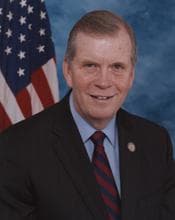
Full profile: /officials/W000798
Source: Congress.gov · FEC
Cosponsors (0)
Members who have signed on to support this bill since introduction. Source: Congress.gov.
No cosponsors on record. Bills can pass without cosponsors — this often means the sponsor introduced the bill alone, either because it's a messaging bill, a chairman's mark, or simply early in the legislative cycle.
Latest Action
The most recent step in the bill's legislative path. Committee Activity below shows referrals and reports; the full action-by-action history including floor proceedings lives at Congress.gov →
Committee Activity
Currently in
- House Committee on Education and WorkforceMarkup By · 2026-06-25
Previously
- House Committee on Education and WorkforceReferred To · 2026-06-22
Plain-English Summary
I don't have enough information to write an accurate summary. The bill title "AWARE Act" and referral to the Education and Workforce Committee suggest it relates to workforce or education issues, but without knowing the specific subjects or provisions of the bill, I cannot provide a factual description of what it would actually do or who it affects. Could you provide the bill's subjects or key provisions?
AI-assisted summary generated from the official bill metadata (title, subjects, actions) sourced from Congress.gov. Cached and reviewed. Always verify against the official text linked below.
Subjects
Full Bill Text
Verbatim text published on Congress.gov via GovInfo. Use Cmd+F / Ctrl+F to search within this excerpt.
[Congressional Bills 119th Congress] [From the U.S. Government Publishing Office] [H.R. 9381 Introduced in House (IH)] <DOC> 119th CONGRESS 2d Session H. R. 9381 To direct the Bureau of Labor Statistics to report on the usage of artificial intelligence in the workplace. _______________________________________________________________________ IN THE HOUSE OF REPRESENTATIVES June 22, 2026 Mr. Walberg introduced the following bill; which was referred to the Committee on Education and Workforce _______________________________________________________________________ A BILL To direct the Bureau of Labor Statistics to report on the usage of artificial intelligence in the workplace. Be it enacted by the Senate and House of Representatives of the United States of America in Congress assembled, SECTION 1. SHORT TITLE. This Act may be cited as the ``AI Workforce Assessment and Research Enhancement Act'' or the ``AWARE Act''. SEC. 2. FINDINGS. Congress finds the following: (1) Artificial intelligence (in this section referred to as ``AI'') has significant potential for workplace applications and may alter labor market demand by automating, augmenting, or creating workplace tasks and changing the nature of work across industries and occupations. (2) Policymakers, educators, workforce training providers, businesses, workers, and researchers would benefit from improved data and analysis to understand and respond to the effects of AI on employment, occupations, tasks, wages, hiring, training, and general workforce needs. (3) The Bureau of Labor Statistics of the Department of Labor is the principal Federal agency responsible for collecting, analyzing, and disseminating labor market and workforce statistics through employer-side, worker-side, and longitudinal statistical programs. (4) The Bureau of Labor Statistics conducts surveys and data collection activities relating to employment, wages, occupations, labor force participation, work arrangements, and business conditions. (5) The data collection programs of the Bureau of Labor Statistics provide essential information on labor market conditions and workforce trends, but were not designed to adequately measure on a timely basis-- (A) employer adoption of AI technologies; (B) worker-level use of AI technologies within jobs and occupations; (C) AI-related changes in workplace tasks, duties, and work organization; (D) AI-related training, retraining, or upskilling activities; (E) the effects of AI on hiring, vacancies, hours, wages, contracting arrangements, or employment levels; or (F) the emergence of new workplace duties, tasks, job titles, or staffing needs associated with AI. (6) Certain related concepts are measured in other Federal statistical programs, including programs administered by the Bureau of the Census and the National Center for Science and Engineering Statistics, but important gaps remain in the issuance of timely, representative, and consistent labor market data. (7) Effective measurement of AI in the workforce may require coordinated employer-side and worker-side data collection approaches in order to capture business adoption, worker experience, task-level changes, and labor market adjustment effects. (8) Improved measurement of AI use and its labor market effects will strengthen workforce analysis, support further economic and workforce policy development, improve employment projections and related research, and provide employers, workers, and educators with more information to more effectively respond to technological change in their workplaces. SEC. 3. LABOR STATISTICS REPORTING ON THE USAGE OF ARTIFICIAL INTELLIGENCE. (a) In General.--Section 4 of the Act of March 4, 1913, titled ``An Act to create a Department of Labor'' (29 U.S.C. 2) is amended-- (1) in the first sentence, by inserting ``which shall include full and complete statistics on the usage of artificial intelligence (as defined in section 5002 of the National Artificial Intelligence Initiative Act of 2020 (15 U.S.C. 9401)) in such conditions of labor and such products and distribution,'' after ``full and complete statistics of the conditions of labor and the products and distribution of the products of the same,''; and (2) in the second…
Show the remaining 146 wordsHide the remaining 146 words
sentence, by striking ``and the total hours of employment,'' and inserting ``the total hours of employment, and the usage of artificial intelligence (as defined in section 5002 of the National Artificial Intelligence Initiative Act of 2020 (15 U.S.C. 9401)),''. (b) Deadline for Initial Collection.--The Bureau of Labor Statistics shall begin collecting, under section 4 of the Act of March 4, 1913, titled ``An Act to create a Department of Labor'' (29 U.S.C. 2), as amended by subsection (a), the statistics on the usage of artificial intelligence described in the amendments made by paragraphs (1) and (2) of subsection (a) not later than 18 months after the date of enactment of this Act. SEC. 4. ARTIFICIAL INTELLIGENCE DEFINED. In this Act, the term ``artificial intelligence'' has the meaning given the term in section 5002 of the National Artificial Intelligence Initiative Act of 2020 (15 U.S.C. 9401). <all>
Related legislation
Bills by the same sponsor or covering overlapping subjects.
- HR4307Enhancing Detection of Human Trafficking ActPassed House · 2026-10-15
- HR10639Regional Great Lakes Partnership Act of 2026Referred to Committee · 2026-09-28
- HR2805PLAN for Broadband ActReported by Committee · 2026-09-16
- HR5505Equal Campus Access Act of 2026Referred to Committee · 2026-09-16