PROTECT USA Act of 2026
Sponsor
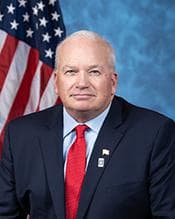
Full profile: /officials/F000471
Source: Congress.gov · FEC
Cosponsors (0)
Members who have signed on to support this bill since introduction. Source: Congress.gov.
No cosponsors on record. Bills can pass without cosponsors — this often means the sponsor introduced the bill alone, either because it's a messaging bill, a chairman's mark, or simply early in the legislative cycle.
Latest Action
The most recent step in the bill's legislative path. Committee Activity below shows referrals and reports; the full action-by-action history including floor proceedings lives at Congress.gov →
Committee Activity
Currently in
- House Committee on Energy and CommerceMarkup By · 2026-09-16
- House Committee on the JudiciaryReferred To · 2026-06-22
Previously
- House Committee on Energy and CommerceReferred To · 2026-06-22
Plain-English Summary
This bill would prevent U.S. companies considered vital to national interests—such as those in defense, energy, or technology—from having to follow foreign environmental and labor reporting rules, particularly the European Union's Corporate Sustainability Due Diligence Directive. The measure aims to protect American businesses from what supporters view as burdensome foreign regulations that could disadvantage them compared to competitors. Companies affected would include those in critical industries, though the bill would need to define which businesses qualify as "integral to national interests."
AI-assisted summary generated from the official bill metadata (title, subjects, actions) sourced from Congress.gov. Cached and reviewed. Always verify against the official text linked below.
Subjects
Full Bill Text
Verbatim text published on Congress.gov via GovInfo. Use Cmd+F / Ctrl+F to search within this excerpt.
[Congressional Bills 119th Congress] [From the U.S. Government Publishing Office] [H.R. 9385 Introduced in House (IH)] <DOC> 119th CONGRESS 2d Session H. R. 9385 To prohibit entities integral to the national interests of the United States from participating in any foreign sustainability due diligence regulation, including the Corporate Sustainability Due Diligence Directive of the European Union, and for other purposes. _______________________________________________________________________ IN THE HOUSE OF REPRESENTATIVES June 22, 2026 Mr. Fitzgerald introduced the following bill; which was referred to the Committee on Energy and Commerce, and in addition to the Committee on the Judiciary, for a period to be subsequently determined by the Speaker, in each case for consideration of such provisions as fall within the jurisdiction of the committee concerned _______________________________________________________________________ A BILL To prohibit entities integral to the national interests of the United States from participating in any foreign sustainability due diligence regulation, including the Corporate Sustainability Due Diligence Directive of the European Union, and for other purposes. Be it enacted by the Senate and House of Representatives of the United States of America in Congress assembled, SECTION 1. SHORT TITLE. This Act may be cited as the ``Prevent Regulatory Overreach from Turning Essential Companies into Targets Act of 2026'' or the ``PROTECT USA Act of 2026''. SEC. 2. FINDINGS. Congress finds the following: (1) The ability of citizens of the United States to engage in international commerce is a fundamental concern of the policy of the United States. (2) Entities in the extractive and manufacturing sectors contribute significantly to the prosperity of the United States and the growth of the world economy. (3) Maintaining and, in some cases, increasing access to certain supplies and materials from the extractive sector, including agriculture, energy, mining, and timber, and access to materials from the manufacturing sector, are critically important for promoting economic development and human progress in the United States and around the world. (4) Restrictions, particularly restrictions adopted unilaterally by foreign countries that are substantially different from restrictions applied by the United States, that unreasonably hinder the ability of entities integral to the national interests of the United States to pursue their commercial activities can have serious adverse effects on employment, economic stability, scientific progress, and international trade, with the potential to impede domestic and foreign policy goals. (5) Maintaining a robust United States energy supply is essential to the continued growth of the physical infrastructure supporting domestic advanced technologies, including data centers and computing hubs, and that foreign sustainability regimes with extraterritorial scope pose significant risks to United States competitiveness and innovation. SEC. 3. DEFINITIONS. In this Act: (1) Entity integral to the national interests of the united states.--The term ``entity integral to the national interests of the United States'' means any partnership, corporation, limited liability company, or other business entity-- (A) that-- (i) is organized under the laws of any State or territory within the United States, or of the District of Columbia; and (ii) conducts substantial business operations within the United States; or (B) that the President otherwise identifies as integral to the national interests of the United States. (2) Foreign sustainability due diligence regulation.-- (A) In general.--Except as provided in subparagraph (B), the term ``foreign sustainability due diligence regulation'' means any law, regulation, or other legal instrument adopted by a foreign government that requires any person to undertake-- (i) an assessment of the environmental or social impacts of its operations or value chain; (ii) action to address any impacts identified in the assessment described in clause (i); and (iii) reporting of the impacts and actions described in clauses (i) and (ii). (B) Exception.--The term ``foreign…
Show the remaining 721 wordsHide the remaining 721 words
sustainability due diligence regulation'' does not apply to any law, regulation, or other legal instrument that is substantively similar to a law, regulation, or other legal instrument that has been adopted or approved by an Act of Congress. (C) Inclusion of corporate sustainability due diligence directive.--The term ``foreign sustainability due diligence regulation'' includes-- (i) the entirety of the Corporate Sustainability Due Diligence Directive adopted by the European Union; (ii) any successor directive adopted by the European Union or any member country of the European Union; and (iii) any precursor directive adopted by any member country of the European Union. SEC. 4. PROHIBITION ON COMPLIANCE WITH FOREIGN SUSTAINABILITY DUE DILIGENCE REGULATIONS. (a) In General.--Except as provided in subsection (b), no entity integral to the national interests of the United States may comply with any foreign sustainability due diligence regulation. (b) Exception for Ordinary Business Activities.--Subsection (a) does not prohibit an entity from undertaking actions that it may lawfully take-- (1) to comply with a statute of the United States; or (2) in the ordinary course of business, including in response to an information request from a consumer or an investor. (c) Hardship Relief Process.-- (1) Petition for relief.--Any entity integral to the national interests of the United States that believes it will experience particular hardship in connection with the prohibition described in subsection (a) may petition the President for an exemption from such prohibition. (2) Exemption approval.-- (A) In general.--Except as provided in subparagraph (B), a petition from an entity submitted under paragraph (1) shall be granted. (B) Denial by president.--Notwithstanding subparagraph (A), the President may deny a petition from an entity submitted under paragraph (1) if, not later than 30 days after the date on which the President receives such petition, the President provides to the entity a written statement that-- (i) denies the petition on the basis that granting the petition would be contrary to the national interests of the United States; (ii) includes an explanation to support such basis; and (iii) describes any condition the entity could meet such that the petition would be granted. (3) Factors to be considered.--In deciding under paragraph (2)(B) whether to deny a petition from an entity submitted under paragraph (1), the President shall consider the following: (A) The extent to which denying the petition would result in the inability of the relevant entity to participate in value chains associated with products essential for domestic use in the United States. (B) Possible adverse effects on the economy in any locality or region of the United States, including adverse effects on employment. (C) The degree to which granting the petition would impact, directly or indirectly, the United States. (D) The extent to which denying the petition would prevent the entity from divesting in a business formed under the laws of a jurisdiction subject to a foreign sustainability due diligence regulation. SEC. 5. PROHIBITION AGAINST ADVERSE ACTION FOR COMPLIANCE WITH THIS ACT. (a) In General.--No person may take any adverse action towards an entity integral to the national interests of the United States for action or inaction related to a foreign sustainability due diligence regulation. (b) Judgments for Foreign Sustainability Due Diligence Regulations.--No judgment by a foreign court brought against an entity integral to the national interests of the United States in relation to any foreign sustainability due diligence regulation shall be recognized in the courts of the United States or of the States, unless otherwise provided by an Act of Congress. (c) Enforcement.-- (1) Actions by the president.-- (A) In general.--The President shall take any action the President determines is in the public interest to protect an entity integral to the national interests of the United States from an adverse action related to a foreign sustainability due diligence regulation. (B) Determination of public interest.--In determining under subparagraph (A) whether an action by the President is in the public interest, the President shall take into account the impact of the adverse action described in that subparagraph on-- (i) consumers and businesses in the United States; (ii) the economic, energy, and environmental security of the United States; and (iii) foreign relations of the United States, including existing international commitments. (2) Penalties.--A person that violates subsection (a) or a regulation issued pursuant to this Act shall be subject to a civil penalty of not more than $1,000,000. <all>
Related legislation
Bills by the same sponsor or covering overlapping subjects.
- HR10390Judicial Conduct and Disability Reform Act of 2026Referred to Committee · 2026-09-15
- HR6048NDO Fairness Act of 2025Passed House · 2026-09-14
- HR7495To authorize the establishment of memorials to the Wisconsin infantry officers and enlisted men who fought in the Battle of Antietam and the Second Battle of Bull Run, and for other purposes.Referred to Committee · 2026-09-10
- HR9459Home Affordability Through Mortgage Simplification ActReferred to Committee · 2026-06-25