Working Families Home Construction Act of 2026
Sponsor
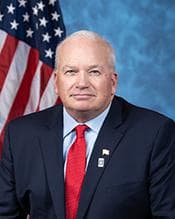
Full profile: /officials/F000471
Source: Congress.gov · FEC
Cosponsors (1)
Members who have signed on to support this bill since introduction. Source: Congress.gov.
1 cosponsor on record at Congress.gov. The named list is syncing into Govwatch and will appear here shortly — view on Congress.gov in the meantime.
Latest Action
The most recent step in the bill's legislative path. Committee Activity below shows referrals and reports; the full action-by-action history including floor proceedings lives at Congress.gov →
Committee Activity
Currently in
- House Committee on Financial ServicesReferred To · 2026-06-25
Plain-English Summary
The bill would allow two major government-backed mortgage companies, Freddie Mac and Fannie Mae, to buy and bundle residential construction loans into securities that can be sold to investors. This change would make it easier for builders and developers to get financing for new home construction projects by expanding the types of loans these companies can purchase. The measure could increase the availability of credit for residential construction and potentially help address housing supply issues.
AI-assisted summary generated from the official bill metadata (title, subjects, actions) sourced from Congress.gov. Cached and reviewed. Always verify against the official text linked below.
Subjects
Full Bill Text
Verbatim text published on Congress.gov via GovInfo. Use Cmd+F / Ctrl+F to search within this excerpt.
[Congressional Bills 119th Congress] [From the U.S. Government Publishing Office] [H.R. 9461 Introduced in House (IH)] <DOC> 119th CONGRESS 2d Session H. R. 9461 To permit the Federal Home Loan Mortgage Corporation and the Federal National Mortgage Association to purchase and securitize certain residential construction loans. _______________________________________________________________________ IN THE HOUSE OF REPRESENTATIVES June 25, 2026 Mr. Fitzgerald introduced the following bill; which was referred to the Committee on Financial Services _______________________________________________________________________ A BILL To permit the Federal Home Loan Mortgage Corporation and the Federal National Mortgage Association to purchase and securitize certain residential construction loans. Be it enacted by the Senate and House of Representatives of the United States of America in Congress assembled, SECTION 1. SHORT TITLE. This Act may be cited as the ``Working Families Home Construction Act of 2026''. SEC. 2. PURCHASE OF QUALIFYING CONSTRUCTION LOANS BY FANNIE MAE AND FREDDIE MAC. (a) In General.--Notwithstanding any other provision of law, the Director of the Federal Housing Finance Agency (hereafter referred to as the ``Director'') shall permit the enterprises to purchase and securitize qualifying construction loans, as described in this section. (b) Qualifying Construction Loan.--A qualifying loan shall have each of the following characteristics: (1) The loan shall be made by a depository institution, a credit union, a State housing finance agency, or any other entity as determined by the Director. (2) The originating institution for the loan shall verify and document the financial viability, capacity to complete, and support from the local community as defined in subsection (d)(4), for the purpose of providing that information to an enterprise. (3) The loan shall have an interest rate established by the Director, which takes into account-- (A) affordability for a family described in paragraph (9); and (B) safety and soundness with respect to the operating costs and expected losses related to purchasing qualifying construction loans. (4) The loan shall be made to a builder, homebuilder, or developer. (5) The loan shall be for a construction project that will result in the building of 1 or more owner-occupied dwelling units. (6) The recipient of the loan shall contribute not less than 10 percent of the capital required to complete the construction project (including the value of the land on which the project is located) to be undertaken by the recipient using such loan. (7) The loan shall be-- (A) not more than $100,000 for each dwelling unit to be constructed as part of the construction project provided that the amounts described in this paragraph represent the maximum amount of supplemental or gap financing eligible for purchase and securitization by an enterprise under this Act and may be layered with other construction financing sources, including commercial construction loans, State or local financing, and developer equity contributions and shall not be construed to require that a qualifying construction loan serve as the sole or primary source of financing for any construction project; and (B) not more than $2,400,000 in total for any single construction project. (8) The loan may be used for-- (A) acquiring land; (B) professional services, including engineering services, land use planning services, surveying, environmental due diligence; (C) developing infrastructure that will serve such eligible construction project, including roads, sewers, sidewalks, grading, water lines, stormwater management, lighting, and street landscaping and signage; (D) construction of dwelling units; (E) direct developer incentives; or (F) municipal fees and permits. (9) Each dwelling unit built as part of a construction project financed with a loan shall be sold to a family whose income is between 90 percent and 130 percent of the area median income in the area where the dwelling unit is…
Show the remaining 437 wordsHide the remaining 437 words
located. (10) When a dwelling unit built as part of a construction project financed with a loan is sold, the terms of the sale shall require the purchaser to reside in the dwelling unit for not less than 1 year, and shall require developers to include a recorded, restrictive covenant to that effect. (c) Availability of Amounts.-- (1) Freddie mac.--Section 1337 of the Federal Housing Enterprises Financial Safety and Soundness Act of 1992 (12 U.S.C. 4567(a)(1)(B)) is amended in subsection (a)(1)(B)-- (A) in clause (i)-- (i) by striking ``65'' and inserting ``53''; and (ii) by striking ``and'' at the end; (B) in clause (ii), by striking ``35'' and inserting ``25''; and (C) by adding at the end the following: ``(iii) 22 percent of such amounts for the purpose of purchasing and securitizing qualifying construction loans under the Working Families Home Construction Act of 2026; and''. (2) Fannie mae.--Section 1337 of the Federal Housing Enterprises Financial Safety and Soundness Act of 1992 (12 U.S.C. 4567(a)(2)(B)) is amended in subsection (a)(2)(B)-- (A) in clause (i)-- (i) by striking ``65'' and inserting ``53''; and (ii) by striking ``and'' at the end; (B) in clause (ii)-- (i) by striking ``35'' and inserting ``25''; and (ii) by striking the period at the end and inserting ``; and''; and (C) by adding at the end the following: ``(iii) 22 percent of such amounts for the purpose of purchasing and securitizing qualifying construction loans under the Working Families Home Construction Act of 2026; and''. (d) Definitions.--In this section: (1) Credit union.--The term ``credit union'' has the meaning given the term ``insured credit union'' in section 101 of the Federal Credit Union Act (12 U.S.C. 1752). (2) Depository institution.--The term ``depository institution'' has the meaning given the term in section 3 of the Federal Deposit Insurance Act (12 U.S.C. 1813). (3) Enterprise.--The term ``enterprise'' means-- (A) the Federal Home Loan Mortgage Corporation; or (B) the Federal National Mortgage Association. (4) Support from the local community.--The term ``support from the local community'' means formal authorization or endorsement for the proposed construction project from the relevant local governmental authority, which shall be deemed satisfied by any one of the following: (A) a valid zoning approval issued by the relevant local government authority for the proposed construction project; (B) a building permit issued by the relevant local government authority for the proposed construction project; (C) a formal resolution or letter of support from a local elected official with jurisdiction over the area in which the project is located; or (D) such other documentation as the Director determines demonstrates formal local governmental authorization for the proposed construction project. <all>
Related legislation
Bills by the same sponsor or covering overlapping subjects.
- HR9385PROTECT USA Act of 2026Reported by Committee · 2026-09-16
- HR10390Judicial Conduct and Disability Reform Act of 2026Referred to Committee · 2026-09-15
- HR6048NDO Fairness Act of 2025Passed House · 2026-09-14
- HR7495To authorize the establishment of memorials to the Wisconsin infantry officers and enlisted men who fought in the Battle of Antietam and the Second Battle of Bull Run, and for other purposes.Referred to Committee · 2026-09-10