Super Pay-As-You-Go Act of 2026
Sponsor
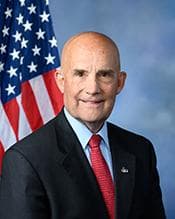
Full profile: /officials/S001224
Source: Congress.gov · FEC
Cosponsors (0)
Members who have signed on to support this bill since introduction. Source: Congress.gov.
No cosponsors on record. Bills can pass without cosponsors — this often means the sponsor introduced the bill alone, either because it's a messaging bill, a chairman's mark, or simply early in the legislative cycle.
Latest Action
The most recent step in the bill's legislative path. Committee Activity below shows referrals and reports; the full action-by-action history including floor proceedings lives at Congress.gov →
Referred to the Committee on the Budget, and in addition to the Committee on Rules, for a period to be subsequently determined by the Speaker, in each case for consideration of such provisions as fall within the jurisdiction of the committee concerned.
2026-07-22
Source: Congress.gov
Committee Activity
Currently in
- House Committee on the BudgetReferred To · 2026-07-22
- House Committee on RulesReferred To · 2026-07-22
Plain-English Summary
The proposal would strengthen federal budget rules by creating "super PAYGO" reductions, which are automatic spending cuts that trigger when Congress passes laws that increase the deficit beyond certain thresholds. This would make it harder for lawmakers to approve new spending or tax cuts without offsetting the costs elsewhere in the budget, potentially affecting federal programs and taxpayers. The measure aims to force Congress to be more fiscally disciplined when making budget decisions.
AI-assisted summary generated from the official bill metadata (title, subjects, actions) sourced from Congress.gov. Cached and reviewed. Always verify against the official text linked below.
Subjects
Full Bill Text
Verbatim text published on Congress.gov via GovInfo. Use Cmd+F / Ctrl+F to search within this excerpt.
[Congressional Bills 119th Congress] [From the U.S. Government Publishing Office] [H.R. 9879 Introduced in House (IH)] <DOC> 119th CONGRESS 2d Session H. R. 9879 To amend the Statutory Pay-As-You-Go Act of 2010 to strengthen and enhance budgetary savings by providing for super PAYGO reductions, and for other purposes. _______________________________________________________________________ IN THE HOUSE OF REPRESENTATIVES July 22, 2026 Mr. Self introduced the following bill; which was referred to the Committee on the Budget, and in addition to the Committee on Rules, for a period to be subsequently determined by the Speaker, in each case for consideration of such provisions as fall within the jurisdiction of the committee concerned _______________________________________________________________________ A BILL To amend the Statutory Pay-As-You-Go Act of 2010 to strengthen and enhance budgetary savings by providing for super PAYGO reductions, and for other purposes. Be it enacted by the Senate and House of Representatives of the United States of America in Congress assembled, SECTION 1. SHORT TITLE. This Act may be cited as the ``Super Pay-As-You-Go Act of 2026''. SEC. 2. PURPOSE. Section 2 of the Statutory Pay-As-You-Go Act of 2010 is amended to read as follows: ``SEC. 2. PURPOSE. ``The purpose of this title is-- ``(1) to establish and enforce a statutory requirement that legislation affecting direct spending or revenues contribute to deficit reduction; ``(2) to ensure that new direct spending and revenue reductions are more than fully offset by reductions in direct spending, increases in revenues, or a combination thereof; ``(3) to reduce the accumulation of Federal debt by requiring legislation affecting direct spending or revenues to produce net deficit reduction; and ``(4) to promote long-term fiscal sustainability through transparent and enforceable budgetary controls.''. SEC. 3. SUPER PAYGO REQUIREMENT. (a) Definitions.--Section 3 of the Statutory Pay-As-You-Go Act of 2010 is amended-- (1) in paragraph (4)(A), by inserting after ``Budgetary effects shall not include any costs associated with debt service.'' the following: ``For purposes of this title, budgetary effects shall be separately identified as costs and savings before netting, except to the extent necessary to prevent double counting of the same provision.''; and (2) by adding at the end the following new paragraphs: ``(9) The term `total budgetary cost' means, with respect to a PAYGO Act, the sum of-- ``(A) all increases in outlays flowing from direct spending, excluding debt service; and ``(B) all reductions in revenues. ``(10) The term `total savings' means, with respect to a PAYGO Act, the sum of-- ``(A) all reductions in outlays flowing from direct spending; and ``(B) all increases in revenues. ``(11) The term `Super PAYGO debit' means, with respect to a PAYGO Act or a Super PAYGO scorecard for any fiscal year or scorecard period, the positive amount, if any, by which-- ``(A) two times the total budgetary cost; exceeds ``(B) the total savings. ``(12) The term `Super PAYGO scorecard' means a scorecard maintained by OMB under section 4(d) that records Super PAYGO debits for the applicable 5-year or 10-year period.''. (b) Super PAYGO Requirement.--The Statutory Pay-As-You-Go Act of 2010 is amended by inserting after section 3 the following new section: ``SEC. 3A. SUPER PAYGO REQUIREMENT. ``(a) Required Deficit Reduction.--Any PAYGO Act affecting direct spending or revenues shall be deemed compliant with this section only if the total savings attributable to such Act equals or exceeds two times the total budgetary cost of such Act. ``(b) Total Budgetary Cost.--The total budgetary cost of a PAYGO Act shall equal the sum of-- ``(1) all increases in direct spending; and ``(2) all reductions in revenues. ``(c) Total Savings.--Total savings shall equal the sum of-- ``(1) all reductions in direct spending; and ``(2) all increases…
Show the remaining 1,972 wordsHide the remaining 1,972 words
in revenues. ``(d) Budget Windows.--The requirements of this section shall be calculated using the 5-fiscal-year and 10-fiscal-year scorecards maintained pursuant to this title. ``(e) Illustration.--An Act that increases direct spending or reduces revenues by $100,000,000,000 shall not satisfy this subsection unless such Act includes not less than $200,000,000,000 in reductions in direct spending, increases in revenues, or a combination thereof.''. SEC. 4. SUPER PAYGO SCORECARDS. (a) OMB Super PAYGO Scorecards.--Section 4(d) of the Statutory Pay- As-You-Go Act of 2010 is amended-- (1) in paragraph (1), by striking ``two PAYGO scorecards displaying the budgetary effects of PAYGO legislation'' and inserting ``two Super PAYGO scorecards displaying the Super PAYGO debits of PAYGO legislation''; (2) by amending paragraph (4) to read as follows: ``(4) 5-year super paygo scorecard.--The first scorecard shall display the Super PAYGO debit, if any, of PAYGO legislation in each year over the 5-year period beginning in the budget year.''; and (3) by amending paragraph (5) to read as follows: ``(5) 10-year super paygo scorecard.--The second scorecard shall display the Super PAYGO debit, if any, of PAYGO legislation in each year over the 10-year period beginning in the budget year.''. (b) Averaging for Super Paygo Scorecards.--Section 4(f) of the Statutory Pay-As-You-Go Act of 2010 is amended by striking ``budgetary effects of a PAYGO Act'' and inserting ``Super PAYGO debit of a PAYGO Act, calculated by comparing two times the total budgetary cost of such Act to the total savings of such Act''. SEC. 5. RESTRICTIONS ON EMERGENCY DESIGNATIONS. Section 4(g) of the Statutory Pay-As-You-Go Act of 2010 is amended-- (1) in paragraph (1), by inserting after ``Congress so designates in statute pursuant to this section'' the following: ``and such provision satisfies the requirements of paragraph (5)''; (2) in paragraph (3)(B)(i), by striking ``three-fifths'' and inserting ``two-thirds''; (3) in paragraph (3)(B)(ii), by striking ``three-fifths'' and inserting ``two-thirds''; and (4) by adding at the end the following new paragraphs: ``(5) Requirements for emergency designations.--A provision may be designated as an emergency requirement only if the budgetary effects of such provision are-- ``(A) sudden; ``(B) urgent; ``(C) unforeseen; ``(D) temporary; and ``(E) necessary to address a direct threat to life, public safety, national security, or significant property damage. ``(6) Separate designation required.--An emergency designation under this subsection shall apply only to the specific provision expressly designated as an emergency requirement and shall not apply to an entire Act, title, subtitle, division, or amendment unless each affected provision is separately designated. ``(7) Expiration.--Any emergency designation shall expire not later than 24 months after the date of the enactment. Any provision designated as an emergency requirement that continues beyond such period shall thereafter be subject to the requirements of this title. ``(8) OMB justification.--Not later than 14 days after the date of the enactment of any Act containing an emergency designation, the Director of the Office of Management and Budget shall publish a written justification for such designation, including an explanation of how the provision satisfies each requirement under paragraph (5).''. SEC. 6. SEQUESTRATION. (a) Sequestration Order.--Section 5(b) of the Statutory Pay-As-You- Go Act of 2010 is amended-- (1) by striking ``debit on either PAYGO scorecard'' and inserting ``Super PAYGO debit on either Super PAYGO scorecard''; (2) by striking ``offset that debit'' and inserting ``offset that Super PAYGO debit''; and (3) by striking ``If there is a debit on both scorecards, the order shall fully offset the larger of the two debits.'' and inserting ``If there is a Super PAYGO debit on both scorecards, the order shall fully offset the larger of the two Super PAYGO debits''. (b) Calculation of Sequestration.--Section 6(a)(1) of the Statutory Pay-As-You-Go Act of 2010 is amended by striking ``budget-year debit, if any, on the applicable PAYGO scorecard'' and inserting ``budget-year Super PAYGO debit, if any, on the applicable Super PAYGO scorecard''. (c) Outlay Savings.--Section 6(b) of the Statutory Pay-As-You-Go Act of 2010 is amended by striking ``budget-year debit'' each place it appears and inserting ``budget-year Super PAYGO debit''. SEC. 7. ENFORCEMENT. The Statutory Pay-As-You-Go Act of 2010 is amended by inserting after section 6 the following new section: ``SEC. 6A. RESTRICTIONS ON EXCLUSION OF BUDGETARY EFFECTS FROM SCORECARDS. ``(a) In General.--It shall not be in order in the House of Representatives or the Senate to consider any bill, joint resolution, amendment, motion, conference report, amendment between the Houses, or other legislative vehicle that directs the exclusion of budgetary effects from a PAYGO scorecard or Super PAYGO scorecard except in accordance with this section. ``(b) Separate Legislation Required.--Any legislation proposing the exclusion of budgetary effects from a PAYGO scorecard or Super PAYGO scorecard shall be considered only as a separate bill or joint resolution that contains no other matter. ``(c) Senate Waiver.--Subsection (a), and any appeal of the ruling of the Chair under subsection (a), may be waived or sustained in the Senate only by an affirmative vote of two-thirds of the Members, duly chosen and sworn. ``(d) House Requirement.--It shall not be in order in the House of Representatives to waive subsection (a) except by a separate roll call vote on a question that identifies the specific budgetary effects proposed to be excluded and the estimated fiscal impact of such exclusion. ``(e) Prohibition on Inclusion in Other Legislation.--It shall not be in order to include a provision described in subsection (a) in a conference report, amendment between the Houses, omnibus measure, continuing resolution, budget reconciliation measure, authorization bill, appropriations Act, or any other legislative vehicle that contains other matter. ``(f) Surgical Application.--If a point of order under this section is sustained, only the offending provision shall be stricken, and the remaining matter shall remain pending. ``(g) Prohibition on Super Paygo Evasion.--It shall not be in order to consider any measure that eliminates, reduces, resets, delays, shifts, or otherwise removes a debit from a PAYGO scorecard or Super PAYGO scorecard, or prevents, delays, cancels, or limits a sequestration order required under section 5. ``SEC. 6B. SEPARATE CONSIDERATION OF PAYGO WAIVERS. ``(a) In General.--It shall not be in order in the House of Representatives or the Senate to consider any bill, joint resolution, amendment, motion, conference report, amendment between the Houses, or other measure proposing to waive, suspend, modify, or otherwise render inapplicable any provision of this title except through separate legislation that contains no other matter. ``(b) Prohibition on Inclusion in Other Legislation.--No waiver, suspension, modification, or other provision rendering inapplicable any provision of this title may be included in any appropriations bill, continuing resolution, authorization bill, budget reconciliation measure, omnibus legislation, conference report, amendment between the Houses, or other legislative vehicle that contains other matter. ``(c) Required Disclosure.--Any legislation described in subsection (a) shall clearly identify-- ``(1) each provision proposed to be waived, suspended, modified, or rendered inapplicable; ``(2) the estimated fiscal impact of such waiver, suspension, modification, or other action; and ``(3) the estimated effect on a Super PAYGO scorecard. ``(d) Senate Waiver.--Subsections (a) and (b), and any appeal of the ruling of the Chair under such subsections, may be waived or sustained in the Senate only by an affirmative vote of two-thirds of the Members, duly chosen and sworn. ``(e) House Waiver.--It shall not be in order in the House of Representatives to waive subsections (a) or (b) except by a separate roll call vote on a question that identifies the specific provision being waived and the estimated fiscal impact of such waiver.''. SEC. 8. TRANSPARENCY AND REPORTING. Section 5 of the Statutory Pay-As-You-Go Act of 2010 is amended by adding at the end the following: ``(c) Publication.--Not later than 14 days after the end of each fiscal year, the Director of the Office of Management and Budget shall publish on a publicly accessible website a report containing-- ``(1) the balances of all Super PAYGO scorecards; ``(2) the budgetary effects of each Act enacted during the fiscal year affecting direct spending or revenues; ``(3) the amount of deficit reduction attributable to each such Act; ``(4) any emergency designation made pursuant to section 4(g); ``(5) any sequestration order issued under this title; ``(6) the cumulative amount of deficit reduction achieved; and ``(7) the estimated amount of deficit reduction avoided through any enacted waiver, exemption, or scorecard exclusion.''. SEC. 9. CONGRESSIONAL BUDGET POINTS OF ORDER. The Statutory Pay-As-You-Go Act of 2010 is amended by inserting after section 6B, as added by section 7 of this Act, the following new section: ``SEC. 6C. CONGRESSIONAL BUDGET POINTS OF ORDER. ``(a) Senate Point of Order.-- ``(1) It shall not be in order in the Senate to consider any bill, joint resolution, amendment, amendment between the Houses, motion, or conference report if the official estimate prepared by the Congressional Budget Office indicates that the measure would fail to satisfy the Super PAYGO requirement under section 3A of this title. ``(2) If a Congressional Budget Office estimate is unavailable, the estimate of the Chairman of the Committee on the Budget of the Senate shall control for purposes of this subsection. ``(3) This subsection may be waived or suspended only by an affirmative vote of two-thirds of the Members, duly chosen and sworn. ``(4) An affirmative vote of two-thirds of the Members, duly chosen and sworn, shall be required to sustain an appeal of the ruling of the Chair regarding this subsection. ``(5) This subsection is enacted as an exercise of the rulemaking power of the Senate. ``(b) House of Representatives Point of Order.-- ``(1) It shall not be in order in the House of Representatives to consider any bill, joint resolution, amendment, motion, conference report, or amendment between the Houses if the official estimate prepared by the Congressional Budget Office indicates that the measure would fail to satisfy the Super PAYGO requirement under section 3A of this title. ``(2) If a Congressional Budget Office estimate is unavailable, the estimate of the Chairman of the Committee on the Budget of the House of Representatives shall control for purposes of this subsection. ``(3) A waiver of this subsection may be considered only through a separate resolution. ``(4) No such resolution shall be agreed to except by an affirmative vote of two-thirds of the Members present and voting, a quorum being present. ``(5) This subsection is enacted as an exercise of the rulemaking power of the House of Representatives with full recognition of the constitutional right of the House to change its rules at any time.''. SEC. 10. DISCLOSURE OF SUPER PAYGO COMPLIANCE. (a) CBO Cost Estimates.--Any estimate prepared by the Congressional Budget Office for legislation affecting direct spending or revenues shall include-- (1) the total increase in direct spending; (2) the total reduction in revenues; (3) the total amount of deficit reduction contained in the legislation; (4) the net budgetary effect of the legislation; (5) the Super PAYGO debit, if any; and (6) a statement describing whether the legislation complies with section 3A of the Statutory Pay-As-You-Go Act of 2010, as added by section 3(b) of this Act. (b) Committee Reports.-- (1) In general.--Any committee report accompanying legislation in the House of Representatives and the Senate affecting direct spending or revenues shall include a statement describing whether the legislation complies with the Super PAYGO requirement under such section 3A. (2) Exercise of rulemaking powers.--The provisions of this title are enacted by the Congress-- (A) as an exercise of the rulemaking power of the House of Representatives and as such they shall be considered as part of the rules of the House and such rules shall supersede other rules only to the extent that they are inconsistent therewith; and (B) with full recognition of the constitutional right of the House to change such rules at any time, in the same manner, and to the same extent as in the case of any other rule of the House. SEC. 11. EFFECTIVE DATE. This Act shall apply to legislation enacted on or after the date of the enactment of this Act. <all>
Related legislation
Bills by the same sponsor or covering overlapping subjects.
- HR6698Board of Veterans Appeals Annual Report Transparency Act of 2025Referred to Committee · 2026-10-06
- HR10766To direct the Secretary of Defense to update the Critical Asset List of the Department of Defense to incorporate assets critical to the development, deployment, and operation of the Golden Dome missile defense system.Referred to Committee · 2026-10-06
- HCONRES116Denouncing Sharia law in the United States.Referred to Committee · 2026-09-03
- HR9716PRIVACY ActReferred to Committee · 2026-07-15