Small Unmanned Aircraft Systems Operational Test, Evaluation, and Training Corridor Act
Sponsor
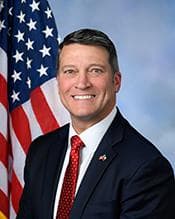
Full profile: /officials/J000304
Source: Congress.gov · FEC
Cosponsors (8)
Members who have signed on to support this bill since introduction. Source: Congress.gov.
Latest Action
The most recent step in the bill's legislative path. Committee Activity below shows referrals and reports; the full action-by-action history including floor proceedings lives at Congress.gov →
Committee Activity
Currently in
- House Committee on Armed ServicesReferred To · 2026-07-23
Plain-English Summary
The Department of Defense would create designated areas where the military can test and train with small drones and related technology without restrictions that normally apply in civilian airspace. This would allow the military to develop and practice drone operations more efficiently while keeping these test flights separate from regular air traffic. The change affects military personnel and defense contractors working on drone technology.
AI-assisted summary generated from the official bill metadata (title, subjects, actions) sourced from Congress.gov. Cached and reviewed. Always verify against the official text linked below.
Subjects
Full Bill Text
Verbatim text published on Congress.gov via GovInfo. Use Cmd+F / Ctrl+F to search within this excerpt.
[Congressional Bills 119th Congress] [From the U.S. Government Publishing Office] [H.R. 9909 Introduced in House (IH)] <DOC> 119th CONGRESS 2d Session H. R. 9909 To direct the Secretary of Defense to establish test and training corridors for small unmanned aircraft systems and associated capabilities, and for other purposes. _______________________________________________________________________ IN THE HOUSE OF REPRESENTATIVES July 23, 2026 Mr. Jackson of Texas (for himself, Mr. Messmer, Mr. Guest, Mr. McCormick, and Mr. McGuire) introduced the following bill; which was referred to the Committee on Armed Services _______________________________________________________________________ A BILL To direct the Secretary of Defense to establish test and training corridors for small unmanned aircraft systems and associated capabilities, and for other purposes. Be it enacted by the Senate and House of Representatives of the United States of America in Congress assembled, SECTION 1. SHORT TITLE. This Act may be cited as the ``Small Unmanned Aircraft Systems Operational Test, Evaluation, and Training Corridor Act''. SEC. 2. REQUIREMENT TO ESTABLISH TEST AND TRAINING CORRIDORS FOR SMALL UNMANNED AIRCRAFT SYSTEMS AND ASSOCIATED CAPABILITIES. (a) In General.--The Secretary of Defense shall establish or designate, and operate, one or more test and training corridors for small unmanned aircraft systems, counter-unmanned aircraft system platforms, and associated capabilities within the national airspace system. (b) Facilities.--The Secretary of Defense may construct new facilities, or use existing facilities available to the Department of Defense, to support one or more test and training corridors established or designated under subsection (a) that collectively address each of the functions described in subsection (c). (c) Functions.--The Secretary of Defense shall ensure that any test and training corridor established or designated under subsection (a) enables the research, development, testing, and evaluation of, and training for members of the Armed Forces on-- (1) small unmanned aircraft systems and associated autonomy software, kinetic and nonkinetic payloads, sensors, communications, and navigation technology; (2) kinetic and nonkinetic counter small-unmanned aircraft system capabilities, including high power microwave, high energy laser, and electronic warfare capabilities, and any requisite autonomy software, sensors, and command and control capabilities; (3) small to medium caliber counter unmanned aircraft systems ammunition and weapon systems, low collateral damage weapons and munitions, and drone-versus-drone capabilities; (4) the acceleration of the integration of modular payloads onto multiple unmanned aircraft systems and counter unmanned aircraft systems and platforms; (5) the reduction in time-to-field for lethal and non- lethal drone-enabled munitions and munition payload capabilities; and (6) standardization of payload-to-platform interfaces. (d) Site Selection.--In establishing or designating one or more test and training corridors under subsection (a), the Secretary of Defense, in coordination with the Director of the Test Resource Management Center and the Secretaries of the military departments, shall-- (1) identify potential locations within the national airspace system that would be conducive to conducting testing, evaluation, and training activities with respect to small unmanned aircraft systems and counter-small unmanned aircraft capabilities, with prioritization of sites that best support the test and training corridor functions described in subsection (c); (2) assess whether existing test and evaluation facilities, including Government-owned and non-Government owned facilities, could be used to meet current and future requirements with respect to such testing, evaluation and training; (3) identify any additional resources required to establish or designate, and operate the corridor, including military construction costs and personnel and manning costs; (4) identify any sensors and capabilities needed to adequately simulate operationally realistic environments in the corridor, including environments with denied or degraded-- (A) communications; (B) electromagnetic spectrum; and (C) global positioning system; (5) identify any interagency, legal, regulatory, or policy impediments to carrying out testing, evaluation, and training activities with respect to small unmanned aircraft systems and…
Show the remaining 183 wordsHide the remaining 183 words
counter-small unmanned aircraft capabilities within the national airspace system, including any impediments to the use of-- (A) electronic warfare; (B) directed energy (such as high-powered microwave and high energy lasers); (C) GPS jamming and spoofing; (D) spectrum enabled and cellular-network enabled systems and capabilities; and (E) other relevant capabilities; (6) consult with interagency partners to develop recommendations for-- (A) addressing any impediments identified under paragraph (4); and (B) ensuring the safety of testing and training activities conducted in the national airspace system; and (7) consider diverse geographic regions across the United States. (e) Notification to Congress.--Not later than 90 days after establishing or designating a test and training corridor under subsection (a), the Secretary of Defense shall submit to the congressional defense committees (as such term is defined in section 101(a)(16) of title 10, United States Code) a written notification that describes-- (1) the location of the corridor; (2) any funding, personnel, or other resources required to support the corridor; and (3) any agreements with other Federal agencies that may be required to safely operate the corridor in the national airspace system. <all>
Related legislation
Bills by the same sponsor or covering overlapping subjects.
- HR10126DEMAND Act of 2026Referred to Committee · 2026-08-20
- HR7466SAFE CATTLE ActReferred to Committee · 2026-07-21
- HRES1303Recognizing the critical importance of the United States Special Operations Forces community and expressing support for the designation of SOF Week.Referred to Committee · 2026-05-19
- HR6444Blast Overpressure Research and Mitigation Task Force ActReferred to Committee · 2026-05-14