HR9963Referred to Committee
North Korean FAKER Act
Introduced
In Committee
3
Passed One Chamber4
Passed Both5
Signed into Law119th
Congress
2026-07-27
Introduced
1
Cosponsors
HR
ⓘType
Sponsor
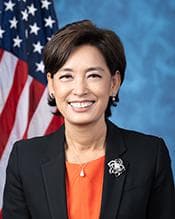
Young Kim
Republican · CA · Representative
Votes with party: 97.8% (668 recorded votes)
Full profile: /officials/K000397
Source: Congress.gov · FEC
Cosponsors (1)
Members who have signed on to support this bill since introduction. Source: Congress.gov.
Latest Action
The most recent step in the bill's legislative path. Committee Activity below shows referrals and reports; the full action-by-action history including floor proceedings lives at Congress.gov →
Committee Activity
Currently in
- House Committee on Foreign AffairsReferred To · 2026-07-27
Plain-English Summary
The bill would give the Secretary of State power to work with U.S. allies and partner countries to identify North Korean activities, figure out who is responsible for them, and stop them from happening. This could involve coordinating international efforts to counter North Korean hacking, weapons development, money laundering, or other harmful actions that threaten U.S. and allied interests.
AI-assisted summary generated from the official bill metadata (title, subjects, actions) sourced from Congress.gov. Cached and reviewed. Always verify against the official text linked below.
Subjects
International Affairs
Full Bill Text
Verbatim text published on Congress.gov via GovInfo. Use Cmd+F / Ctrl+F to search within this excerpt.
[Congressional Bills 119th Congress] [From the U.S. Government Publishing Office] [H.R. 9963 Introduced in House (IH)] <DOC> 119th CONGRESS 2d Session H. R. 9963 To authorize the Secretary of State to coordinate and engage with allies and partners of the United States to detect, attribute, and disrupt certain activities of North Korea, and for other purposes. _______________________________________________________________________ IN THE HOUSE OF REPRESENTATIVES July 27, 2026 Mrs. Kim (for herself and Mr. Bera) introduced the following bill; which was referred to the Committee on Foreign Affairs _______________________________________________________________________ A BILL To authorize the Secretary of State to coordinate and engage with allies and partners of the United States to detect, attribute, and disrupt certain activities of North Korea, and for other purposes. Be it enacted by the Senate and House of Representatives of the United States of America in Congress assembled, SECTION 1. SHORT TITLE. This Act may be cited as the ``North Korean Fraudulent Applicants Knowingly Enriching the Regime Act'' or the ``North Korean FAKER Act''. SEC. 2. STATEMENT OF POLICY. It is the policy of the United States-- (1) to counter illegal revenue generation by the Democratic People's Republic of Korea through deceptive remote employment and identity fraud schemes; (2) to prevent such revenue from being used to support North Korea's ballistic missile programs, nuclear, chemical, and biological weapons programs, and proliferation of weapons of mass destruction; (3) to promote international cooperation and strengthen international norms and standards to detect, disrupt, and deter such programs; and (4) to apply diplomatic tools to prevent foreign persons from facilitating such schemes or contributing to weapons of mass destruction proliferation networks associated with North Korea. SEC. 3. DIPLOMATIC COORDINATION AND COUNTER-EVASION MEASURES. (a) International Coordination.--The Secretary of State is authorized to coordinate with appropriate counterparts of the governments of allied and partner countries to-- (1) align sanctions and other restrictive measures with respect to persons who knowingly engage in, facilitate, or are responsible for a remote information technology worker scheme conducted on behalf of North Korea; (2) enhance information-sharing regarding remote information technology worker schemes, money-laundering, and weapons of mass destruction proliferation networks in North Korea; (3) prioritize diplomatic engagement with countries identified as hosting, enabling, or failing to prevent illegal remote workforce activity by North Korea, including through security assistance, technical training, and where appropriate, the use of sanctions or economic measures; and (4) develop and implement coordinated strategies and security assistance guarantees to prevent North Korean sanctions evasion and proliferation financing. (b) External Engagement.--The Secretary is authorized to-- (1) engage with private sector entities with relevant technical expertise, including cybersecurity firms, financial institutions, digital asset platforms, and online labor marketplaces, to enhance the ability of the United States and its partners to detect, attribute, and disrupt activities of North Korea described in subsection (a)(2), including weapons of mass destruction-related proliferation support; and (2) to address the use of artificial intelligence, synthetic identities, and other emerging technologies in furtherance of such activities. (c) Rewards for Justice Program Enhancement.--Subject to the limitations set forth in section 36(e) of the State Department Basic Authorities Act of 1956 (22 U.S.C. 2708(e)), the Secretary may-- (1) increase the reward offered through the Rewards for Justice Program with respect to the activities of North Korea described in subsection (a)(2), including illegal remote information technology worker schemes and weapons of mass destruction proliferation networks; and (2) carry out such efforts as the Secretary determines appropriate to enhance outreach, increase public awareness, and prioritize information that facilitates the identification, disruption, or prevention of such activities. (d) Attribution.--The Secretary, in consultation with the relevant heads of other Federal departments and…
Show the remaining 241 wordsHide the remaining 241 words
agencies, may publicly attribute, as appropriate, illegal remote workforce schemes and associated entities linked to North Korea, including through coordinated bilateral or multilateral statements and joint advisories to increase public awareness of the weapons of mass destruction proliferation activities of North Korea. SEC. 4. REPORT ON ILLEGAL REMOTE WORKFORCE ACTIVITIES. Not later than 180 days after the date of the enactment of this Act, and annually thereafter for a period of 2 years, the Secretary shall submit to the appropriate congressional committees a report that includes with respect to the period covered by the report-- (1) an assessment of illegal remote workforce activities conducted by or on behalf of North Korea; (2) a description of efforts to coordinate with allies and partners to counter such activities; (3) an overview of actions taken to disrupt associated networks; (4) a description of coordination between the Department of State and interagency partners to achieve the objectives described in section 2; and (5) recommendations for additional diplomatic, economic, or legislative measures to enhance the effectiveness of such efforts, actions, and coordination. SEC. 5. DEFINITIONS. In this Act: (1) Appropriate congressional committees.--The term ``appropriate congressional committees'' means-- (A) the Committee on Foreign Affairs of the House of Representatives; and (B) the Committee on Foreign Relations of the Senate. (2) Artificial intelligence.--The term ``artificial intelligence'' has the meaning given such term in section 5002 of the National Artificial Intelligence Initiative Act of 2020 (15 U.S.C. 9401). <all>
Related legislation
Bills by the same sponsor or covering overlapping subjects.
- HRES1563Amending the Rules of the House of Representatives with respect to the certification requirement in the case of a congressional earmark or limited tax or tariff benefit.Referred to Committee · 2026-09-17
- HR3350To designate the facility of the United States Postal Service located at 340 East 1st Street in Tustin, California, as the "Ursula Ellen Kennedy Post Office Building".Passed House · 2026-09-14
- HR5402Credit Access and Inclusion Act of 2026Referred to Committee · 2026-09-01
- HR9331STOP Payments Fraud Act of 2026Referred to Committee · 2026-09-01