HR9975Referred to Committee
Carbon Dioxide Removal Leadership Act of 2026
Introduced
In Committee
3
Passed One Chamber4
Passed Both5
Signed into Law119th
Congress
2026-07-27
Introduced
1
Cosponsors
HR
ⓘType
Sponsor
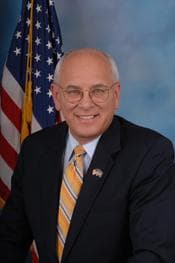
Paul Tonko
Democrat · NY · Representative
Votes with party: 98.3% (663 recorded votes)
Full profile: /officials/T000469
Source: Congress.gov · FEC
Cosponsors (1)
Members who have signed on to support this bill since introduction. Source: Congress.gov.
Latest Action
The most recent step in the bill's legislative path. Committee Activity below shows referrals and reports; the full action-by-action history including floor proceedings lives at Congress.gov →
Committee Activity
Currently in
- House Committee on Energy and CommerceReferred To · 2026-07-27
Plain-English Summary
The legislation would establish federal programs and funding to develop and deploy technologies that remove carbon dioxide directly from the atmosphere or capture it from industrial sources, helping the U.S. reduce greenhouse gases and combat climate change. It would affect energy companies, technology developers, and research institutions working on carbon removal solutions, while potentially creating new jobs in this emerging industry. The bill aims to position the United States as a leader in carbon removal technology by investing in research, pilot projects, and commercial deployment of these climate solutions.
AI-assisted summary generated from the official bill metadata (title, subjects, actions) sourced from Congress.gov. Cached and reviewed. Always verify against the official text linked below.
Subjects
Environmental Protection
Full Bill Text
Verbatim text published on Congress.gov via GovInfo. Use Cmd+F / Ctrl+F to search within this excerpt.
[Congressional Bills 119th Congress] [From the U.S. Government Publishing Office] [H.R. 9975 Introduced in House (IH)] <DOC> 119th CONGRESS 2d Session H. R. 9975 To require the Secretary of Energy to remove carbon dioxide directly from ambient air or seawater, and for other purposes. _______________________________________________________________________ IN THE HOUSE OF REPRESENTATIVES July 27, 2026 Mr. Tonko (for himself and Mr. Peters) introduced the following bill; which was referred to the Committee on Energy and Commerce _______________________________________________________________________ A BILL To require the Secretary of Energy to remove carbon dioxide directly from ambient air or seawater, and for other purposes. Be it enacted by the Senate and House of Representatives of the United States of America in Congress assembled, SECTION 1. SHORT TITLE. This Act may be cited as the ``Carbon Dioxide Removal Leadership Act of 2026''. SEC. 2. FEDERAL REQUIREMENT TO REMOVE CARBON DIOXIDE. (a) Required Amounts.--The Secretary shall, to the extent economically feasible as provided in subsection (d), remove-- (1) 50,000 net metric tons of carbon dioxide, calculated on a lifecycle basis, for each of fiscal years 2026 through 2027; (2) 500,000 net metric tons of carbon dioxide, calculated on a lifecycle basis, for each of fiscal years 2028 through 2030; (3) 5,000,000 net metric tons of carbon dioxide, calculated on a lifecycle basis, for each of fiscal years 2031 through 2035; and (4) 10,000,000 net metric tons of carbon dioxide, calculated on a lifecycle basis, for fiscal year 2036 and each fiscal year thereafter. (b) Timing.--The Secretary shall remove each amount of carbon dioxide required under subsection (a) by not later than 3 years after the beginning of the fiscal year for which such removal is required. (c) Small Removal Project Set-aside.--To the extent practicable, at least 20 percent of the net metric tons of carbon dioxide required to be removed for each of fiscal years 2026 through 2035 under subsection (a) shall be removed by small removal projects. (d) Economic Feasibility.-- (1) In general.--The removal of carbon dioxide under this section shall be considered economically feasible if such removal can be accomplished or, in the case of a contract, purchased-- (A) with respect to such removal carried out for any of fiscal years 2026 through 2027, at a price per metric ton of carbon dioxide of not more than $750 (which the Secretary may adjust for inflation); (B) with respect to such removal carried out for any of fiscal years 2028 through 2030, at a price per metric ton of carbon dioxide of not more than $500 (which the Secretary may adjust for inflation); (C) with respect to such removal carried out for any of fiscal years 2031 through 2033, at a price per metric ton of carbon dioxide of not more than $300 (which the Secretary may adjust for inflation); (D) with respect to such removal carried out for any of fiscal years 2034 through 2036, at a price per metric ton of carbon dioxide of not more than $200 (which the Secretary may adjust for inflation); and (E) with respect to such removal carried out for fiscal year 2037 and each fiscal year thereafter, at a price per metric ton of carbon dioxide of not more than $150 (which the Secretary may adjust for inflation). (2) Inclusion of measurement, monitoring, reporting, and verification costs.--In determining whether the removal of carbon dioxide is considered economically feasible under paragraph (1), the price for such removal shall include any costs associated with the measurement, monitoring, reporting, and verification required under subsection (f)(1), including where such costs are directly paid to an independent entity conducting the measurement, monitoring, reporting, or verification.…
Show the remaining 1,852 wordsHide the remaining 1,852 words
(3) Multi-year contracts.--Notwithstanding paragraph (1), the removal of carbon dioxide carried out pursuant to a multi- year contract entered into under subsection (h) shall be considered economically feasible if such removal can be accomplished at or below the applicable dollar amount for the first fiscal year of the contract, as provided in paragraph (1), through the entire length of such contract. (e) Federal Assistance.--Funds received pursuant to a contract entered into under subsection (h) shall not be considered Federal assistance or otherwise affect eligibility for any Federal assistance, including tax incentives. (f) Measurement, Monitoring, Reporting, and Verification.-- (1) In general.--The Secretary shall measure, monitor, report, and verify, through an independent third party, the net metric tons of carbon dioxide the Secretary removed for purposes of this section. If the Secretary enters into a contract with an entity under subsection (h), the Secretary shall include as a term or condition of such contract that such entity measure, monitor, report, and verify through an independent third party the net metric tons of carbon dioxide removed by such entity for purposes of this section. (2) Standards.--Not later than 1 year after the date of enactment of this section, the Secretary, in consultation with the Administrator of the National Oceanic and Atmospheric Administration, the Administrator of the Environmental Protection Agency, the Secretary of the Department of Agriculture, the Director of the National Institute of Standards and Technology, and other relevant Federal agencies as determined appropriate by the Secretary, shall establish standards for evaluation of the measurement, monitoring, reporting, and verification methods of net metric tons of carbon dioxide removed pursuant to this section. Such standards shall-- (A) require the use of the best available practices used by similar carbon dioxide removal projects; (B) ensure safe, effective, and efficient removal of carbon dioxide; (C) require independent, third-party verification of carbon dioxide removal and provide for effective oversight of such entities; (D) ensure additionality, durability, and net- negativity of carbon dioxide removal; (E) include criteria to determine whether the storage of captured carbon dioxide is durable; (F) ensure scientifically rigorous and transparent methods for measurement, monitoring, reporting, and verifying under paragraph (1); and (G) be regularly reviewed and, as necessary, updated to account for scientific and technological advancements. (3) Prohibition on double counting.--Carbon dioxide that is removed for the purposes of compliance with any other greenhouse gas emissions management program, including any foreign, Federal, State, local, or private greenhouse gas emissions management program, as determined by the Secretary, may not be considered removed under subsection (a) for purposes of meeting the requirements of such subsection. (g) Priorities.--In carrying out this section, the Secretary shall give priority to a project for the removal of carbon dioxide based on the degree to which the project-- (1) minimizes the amount of greenhouse gas emissions released by carrying out such project; (2) supports the commercialization of innovative removal technologies that demonstrate-- (A) near- and long-term cost competitiveness relative to similar technologies; and (B) a potential to achieve the economic feasibility requirements established under subsection (d); (3) increases the diversity of commercially available eligible technologies; (4) may provide for domestic job creation, with a further preference for partnerships with labor organizations, small businesses, minority-owned businesses, and women-owned businesses across value chains; (5) sources supply chain materials domestically; (6) results in economic development or economic diversification in regions or localities that have historically generated significant economic activity from the production, processing, transportation, or combustion of fossil fuels, including through the use of coal mines, fossil fuel-fired electricity generating units, and petroleum refining facilities; (7) quantifies and mitigates risks from carbon dioxide removal activities on, and provides measurable co-benefits to, nearby communities and residents, the environment, agriculture, and public health, including by-- (A) improving local air quality, water quality, and soil quality; (B) minimizing land, water, and energy footprints; and (C) using zero-emission energy to the extent practically feasible; and (8) includes robust public engagement and community benefits, including the use of enforceable community benefit agreements. (h) Contracts.-- (1) In general.--After a transparent and competitive process, the Secretary may enter into one or more contracts to meet the requirements of subsection (a). (2) Length.--A contract entered into under this subsection may not be for a term of more than 15 years. (3) Maintenance of removal commitments.--The Secretary shall include as a term or condition in each contract entered into under this subsection that the entity that enters into the contract shall be liable to remove an additional amount of carbon dioxide that is equal to any amount of carbon dioxide that is released from any location where the entity stored carbon dioxide pursuant to the contract. (4) Limitation.--To the extent that there is a sufficient number of entities capable of removing carbon dioxide in a manner that meets the standards and requirements of this section under a contract entered into pursuant to this subsection, the Secretary shall ensure that no one entity is responsible for removing more than 25 percent of the net metric tons of carbon dioxide required under subsection (a) in any fiscal year. (i) Report.--Not later than January 1, 2029, and every 2 years thereafter, the Secretary shall submit to Congress, and release to the public, a report on the progress of carrying out the requirements of this section, which such report shall include-- (1) the amounts verified under subsection (f)(1) and the corresponding names of each independent third party that provided such verified amount; (2) the total price, and price per metric ton, to remove carbon dioxide for the applicable fiscal year as required under subsection (a); (3) each technology category, the amount of energy, and each storage mechanism used to remove carbon dioxide for the applicable fiscal year as required under subsection (a); (4) any location where carbon dioxide was removed for the applicable fiscal year as required under subsection (a); (5) the methods associated with the measurement, monitoring, reporting, and verification required under subsection (f)(1); (6) the names of each entity conducting such measurement, monitoring, reporting, and verification required under subsection (f)(1); (7) an estimate of how removing carbon dioxide under this section affects nearby communities and residents, the environment, agriculture, and public health; (8) information on potential labor impacts and job creation resulting from fulfilling the requirements of subsection (a); and (9) an explanation of how the Secretary prioritized projects under subsection (g). (j) Authorization of Appropriations.--There are authorized to be appropriated such sums as are necessary to carry out this section. (k) Definitions.--In this section: (1) Eligible technology.-- (A) In general.--The term ``eligible technology'' means, as determined by the Secretary, any equipment, technique, or technology that-- (i) was placed into service after January 1, 2022; and (ii) removes carbon dioxide directly from ambient air or seawater. (B) Exclusion.--The term ``eligible technology'' does not include any equipment, technique, or technology that-- (i) removes carbon dioxide which is deliberately released from naturally occurring subsurface springs; (ii) removes carbon dioxide using natural photosynthesis, except as provided in subparagraph (C); or (iii) uses captured carbon dioxide in enhanced oil recovery. (C) Expansion of eligible technology.-- Notwithstanding subparagraph (B)(ii), any equipment, technique, or technology that removes carbon dioxide using gasification, pyrolysis, or sequestration of solid, nonhazardous, and cellulosic waste materials may be considered an eligible technology under this section if the Secretary, by rule-- (i) determines an entity that carries out a removal project under this section is able to adequately measure, monitor, report, and verify the amount of greenhouse gas emissions, calculated on a lifecycle basis (including direct emissions and significant indirect emissions), removed using such equipment, technique, or technology; (ii) determines an entity that carries out a removal project under this section is able to adequately mitigate the environmental impacts (including impacts on biodiversity, land use, and air and water quality) associated with such equipment, technique, or technology; and (iii) requires an entity carrying out a removal project under this section to-- (I) adequately measure, monitor, report, and verify the amount and storage durability of greenhouse gas emissions, calculated on a lifecycle basis (including direct emissions and significant indirect emissions), associated with using such equipment, technique, or technology; and (II) adequately mitigate the environmental impacts (including impacts on biodiversity, land use, and air, soil, and water quality) associated with using such equipment, technique, or technology. (2) Lifecycle basis.--The term ``lifecycle basis'' means the net sum of all greenhouse gas emissions (using mass values for all greenhouse gases that are adjusted to account for their relative global warming potential, as determined by the Secretary in consultation with the Administrator of the Environmental Protection Agency) associated with a carbon dioxide removal activity from cradle to grave, including any emissions associated with-- (A) energy and feedstock inputs in the carbon dioxide removal activity, including inputs in the distribution and transportation of carbon dioxide; (B) indirect effects, such as land-use change, as scientifically justified; (C) the carbon dioxide removal process; (D) carbon dioxide transport and storage, including any leakage, use, and disposal of any materials or products associated with such transport and storage; and (E) embodied emissions of the equipment used in the carbon dioxide removal activity. (3) Remove.--The term ``remove'' means to extract carbon dioxide from the atmosphere by-- (A) capturing carbon dioxide using eligible technology; and (B) durably storing, on a timescale equivalent to geologic storage, such captured carbon dioxide-- (i) pursuant to a permit issued under part C of the Safe Drinking Water Act (42 U.S.C. 300h et seq.) for a Class V or Class VI injection well (as such classes of wells are described in section 144.6 of title 40, Code of Federal Regulations (or successor regulations)); (ii) in building materials and mineralized carbon materials; or (iii) using other durable storage methods, as determined by the Secretary. (4) Secretary.--The term ``Secretary'' means the Secretary of Energy. (5) Small removal project.--The term ``small removal project'' means a project for the removal of carbon dioxide that, on an annual basis, does not remove more than 5 percent of the net metric tons of carbon dioxide required to be removed for the applicable fiscal year under subsection (a). SEC. 3. STUDY ON THE LONG-TERM FUTURE OF FEDERAL CARBON DIOXIDE REMOVAL MANAGEMENT. Not later than 1 year after the date of enactment of this Act, the Secretary of Energy, in consultation with the Administrator of the National Oceanic and Atmospheric Administration, the Administrator of the Environmental Protection Agency, the Secretary of the Department of Agriculture, and other relevant Federal agencies, shall submit to the Committee on Energy and Commerce of the House of Representatives and the Committee on Energy and Natural Resources of the Senate a report that evaluates and makes recommendations for potential program design elements and financing options for a Federal carbon dioxide removal offtake program that can be scaled to achieve carbon dioxide removal from the atmosphere and the oceans at a gigaton scale annually by 2050. Such report shall include consideration of potential management and organizational structures for the program, including-- (1) a government sponsored enterprise; (2) a government corporation; (3) a program office with the Department of Energy or other Federal agency; and (4) a contracted service provider. <all>
Related legislation
Bills by the same sponsor or covering overlapping subjects.
- HR10611TIME Act of 2026Referred to Committee · 2026-09-24
- HR10468State Energy Oversight Act of 2026Referred to Committee · 2026-09-16
- HRES1555Supporting the designation of September 20, 2026, as "Pharmacy Workforce Suicide Awareness Day" to raise awareness of, and promote a national discussion about, pharmacy workforce suicide and to reduce the stigma of mental health conditions, and for other purposes.Referred to Committee · 2026-09-16
- HR10469Regional Energy Hubs Act of 2026Referred to Committee · 2026-09-16