Expressing opposition to the use of onychectomy, also known as declawing, for elective surgery in cats.
Sponsor
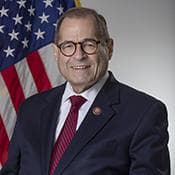
Full profile: /officials/N000002
Source: Congress.gov · FEC
Cosponsors (20)
Members who have signed on to support this bill since introduction. Source: Congress.gov.
- André Carson (D-IN-7)Original· 2026-01-09
- Darren Soto (D-FL-9)Original· 2026-01-09
- Dina Titus (D-NV-1)Original· 2026-01-09
- Eleanor Holmes Norton (D-DC)Original· 2026-01-09
- Emanuel Cleaver (D-MO-5)Original· 2026-01-09
- Eugene Simon Vindman (D-VA-7)Original· 2026-01-09
- Henry C. "Hank" Johnson, Jr. (D-GA-4)Original· 2026-01-09
- Lateefah Simon (D-CA-12)Original· 2026-01-09
- Luz M. Rivas (D-CA-29)Original· 2026-01-09
- Madeleine Dean (D-PA-4)Original· 2026-01-09
- Maxine Dexter (D-OR-3)Original· 2026-01-09
- Mike Quigley (D-IL-5)Original· 2026-01-09
- Pramila Jayapal (D-WA-7)Original· 2026-01-09
- Raja Krishnamoorthi (D-IL-8)Original· 2026-01-09
- Rashida Tlaib (D-MI-12)Original· 2026-01-09
- Ted Lieu (D-CA-36)Original· 2026-01-09
- Zoe Lofgren (D-CA-18)Original· 2026-01-09
- Brad Sherman (D-CA-32)· 2026-02-03
- Sydney Kamlager-Dove (D-CA-37)· 2026-02-24
Latest Action
The most recent step in the bill's legislative path. Committee Activity below shows referrals and reports; the full action-by-action history including floor proceedings lives at Congress.gov →
Committee Activity
Currently in
- House Committee on AgricultureReferred To · 2026-01-09
Plain-English Summary
This resolution expresses Congress's opposition to declawing cats for non-medical reasons, calling the procedure harmful to the animals' health and welfare. The measure reflects growing concern among lawmakers and veterinarians that elective declawing—removing a cat's claws surgically—causes pain, behavioral problems, and long-term complications for pets. The resolution does not ban the practice but signals that Congress believes cat owners and veterinarians should avoid the procedure except when medically necessary.
AI-assisted summary generated from the official bill metadata (title, subjects, actions) sourced from Congress.gov. Cached and reviewed. Always verify against the official text linked below.
Subjects
Full Bill Text
Verbatim text published on Congress.gov via GovInfo. Use Cmd+F / Ctrl+F to search within this excerpt.
[Congressional Bills 119th Congress] [From the U.S. Government Publishing Office] [H. Res. 985 Introduced in House (IH)] <DOC> 119th CONGRESS 2d Session H. RES. 985 Expressing opposition to the use of onychectomy, also known as declawing, for elective surgery in cats. _______________________________________________________________________ IN THE HOUSE OF REPRESENTATIVES January 9, 2026 Mr. Nadler (for himself, Mr. Carson, Mr. Cleaver, Ms. Dean of Pennsylvania, Ms. Dexter, Ms. Jayapal, Mr. Johnson of Georgia, Mr. Krishnamoorthi, Mr. Lieu, Ms. Lofgren, Ms. Norton, Mr. Quigley, Ms. Rivas, Ms. Simon, Mr. Soto, Ms. Titus, Ms. Tlaib, and Mr. Vindman) submitted the following resolution; which was referred to the Committee on Agriculture _______________________________________________________________________ RESOLUTION Expressing opposition to the use of onychectomy, also known as declawing, for elective surgery in cats. Whereas over 40,000,000 households in the United States have a cat or cats, and research shows that cats can improve psychological health, offer emotional support, and enhance quality of life; Whereas scratching is a normal, instinctive cat behavior done by cats to mark objects with visual cues and their scent, exercise muscles, relieve stress, express emotions, and manage claw health; Whereas onychectomy, also known as declawing, is a serious medical procedure in which a cat's third phalanges and claws are surgically removed; Whereas tendonectomy, often considered an alternative to onychectomy, cuts the tendons on each toe to prevent grasping motions, disabling normal function of their claws; Whereas these are painful procedures, preventing a cat from being able to use their claws and leaving them unable to properly scratch, affecting their balance, and rendering them unable to effectively defend themselves or fully express normal behaviors; Whereas there is ample evidence that links onychectomy and tendonectomy to life- long pain and adverse and long-lasting physical and behavioral effects on cats and that complications from these surgeries can include nerve damage, lameness, chronic pain, litter box aversion, and permanent disability; Whereas, for purposes of this resolution, the term ``declawing'' includes onychectomy and any surgical, chemical, or mechanical procedure that removes, severs, alters, or otherwise disables a cat's claws or the normal function of the claw, including through modification of tendons, ligaments, or other anatomical structures, but not including trimming the nonviable tips of the claws or placing temporary nail caps; Whereas tendonectomy is one example of a procedure used to disable a cat's claws by altering paw function, often described as an alternative to onychectomy; Whereas declawing as an elective surgery unnecessarily increases public health and safety risks as declawed cats become more prone to biting as a form of defense, leading to increased chance of infection for humans; Whereas there is no evidence that declawing reduces the number of cats surrendered to shelters; Whereas the behavioral implications, such as problems with litterbox use and biting, are common reasons cats are surrendered; Whereas there are many humane alternatives to address and coexist with scratching behaviors that involve no physical harm to the cat; Whereas there is widespread support for outlawing this practice, including from the Centers for Disease Control and Prevention, the International Society of Feline Medicine, and the American Association of Feline Practitioners; Whereas the Centers for Disease Control, US Public Health, National Institutes of Health, and Infectious Diseases Society of America have a joint position statement avowing declawing as unnecessary to protect human health; Whereas many countries have banned elective onychectomies by law, and in others the practice is considered unethical and prohibited under veterinary professional standards, including Australia, Austria, Belgium, Bosnia and Herzegovina, Brazil, Bulgaria, Cyprus, Czech Republic, Denmark, England, Finland, France, Germany, Greece, Ireland, Israel, Italy, Latvia, Lithuania, Luxembourg, Macedonia, Malta, Montenegro, Netherlands, New Zealand, Northern…
Show the remaining 341 wordsHide the remaining 341 words
Ireland, Norway, Portugal, Romania, Scotland, Serbia, Slovenia, Spain, Sweden, Switzerland, Turkey, Ukraine, and Wales; Whereas, in Canada, declawing is outlawed in 9 of the 10 provinces; Whereas multiple States, including New York, Maryland, Virginia, Massachusetts, Rhode Island, and California, have banned onychectomies and tendonectomies as elective procedures; Whereas several other States have introduced legislation but have yet to codify the bans into law; Whereas a number of municipalities have implemented bans or passed resolutions opposing this practice, including Malibu, Marin County, and Ojai, California; Denver, Colorado; Washington, District of Columbia; Volusia County, Florida; Buffalo Grove, Downers Grove, and Evanston, Illinois; the City of St. Louis and St. Louis County, Missouri; Allentown, Easton, Forks Township, and Pittsburgh, Pennsylvania; Austin, Texas; Tacoma, Washington; and Madison, Wisconsin; Whereas it is also outlawed in 8 California cities, including Berkeley, Beverly Hills, Burbank, Culver City, Los Angeles, San Francisco, Santa Monica, and West Hollywood; Whereas recognizing that the elective practice of onychectomy or tendonectomy is inhumane, and such recognition is an important step forward in prioritizing animal welfare in the United States: Now, therefore, be it Resolved, That the House of Representatives-- (1) opposes declawing, as defined in this resolution, when performed for cosmetic or aesthetic purposes, or for reasons of convenience in keeping or handling a cat, and encourages veterinary professionals to discourage the practice with vigor; (2) recognizes that these practices should only be performed when medically necessary for a therapeutic purpose for the physical health of the cat, meaning a medically necessary procedure to address an existing or recurring anatomical pathology issue such as infection, disease, injury, or abnormal condition in the claws, nail bed, or toe bone that jeopardizes the cat's health, and not for the purpose of convenience, property protection, or behavioral modification; (3) urges State legislatures that have not yet banned onychectomy (declawing) and tendonectomy for elective reasons to consider this on the grounds of animal welfare and public health; and (4) affirms the commitment of the United States to advancing the cause of animal protection and animal welfare. <all>
Related legislation
Bills by the same sponsor or covering overlapping subjects.
- HR10372FABRIC ActReferred to Committee · 2026-09-14
- HR9995Restoring Justice for Workers ActReferred to Committee · 2026-07-30
- HR9996No Surprise Bills for New Moms ActReferred to Committee · 2026-07-30
- HR8522PROTECT ActReferred to Committee · 2026-04-27