S1249Referred to Committee
Drone Integration and Zoning Act
Introduced
In Committee
3
Passed One Chamber4
Passed Both5
Signed into Law119th
Congress
2025-04-02
Introduced
0
Cosponsors
S
ⓘType
Sponsor
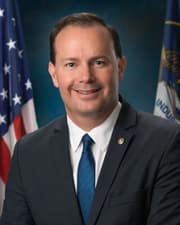
Mike Lee
Republican · UT · Senator
Votes with party: 73.6% (833 recorded votes)
Top industries funding sponsor:
- Conservative Groups$383k
Full profile: /officials/L000577
Source: Congress.gov · FEC
Cosponsors (0)
Members who have signed on to support this bill since introduction. Source: Congress.gov.
No cosponsors on record. Bills can pass without cosponsors — this often means the sponsor introduced the bill alone, either because it's a messaging bill, a chairman's mark, or simply early in the legislative cycle.
Latest Action
The most recent step in the bill's legislative path. Committee Activity below shows referrals and reports; the full action-by-action history including floor proceedings lives at Congress.gov →
Read twice and referred to the Committee on Commerce, Science, and Transportation.
2025-04-02
Source: Congress.gov
Plain-English Summary
Drone Integration and Zoning Act This bill requires the Federal Aviation Administration (FAA) to prescribe regulations or standards related to unmanned aircraft systems (i.e., drones) and allow limited state and local regulation of drones. The FAA must designate the area between 200 feet and 400 feet above ground level for use by (1) civil drones, and (2) commercial and recreational drones. The bill prohibits the FAA from authorizing the operation of civil drones within 200 feet above ground level above private property without the property owner's permission. For structures above this level, the FAA may not authorize civil drone operations (1) within 50 feet of the top of the structure, or (2) within 200 feet laterally or inside the property line, whichever is closer to the structure, with exceptions. Further, the bill specifies that the FAA must preserve state, local, and tribal authority to issue reasonable restrictions on the time, manner, and place of operation of drones below 200 feet above ground level. The bill includes additional exceptions to federal preemption requirements allowing for these entities to regulate specific drone activities. The FAA must also establish a process for the designation of authorized commercial routes , which must be at least 200 feet above ground level. The Department of Transportation must also establish a process for state, local, and tribal authorities to apply for a designation of complex airspace . This designation for an area allows the FAA to assign these entities with designated responsibilities for the management of drone operations.
Plain-English rewrite of the Congressional Research Service summary published on Congress.gov. Cached and reviewed.
Subjects
Transportation and Public Works
Full bill text is not yet cached locally.
Related legislation
Bills by the same sponsor or covering overlapping subjects.
- S5000A bill to authorize the President of the United States to issue cyber letters of marque and reprisal, and for other purposes.Referred to Committee · 2026-07-15
- S4931End EPA Abuse Act of 2026Referred to Committee · 2026-06-24
- S4708Arctic Security and Diplomacy ActReferred to Committee · 2026-06-17
- S1954Biosimilar Red Tape Elimination ActReferred to Committee · 2026-06-17