Over-the-Counter Monograph Drug User Fee Amendments
Sponsor
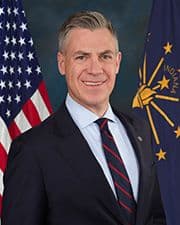
Full profile: /officials/B001299
Source: Congress.gov · FEC
Cosponsors (3)
Members who have signed on to support this bill since introduction. Source: Congress.gov.
Latest Action
The most recent step in the bill's legislative path. Committee Activity below shows referrals and reports; the full action-by-action history including floor proceedings lives at Congress.gov →
Placed on Senate Legislative Calendar under General Orders. Calendar No. 152.
2025-09-08
Source: Congress.gov
Committee Activity
Currently in
- Senate Committee on Health, Education, Labor, and PensionsReported By · 2025-09-08
Previously
- Health, Education, Labor, and Pensions CommitteeReported By · 2025-09-08
- Health, Education, Labor, and Pensions CommitteeMarkup By · 2025-07-30
- Senate Committee on Health, Education, Labor, and PensionsMarkup By · 2025-07-30
- Health, Education, Labor, and Pensions CommitteeReferred To · 2025-07-15
- Senate Committee on Health, Education, Labor, and PensionsReferred To · 2025-07-15
Plain-English Summary
Over-the-Counter Monograph Drug User Fee Amendments This bill reauthorizes the Over-the-Counter (OTC) Monograph Drug User Fee Program (OMUFA); revises procedures used by the Food and Drug Administration (FDA) to evaluate topical, nonprescription drugs (e.g., sunscreens); and requires the FDA to clarify the process through which a prescription drug may be switched to nonprescription status. Under current law, many OTC drugs are marketed through compliance with an OTC monograph issued by the FDA, rather than through an approved new drug application. Monographs establish the conditions under which OTC drugs are generally recognized as safe and effective. The bill reauthorizes the collection of OMUFA fees from OTC drug facilities through FY2030 and revises methods for calculating such fees. Separately, the bill requires the FDA to allow for the use of real-world evidence to demonstrate the safety and effectiveness of active ingredients in topical, nonprescription drugs. The FDA must consider nonclinical tests and other alternatives to animal testing in evaluating such drugs. The FDA must also issue guidance to clarify the application process for nonprescription drugs, including applications to switch a prescription drug to nonprescription status. The FDA must plan to engage stakeholders in identifying drugs that are promising candidates for a switch. Moreover, applicants seeking a switch may request to meet with the FDA to develop a plan for the requisite application. Finally, the Government Accountability Office must report on (1) the OTC monograph drug supply chain, and (2) the FDA’s handling of applications to switch a prescription drug to nonprescription status.
Plain-English rewrite of the Congressional Research Service summary published on Congress.gov. Cached and reviewed.
Subjects
Related legislation
Bills by the same sponsor or covering overlapping subjects.
- S5599River Ridge Land Conveyance ActReferred to Committee · 2026-09-29
- S5597Service Academy Testing Enhancement Act of 2026Referred to Committee · 2026-09-29
- S5596Military DEI Repeal Act of 2026Referred to Committee · 2026-09-29
- S5595Weapons Resupply, Stockpile, and Assurance ActReferred to Committee · 2026-09-29