S4142Referred to Committee
SHIELD Act
Introduced
In Committee
3
Passed One Chamber4
Passed Both5
Signed into Law119th
Congress
2026-03-19
Introduced
3
Cosponsors
S
ⓘType
Sponsor
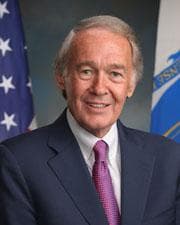
Edward J. Markey
Democrat · MA · Senator
Votes with party: 85.0% (908 recorded votes)
Full profile: /officials/M000133
Source: Congress.gov · FEC
Cosponsors (3)
Members who have signed on to support this bill since introduction. Source: Congress.gov.
Latest Action
The most recent step in the bill's legislative path. Committee Activity below shows referrals and reports; the full action-by-action history including floor proceedings lives at Congress.gov →
Committee Activity
Currently in
- Senate Committee on the JudiciaryReferred To · 2026-03-19
Previously
- Judiciary CommitteeReferred To · 2026-03-19
Plain-English Summary
The SHIELD Act would restrict federal funding and resources from being used to enforce immigration laws in certain ways, likely aiming to protect immigrants from deportation or limit immigration enforcement activities. The bill would affect immigration agencies, local law enforcement that cooperates with federal immigration authorities, and immigrant communities. It has been introduced in Congress but has not yet been debated or voted on.
AI-assisted summary generated from the official bill metadata (title, subjects, actions) sourced from Congress.gov. Cached and reviewed. Always verify against the official text linked below.
Subjects
Immigration
Full Bill Text
Verbatim text published on Congress.gov via GovInfo. Use Cmd+F / Ctrl+F to search within this excerpt.
[Congressional Bills 119th Congress] [From the U.S. Government Publishing Office] [S. 4142 Introduced in Senate (IS)] <DOC> 119th CONGRESS 2d Session S. 4142 To authorize the Attorney General to provide grants to States, units of local government, and organizations to support the recruitment, training, and development of staff and infrastructure needed to support the due process rights of individuals facing removal. _______________________________________________________________________ IN THE SENATE OF THE UNITED STATES March 19, 2026 Mr. Markey (for himself, Mr. Padilla, Mr. Schiff, and Ms. Warren) introduced the following bill; which was read twice and referred to the Committee on the Judiciary _______________________________________________________________________ A BILL To authorize the Attorney General to provide grants to States, units of local government, and organizations to support the recruitment, training, and development of staff and infrastructure needed to support the due process rights of individuals facing removal. Be it enacted by the Senate and House of Representatives of the United States of America in Congress assembled, SECTION 1. SHORT TITLES. This Act may be cited as the ``Securing Help for Immigrants through Education and Legal Development Act'' or the ``SHIELD Act''. SEC. 2. DEFINITIONS. In this Act: (1) Individual facing removal.--The term ``individual facing removal'' means an individual in a proceeding under section 235(b), 238, 240, or 241(a)(5) of the Immigration and Nationality Act (8 U.S.C. 1225(b), 1228, 1229a, and 1231(a)(5)). (2) Service area.--The term ``service area'' means the jurisdiction or geographical area in which an entity carries out activities using funds awarded under this Act. (3) State.--The term ``State'' means each of the several States, the District of Columbia, the Commonwealth of Puerto Rico, the United States Virgin Islands, Guam, American Samoa, and the Commonwealth of the Northern Mariana Islands. (4) Unit of local government.--The term ``unit of local government'' has the meaning given such term in section 901(a)(3) of the Omnibus Crime Control and Safe Streets Act of 1968 (34 U.S.C. 10251(a)(3)). SEC. 3. IMMIGRATION LEGAL SERVICES STAFF AND INFRASTRUCTURE DEVELOPMENT PROGRAM. (a) In General.--The Attorney General, acting through the Director of the Office for Access to Justice, shall award competitive workforce development and capacity building grants to eligible entities that are seeking to expand access to representation for individuals facing removal by increasing the workforce and strengthening the legal services infrastructure needed to provide such representation. (b) Eligibility Criteria.--An entity is eligible to receive a grant under this section if it is a-- (1) State or unit of local government that has allocated public funds towards the provision of immigration-related legal services, including legal representation, legal assistance, community navigation, and related services, to individuals facing removal; (2) a community-based organization, nonprofit organization, or educational institution that provides or coordinates immigration-related legal services to individuals facing removal; or (3) a community-based organization, nonprofit organization, or educational institution that recruits, trains, or mentors individuals who provide or will provide immigration-related legal services to individuals facing removal. (c) Application.--An eligible entity seeking a grant under this section shall submit to the Director of the Office for Access to Justice an application at such time, in such manner, and containing such information as the Director may reasonably require. (d) Use of Funds.--Funds awarded under this section shall be used to develop a workforce scaled to meet the representation needs of all individuals facing removal, grow the immigration-related legal services infrastructure, and enhance long-term capacity to provide high-quality, holistic, and linguistically appropriate legal services, which may include-- (1) workforce recruitment and training programs, such as educational, fellowship, clinical, job recruitment, and job training services aimed at increasing the number of lawyers, accredited representatives, social workers, and community navigators entering…
Show the remaining 1,609 wordsHide the remaining 1,609 words
the immigration legal services field; (2) technical assistance services, such as-- (A) substantive and technical skills-based trainings to improve the quality of representation provided to individuals facing removal; (B) language training to ensure legal staff are equipped to provide linguistically appropriate services; (C) specialized legal support to support representation in complex defense cases, including representation in Federal court and State court; and (D) leadership development, including management training and establishing appropriate supervisory systems; (3) local or regional coordination services to ensure a coordinated and efficient delivery of legal services to individuals facing removal; (4) retention improvement strategies to ensure sustainable growth of the immigration-related legal services field, including strategies to address caseload management, burnout, and organizational systems; (5) recruiting and retaining legal staff from underrepresented backgrounds and promoting diversity within the legal services field; (6) growing legal services infrastructure and representational capacity in locations with a significant unmet need for legal representation and with significantly less immigration-related legal services capacity in their service area than national averages; and (7) physical, administrative, and technological infrastructure resources in coordination with a use of funds described in paragraphs (1) through (6). (e) Contracts and Subawards.--A recipient of a grant under this section may, for purposes authorized under subsection (d), use all or a portion of that grant to contract with or make one or more subawards to one or more-- (1) community-based organization, nonprofit organization, private organization, or educational institution; or (2) units of local government. (f) Conditions.--As a condition of receiving a grant under this section, an eligible entity shall-- (1) submit to the Attorney General a certification that the proposed uses of grant funds by the entity-- (A) are consistent with this section; and (B) meet the criteria determined by the Attorney General, in consultation with the Director of the Office for Access to Justice; and (2) not later than 90 days after the end of each fiscal year for which an entity receives grant funds under this section, submit a report to the Director of the Office for Access to Justice that describes-- (A) the types of services being provided under the grant; (B) the service area; (C) the number of individuals recruited or retained through services funded under the grant; (D) the impact that staffing recruitment and retention has had on organizational capacity to represent more individuals within the service area; (E) the actual expenditures made in connection with the grant, including personnel and staffing structure and indirect costs; (F) the outcomes of services; and (G) a description of the continuing unmet representation needs of individuals facing removal in the service area and recommendations of supports and resources needed to meet them. (g) Grant Term.--The term of a grant under this section shall be 4 years, which may be renewed. (h) Supplement of Non-Federal Funds.--Any Federal funds received under this section shall be used to supplement, not supplant, Federal or non-Federal funds that would otherwise be available for activities funded under this section. SEC. 4. AUTHORITY AND DUTIES OF THE ADMINISTERING AGENCY. (a) Duties of the Director.--The Director of the Office for Access to Justice may promulgate such rules, policies, and procedures as may be necessary and appropriate to carry out the grant program under this Act, including the following: (1) Establishing competitive grantmaking procedures to identify grant recipients. (2) Targeting grants in a manner that best accomplishes the following objectives and priorities: (A) Advancing a legal services workforce trained and equipped to implement an independent legal defense for individuals facing removal that ensures high- quality, independent legal representation, regardless of ability to pay, prior contact with the criminal legal system, or the nature or perceived strength of their legal defense. (B) A national legal services infrastructure scaled to meet the representation needs of all individuals facing removal. (C) Long-term growth of organizational or programmatic capacity to provide high-quality, holistic, and linguistically appropriate legal services to individuals facing removal. (D) Providing support to State and local governments that have taken leadership and developed expertise in providing public funding for the legal defense of individuals facing removal. (E) Addressing the crisis of lack of representation in parts of the country where such publicly funded programs have not been established. (b) Independent Implementation.--Except as otherwise provided in this Act, the Attorney General, acting through the Director of the Office for Access to Justice, shall exercise the authority under this Act in an independent manner in order to advance the primary objective of increasing access to representation for individuals facing removal, and without regard to other priorities of the Federal Government related to immigration enforcement. SEC. 5. REPORTS AND ACCOUNTABILITY. (a) Reports and Evaluations.--For each fiscal year, each grantee under this section during that fiscal year shall submit to the Attorney General a report on the effectiveness of activities carried out using such grant. Each report shall include an evaluation in such form and containing such information as the Attorney General may reasonably require. The Attorney General shall specify the dates on which such reports shall be submitted. (b) Accountability.--Grants awarded under this Act shall be subject to the following accountability provisions: (1) Audit requirement.-- (A) Defined term.--In this paragraph, the term ``unresolved audit finding'' means a finding in the final audit report of the Inspector General of the Department of Justice under subparagraph (C) that the audited grantee has used grant funds for an unauthorized expenditure or otherwise unallowable cost that is not closed or resolved within 1 year after the date on which 1 final audit report is issued. (B) Audits.--Beginning in the first fiscal year beginning after December 13, 2016, and in each fiscal year thereafter, the Inspector General of the Department of Justice shall conduct audits of grantees under this section to prevent waste, fraud, and abuse of funds by grantees. The Inspector General shall determine the appropriate number of grantees to be audited each year. (C) Final audit report.--The Inspector General of the Department of Justice shall submit to the Attorney General a final report on each audit conducted under subparagraph (B). (D) Technical assistance.--A recipient of a grant under this section that is found to have an unresolved audit finding shall be eligible to receive prompt, individualized technical assistance to resolve the audit finding and to prevent future findings, for a period not to exceed the following 2 fiscal years. (E) Priority.--In making grants under this section, the Attorney General shall give priority to applicants that did not have an unresolved audit finding during the 3 fiscal years before submitting an application for a grant under this section. (2) Nonprofit agency requirements.-- (A) Defined term.--For purposes of this paragraph and the grant program authorized under this section, the term ``nonprofit agency'' means an organization that is described in section 501(c)(3) of the Internal Revenue Code of 1986 and is exempt from taxation under section 501(a) of the Internal Revenue Code of 1986. (B) Prohibition.--The Attorney General may not award a grant under this section to a nonprofit agency that holds money in an offshore account for the purpose of avoiding paying the tax described in section 511(a) of the Internal Revenue Code of 1986. (C) Disclosure.--Each nonprofit agency that is awarded a grant under this section and uses the procedures prescribed in regulations to create a rebuttable presumption of reasonableness for the compensation of its officers, directors, trustees, and key employees, shall disclose to the Attorney General, in the application for the grant, the process for determining such compensation, including the independent persons involved in reviewing and approving such compensation, the comparability data used, and contemporaneous substantiation of the deliberation and decision. Upon request, the Attorney General shall make the information disclosed under this subparagraph available for public inspection. (3) Conference expenditures.-- (A) Limitation.--Not more than $100,000 of the amounts made available to the Department of Justice to carry out this section may be used by the Attorney General, or by any individual or entity awarded a grant under this section to host, or make any expenditures relating to, a conference unless the Deputy Attorney General provides prior written authorization that the funds may be expended to host the conference or make such expenditure. (B) Written approval.--Written approval under subparagraph (A) shall include a written estimate of all costs associated with the conference, including the cost of all food, beverages, audio-visual equipment, honoraria for speakers, and entertainment. (C) Report.--The Deputy Attorney General shall submit an annual report to the Committee on the Judiciary of the Senate and the Committee on the Judiciary of the House of Representatives on all conference expenditures approved under this paragraph. (4) Annual certification.--Beginning in the first fiscal year beginning after the date of the enactment of this Act, the Attorney General shall submit an annual certification to the Committee on the Judiciary of the Senate, the Committee on Appropriations of the Senate, the Committee on the Judiciary of the House of Representatives, and the Committee on Appropriations of the House of Representatives that indicates whether all final audit reports issued by the Office of the Inspector General under paragraph (1) have been completed and reviewed by the appropriate Assistant Attorney General or the Director of the Office for Access to Justice. SEC. 6. AUTHORIZATION OF APPROPRIATIONS. There is authorized to be appropriated to the Department of Justice to carry out this Act $100,000,000 for each of the fiscal years 2026 through 2027. SEC. 7. RULES OF CONSTRUCTION. Nothing in this Act may be construed to preclude the ability for a respondent to obtain counsel at no expense to the Government pursuant to sections 240(b)(4) and 292 of the Immigration and Nationality Act (8 U.S.C. 1229a(b)(4) and 8 U.S.C. 1362). <all>
Related legislation
Bills by the same sponsor or covering overlapping subjects.
- S5567Civilian Climate Corps for Jobs and Justice ActReferred to Committee · 2026-09-24
- S5544Facial Recognition and Biometric Technology Moratorium Act of 2026Referred to Committee · 2026-09-24
- S5541Cybersecurity and AI Board of Investigations Act of 2026Referred to Committee · 2026-09-24
- S5524Workforce Opportunities for Communities in Recovery ActReferred to Committee · 2026-09-24