S5130Referred to Committee
Human Dignity and Emerging Technologies Act
Introduced
In Committee
3
Passed One Chamber4
Passed Both5
Signed into Law119th
Congress
2026-07-23
Introduced
1
Cosponsors
S
ⓘType
Sponsor
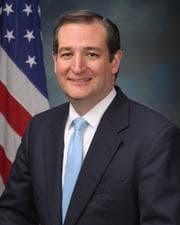
Ted Cruz
Republican · TX · Senator
Votes with party: 75.7% (868 recorded votes)
Top industries funding sponsor:
- Conservative Groups$464k
Full profile: /officials/C001098
Source: Congress.gov · FEC
Cosponsors (1)
Members who have signed on to support this bill since introduction. Source: Congress.gov.
Latest Action
The most recent step in the bill's legislative path. Committee Activity below shows referrals and reports; the full action-by-action history including floor proceedings lives at Congress.gov →
Read twice and referred to the Committee on Commerce, Science, and Transportation.
2026-07-23
Source: Congress.gov
Committee Activity
Currently in
- Senate Committee on Commerce, Science, and TransportationReferred To · 2026-07-23
Plain-English Summary
The proposal would create a new federal commission focused on protecting human dignity in areas like technology, medicine, and scientific research. The commission would study how emerging technologies and policies affect people's rights and well-being, and make recommendations to Congress on protecting individuals from potential harms. This would affect technology companies, researchers, healthcare providers, and the general public by establishing oversight of how new innovations are developed and used.
AI-assisted summary generated from the official bill metadata (title, subjects, actions) sourced from Congress.gov. Cached and reviewed. Always verify against the official text linked below.
Subjects
Government Operations and Politics
Full Bill Text
Verbatim text published on Congress.gov via GovInfo. Use Cmd+F / Ctrl+F to search within this excerpt.
[Congressional Bills 119th Congress] [From the U.S. Government Publishing Office] [S. 5130 Introduced in Senate (IS)] <DOC> 119th CONGRESS 2d Session S. 5130 To establish the United States Commission on Human Dignity, and for other purposes. _______________________________________________________________________ IN THE SENATE OF THE UNITED STATES July 23, 2026 Mr. Cruz (for himself and Mr. Warnock) introduced the following bill; which was read twice and referred to the Committee on Commerce, Science, and Transportation _______________________________________________________________________ A BILL To establish the United States Commission on Human Dignity, and for other purposes. Be it enacted by the Senate and House of Representatives of the United States of America in Congress assembled, SECTION 1. SHORT TITLE. This Act may be cited as the ``Human Dignity and Emerging Technologies Act''. SEC. 2. DEFINITIONS. In this Act: (1) Appropriate congressional committees.--The term ``appropriate congressional committees'' means-- (A) the Committee on Commerce, Science, and Transportation of the Senate; and (B) the Committee on Science, Space, and Technology of the House of Representatives. (2) Artificial intelligence.--The term ``artificial intelligence'' has the meaning given the term in section 5002 of the National Artificial Intelligence Initiative Act of 2020 (15 U.S.C. 9401). (3) Commission.--The term ``Commission'' means the United States Commission on Human Dignity established by section 3. SEC. 3. ESTABLISHMENT. There is established within the legislative branch of the Federal Government an independent, advisory commission to be known as the ``United States Commission on Human Dignity''. SEC. 4. PURPOSE. The purpose of the Commission is to provide independent advice to the Federal Government, including Congress, on the ethical and policy dimensions of developments in emerging technologies such as artificial intelligence to inform Federal policy. In carrying out this purpose, the Commission shall recognize the geopolitical dimensions of emerging technologies, including the challenge posed by foreign state actors whose documented use of such technologies threatens human dignity. SEC. 5. COMPOSITION AND APPOINTMENT. (a) Membership.-- (1) Appointment.--The Commission shall be composed of 17 members, of whom-- (A) 5 members shall be appointed by the President; (B) 4 members shall be appointed by the majority leader of the Senate, 2 of whom shall be chosen on the recommendation of the minority leader of the Senate; (C) 4 members shall be appointed by the Speaker of the House of Representatives, 2 of whom shall be chosen on the recommendation of the minority leader of the House of Representatives; and (D) 4 members shall be appointed by the appropriate congressional committees, with 2 members appointed by the respective chairs and 2 members appointed by the respective ranking members of each committee. (2) Qualifications.--Members appointed under paragraph (1) shall be selected only from among those who have demonstrated expertise and integrity in the fields of philosophy, ethics, civil rights, religion, social sciences, science, technology, medicine, or law. (3) Appointment deadline.--Members shall be appointed to the Commission under paragraph (1) not later than 180 days after the date of the enactment of this Act. If 1 or more appointments under paragraph (1) is not made by the appointment date, such position shall remain vacant until filled in the same manner in which the original appointment was required to be made. (b) Terms.--Members of the Commission shall serve 5-year terms, except that a member of the Commission may continue to serve after the expiration of the term of such member until a successor is appointed. (c) Removal.--A member of the Commission may only be removed from the Commission for cause. (d) Chairman; Vice Chairman.--The Commission shall, by majority vote, select a Chairman and Vice Chairman from among its members to serve 2-year terms in those offices. Neither office…
Show the remaining 709 wordsHide the remaining 709 words
shall control the budget of the Commission independently of a vote of the members of the Commission. (e) Staff.--The Chairman, in consultation with the Commission, shall appoint an Executive Director and such professional staff as are necessary to carry out the duties of the Commission, subject to the approval of the appropriate congressional committees. (f) Space for Use of Commission.--Not later than 180 days after the date of the enactment of this Act, the Administrator of General Services, in consultation with the Commission, shall identify and make available suitable excess space within the Federal space inventory to house the operations of the Commission. If the Administrator is not able to make such suitable excess space available within such 180-day period, the Commission may lease space to the extent the funds are available. (g) Initial Meeting.--The Commission shall meet and begin the operations of the Commission as soon as practicable. (h) Quorum.--After its initial meeting, the Commission shall meet upon the call of the Chairman or a majority of the members of the Commission. Nine members of the Commission shall constitute a quorum. (i) Vacancies.--Any vacancy in the Commission shall not affect its powers but shall be filled in the same manner in which the original appointment was made. SEC. 6. RESPONSIBILITIES AND DUTIES. (a) Responsibilities.--The Commission shall-- (1) defend the inherent dignity of the human person understood as unique, embodied, and endowed with a rational and moral nature, without regard to capability or condition, within Federal science and technology policy; and (2) cultivate humility in Federal science and technology policy regarding technological mastery over human nature amid geopolitical competition. (b) Duties.--The Commission shall carry out its responsibilities described in subsection (a) by carrying out the following duties: (1) Creating and updating materials, such as statements and principles to inform Federal science and technology policy. (2) Undertaking ongoing inquiry into the bioethical implications of the following developments in science and technology: (A) Robotics. (B) Artificial intelligence. (C) Biotechnologies. (D) Neurotechnologies. (E) Emerging clinical technologies. (3) Monitoring Federal science and technology programs, supported research, regulatory proposals, and emerging scientific and technological developments for threats to the inherent dignity of the human person. (4) Holding public hearings and receiving testimony from philosophers, ethicists, religious leaders, social scientists, scientists, technologists, medical professionals, legal scholars, and affected members of the public on Federal science and technology policy. (5) Annually issuing a report to the President and appropriate congressional committees with findings, policy options, and recommendations, with the opportunity for individual members of the Commission to offer dissenting views, to inform how Federal science and technology policy should align with the Commission's responsibilities under subsection (a). (6) Producing additional targeted reports or advisory opinions, as warranted, in line with the responsibilities set forth in subsection (a). SEC. 7. OVERSIGHT AND ETHICS. (a) Congressional Input and Oversight.-- (1) Evaluation of programs and policies.--Upon the request of an appropriate congressional committee, the Commission shall, to the extent practicable, evaluate a Federal science and technology program or policy that is in effect. (2) Availability of information and documents.--The Commission shall make available for inspection any information and documents requested by an appropriate congressional committee and respond to any requests to provide testimony before an appropriate congressional committee. (b) Information From Federal Agencies.--On request by the Chairman or by a majority vote of the Commission, the head of a Federal agency shall furnish information to the Commission. (c) Limitation on Authority.--The Commission shall be advisory only. Nothing in this Act shall be construed to authorize the Commission to issue regulations, compel action, adjudicate rights, enforce law, or otherwise regulate any private person. (d) Conflicts of Interest.--The Commission shall adopt, and make publicly available, a written conflict-of-interest policy for its members and staff. The policy shall establish procedures for the disclosure, review, recusal, and resolution of actual or apparent conflicts of interest. It shall be consistent with Federal ethics laws and with the ethics rules of the Senate and the House of Representatives, as applicable. SEC. 8. AUTHORIZATION OF APPROPRIATIONS. There is authorized to be appropriated to the Commission $2,000,000 for each of fiscal years 2027 through 2031 to carry out the duties of the Commission. SEC. 9. TERMINATION OF AUTHORITY. The Commission shall terminate on October 1, 2032. <all>
Related legislation
Bills by the same sponsor or covering overlapping subjects.
- S283Illegal Red Snapper and Tuna Enforcement ActEnacted into Law · 2026-10-15
- S4668Protect College Sports Act of 2026Passed Senate · 2026-10-05
- S4009Falun Gong and Victims of Forced Organ Harvesting Protection ActPassed Senate · 2026-10-05
- S3798Safe Access to Cash Act of 2026Passed Senate · 2026-10-05