Reimagining Education and Skills through Unified Longitudinal Talent Systems (RESULTS) Act of 2026
Sponsor
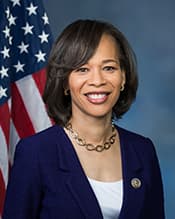
Full profile: /officials/B001303
Source: Congress.gov · FEC
Cosponsors (1)
Members who have signed on to support this bill since introduction. Source: Congress.gov.
Latest Action
The most recent step in the bill's legislative path. Committee Activity below shows referrals and reports; the full action-by-action history including floor proceedings lives at Congress.gov →
Read twice and referred to the Committee on Health, Education, Labor, and Pensions.
2026-07-29
Source: Congress.gov
Committee Activity
Currently in
- Senate Committee on Health, Education, Labor, and PensionsReferred To · 2026-07-29
Plain-English Summary
States would be encouraged to build better computer systems that collect and share education and workforce data within their borders, making it easier for schools, colleges, and employers to track student progress and job training outcomes while keeping information secure and private. This would help educators and policymakers identify which programs work best and where students need more support, ultimately improving educational quality and job readiness for students and workers.
AI-assisted summary generated from the official bill metadata (title, subjects, actions) sourced from Congress.gov. Cached and reviewed. Always verify against the official text linked below.
Subjects
Full Bill Text
Verbatim text published on Congress.gov via GovInfo. Use Cmd+F / Ctrl+F to search within this excerpt.
[Congressional Bills 119th Congress] [From the U.S. Government Publishing Office] [S. 5157 Introduced in Senate (IS)] <DOC> 119th CONGRESS 2d Session S. 5157 To promote the use of accessible, seamless, intrastate data available through robust, secure, and tailored statewide longitudinal data systems, and for other purposes. _______________________________________________________________________ IN THE SENATE OF THE UNITED STATES July 29, 2026 Ms. Blunt Rochester (for herself and Mr. Marshall) introduced the following bill; which was read twice and referred to the Committee on Health, Education, Labor, and Pensions _______________________________________________________________________ A BILL To promote the use of accessible, seamless, intrastate data available through robust, secure, and tailored statewide longitudinal data systems, and for other purposes. Be it enacted by the Senate and House of Representatives of the United States of America in Congress assembled, SECTION 1. SHORT TITLE. This Act may be cited as the ``Reimagining Education and Skills through Unified Longitudinal Talent Systems (RESULTS) Act of 2026''. SEC. 2. PURPOSES. The purposes of this Act are-- (1) to promote the use of accessible, seamless data available through robust, secure, and tailored statewide longitudinal data systems that-- (A) protect privacy and confidentiality in accordance with applicable Federal and State privacy laws; and (B) connect early childhood education, elementary school and secondary school, postsecondary education, adult education, workforce development, and employment outcomes data, in order to help State and local policymakers address emerging and longstanding cross- sector challenges and provide communities insights they need to make informed decisions about their education and workforce training options; (2) to modernize section 208 of the Educational Technical Assistance Act of 2002 (20 U.S.C. 9607), as in effect on the day before the date of enactment on this Act, with a more flexible, consolidated source of funding that States can use to improve their statewide longitudinal data systems, including the infrastructure and capacity of those systems; and (3) to support more robust statewide longitudinal data systems in order to ensure consistency and compatibility of data elements, formats, and structures. SEC. 3. GRANT PROGRAM FOR STATEWIDE LONGITUDINAL DATA SYSTEMS. Section 208 of the Educational Technical Assistance Act of 2002 (20 U.S.C. 9607) is amended to read as follows: ``SEC. 208. GRANT PROGRAM FOR STATEWIDE LONGITUDINAL DATA SYSTEMS. ``(a) Definitions.--In this section: ``(1) ESEA definitions.--The terms `elementary school' and `secondary school' have the meanings given those terms in section 8101 of the Elementary and Secondary Education Act of 1965 (20 U.S.C. 7801). ``(2) Area career and technical education school.--The term `area career and technical education school' has the meaning given such term in section 3 of the Carl D. Perkins Career and Technical Education Act of 2006 (20 U.S.C. 2302). ``(3) Eligible entity.--The term `eligible entity' means-- ``(A) the Governor of a State; or ``(B) a State agency, data governance entity, or public sector organization that oversees the statewide longitudinal data system, provided that such entity is designated by the Governor to administer or coordinate activities under this section. ``(4) Institution of higher education.--The term `institution of higher education' has the meaning given that term in section 102 of the Higher Education Act of 1965 (20 U.S.C. 1002). ``(5) Statewide longitudinal data system.--The term `statewide longitudinal data system' means a data system operated at the State level by an eligible entity that connects individual-level data from early childhood education, elementary school and secondary school, postsecondary education, adult education, workforce development, employment outcomes (including unemployment insurance wage records), and other data sources, as determined by the State, in a manner that-- ``(A)(i) protects and promotes individual privacy and data security, in accordance with applicable Federal and State privacy laws, including section 444 of…
Show the remaining 2,462 wordsHide the remaining 2,462 words
the General Education Provisions Act (20 U.S.C. 1232g; commonly known as the `Family Educational Rights and Privacy Act of 1974') and section 445 of such Act (20 U.S.C. 1232h; commonly known as the `Protection of Pupil Rights Amendment'); ``(ii) increases data transparency; and ``(iii) minimizes reporting burden; and ``(B) enhances the ability of the public, researchers, policymakers, practitioners, and States to efficiently and accurately access, manage, analyze, and use data to inform decision-making and improve educational and employment opportunities and outcomes, including academic achievement, postsecondary education access and completion, and labor market outcomes. ``(b) Grants Authorized.-- ``(1) In general.--The Secretary, acting through the Director of the Institute of Education Sciences and in consultation with the Secretary of Labor, shall award grants, on a competitive basis, to eligible entities to enable those eligible entities to create, modernize, and improve the State's statewide longitudinal data system in accordance with this section. ``(2) Determination of funding level.--In determining the amount of a grant awarded under this section, the Secretary shall consider-- ``(A) the size and geographic diversity of the State represented by the eligible entity as compared to all States receiving a grant under this section; ``(B) the potential direct and demonstrative impact of the State's proposed activities; and ``(C) the technical quality of the proposed activity, including peer review of the proposal. ``(3) Applications.--An eligible entity that desires a grant under this section shall submit an application to the Secretary at such time, in such manner, and containing such information as the Secretary may reasonably require, including-- ``(A) a description of the development and modernization plan for the statewide longitudinal data system, which shall-- ``(i) identify the State data needs and demonstrate a comprehensive strategy for infrastructure and capacity to meet those needs; ``(ii) include a learning agenda identifying priority policy and program questions the statewide longitudinal data system will be used to answer, or if a statewide longitudinal data system has not published a learning agenda, include a plan to develop such a learning agenda and policies to ensure regular review of that learning agenda; ``(iii) include a plan to conduct periodic capacity assessments of the State's ability to use the statewide longitudinal data system to generate actionable evidence of what works to improve academic and workforce outcomes, and to develop capacity within the State for such use; ``(iv) designate cross-agency roles (such as a chief data officer, chief evaluation officer, or chief privacy officer) to coordinate evidence-building activities and facilitate access for qualified researchers, including those external to the State, under appropriate privacy and security protections; ``(v) ensure the availability of data through interactive resources containing education-to-employment statistics and open datasets containing aggregate statistics that the public can access and download; ``(vi) describe the methods and procedures the eligible entity will use to ensure the security and privacy of the collection, storage, and use of the data involved in the statewide longitudinal data system in accordance with all applicable Federal and State privacy laws, including section 444 of the General Education Provisions Act (20 U.S.C. 1232g; commonly known as the `Family Educational Rights and Privacy Act of 1974') and section 445 of such Act (20 U.S.C. 1232h; commonly known as the `Protection of Pupil Rights Amendment'); ``(vii) describe how the eligible entity will ensure interoperability of de-identified data, including through the use of structured, open, linked, interoperable, and durable (SOLID) data formats; and ``(viii) include a detailed budget; ``(B) a description of the expected outcomes and outputs that will result from the activities described in the proposed plan; ``(C) the Federal performance reporting requirements the statewide longitudinal data system will support and how such efforts will reduce administrative burden and duplication of effort; ``(D) the manner in which the modernized statewide longitudinal data system will be used to improve transparency in relation to, among other things, program quality, education and career outcomes and opportunities, labor market trends, and changes to job skills needed to obtain employment, including for in- demand jobs; and ``(E) the extent to which the modernized statewide longitudinal data system will be used to enhance collaboration with the end-users of education, workforce, and labor market data as outlined in subsection (c)(2)(F). ``(4) Duration.--A grant awarded under this section may be for a period of not more than 4 years. ``(5) Supplement, not supplant.--Funds made available under this section shall be used to supplement, and not supplant, other Federal, State, or local funds used for development of State data systems. ``(c) Uses of Funds.-- ``(1) Requirements for data systems.-- ``(A) In general.--Grants under this section shall be used to support statewide longitudinal data systems that meet the following requirements: ``(i) At a minimum, include, or seek to include, and integrate individual level and administrative data from-- ``(I) public early childhood education, public elementary schools and secondary schools, public institutions of higher education, and public area career and technical education schools; ``(II) workforce programs funded through the Workforce Innovation and Opportunity Act (29 U.S.C. 3101 et seq.), including education and training providers receiving such funding through State or local funding streams, programs for which an individual may be eligible to receive a Workforce Pell Grant under section 401(k) of the Higher Education Act of 1965 (20 U.S.C. 1070a(k)), and apprenticeships registered under the Act of August 16, 1937 (commonly known as the `National Apprenticeship Act'; 50 Stat. 664, chapter 663; 29 U.S.C. 50 et seq.); and ``(III) unemployment insurance and other statewide data sources with access to labor market outcomes or wage record data, in accordance with privacy and data security requirements of the State. ``(ii) Are able to, or seek to, disaggregate data by race, ethnicity, socio- economic status, age, disability status, and gender across the levels of early childhood education, elementary and secondary education, postsecondary education, and the workforce. ``(iii) Protect student privacy consistent with all applicable Federal and State privacy laws, including section 444 of the General Education Provisions Act (20 U.S.C. 1232g; commonly known as the `Family Educational Rights and Privacy Act of 1974') and section 445 of such Act (20 U.S.C. 1232h; commonly known as the `Protection of Pupil Rights Amendment'). ``(iv) Are governed through an interagency governance structure involving all agency data contributors and established through statute, regulation, intergovernmental agreement, or other formal legal structure. ``(B) Permissible elements.--Data systems supported under this section may include other data systems, such as-- ``(i) juvenile justice and child welfare data systems; ``(ii) data systems relating to private early childhood education, private elementary schools and secondary schools, private institutions of higher education, and private area career and technical education schools; ``(iii) health records; ``(iv) correctional systems; ``(v) work-based, workplace, and employer- provided training records; and ``(vi) other data systems determined appropriate by the eligible entity. ``(2) Additional uses of funds.--In addition to supporting statewide longitudinal data systems in accordance with paragraph (1), eligible entities receiving a grant under this section shall use grant funds to carry out one or more of the following activities: ``(A) Data governance.--Activities such as-- ``(i) supporting the implementation of statewide data governance structures that include, at a minimum, all State agencies that contribute data to the statewide longitudinal data system, the director of the statewide longitudinal data system, a data governance director, and public stakeholders; ``(ii) funding a Chief Data Office or Chief Evaluation Officer; and ``(iii) funding a Chief Privacy Officer and capacity for legal expertise on de- identification, risk management, and data sharing. ``(B) Accountability and reporting.--Establishing the policies and processes to use the statewide longitudinal data system as the primary infrastructure for meeting existing Federal education and workforce accountability and performance reporting requirements (such as requirements under the Higher Education Act of 1965 (20 U.S.C. 1001 et seq.)), (including the Workforce Pell Grant program under section 401(k) of such Act (20 U.S.C. 1070a(k)), the Elementary and Secondary Education Act of 1965 (20 U.S.C. 6301 et seq.), the Carl D. Perkins Career and Technical Education Act of 2006 (20 U.S.C. 2301 et seq.), the Workforce Innovation and Opportunity Act (29 U.S.C. 3101 et seq.), the Head Start Act (42 U.S.C. 9831 et seq.), the Individuals with Disabilities Education Act (20 U.S.C. 1400 et seq.), section 6(d)(4) of the Food and Nutrition Act of 2008 (7 U.S.C. 2015(d)(4)), and the temporary assistance for needy families program established under part A of title IV of the Social Security Act (42 U.S.C. 601 et seq.)). ``(C) Accessibility of data.--Facilitating access, as appropriate and in accordance with applicable data privacy laws, to the data within the statewide longitudinal data system for students, parents, workers, employers, researchers, State and local policymakers, schools, workforce training program providers, community nonprofit organizations, and others, by carrying out activities such as-- ``(i) creating data dashboards, public data portals, open aggregate datasets, and reports that can be queried and have de-identified information that can be sorted and aggregated in different ways for public consumption; ``(ii) creating one-way, secure data portals that allow schools, institutions of higher education, and workforce training providers (defined as providers under section 122(a)(2) of the Workforce Innovation and Opportunity Act (29 U.S.C. 3152(a)(2))) to access outcomes data for their students or program participants for a set period of time; ``(iii) creating individual student dashboards with personally identifiable information that parents, counselors, and teachers can access through a secure portal to assist in identifying whether students are on- track for graduation and planning for college and careers after graduation; or ``(iv) developing policies, processes, and protocols that allow State agencies, alone or in partnership with public or private nonprofit institutions of higher education or nonprofit research organizations, to conduct research related to topics such as student academic outcomes, postsecondary and workforce training program quality, earnings outcomes of education and workforce training program participants, and high-quality career pathways and trajectories. ``(D) Expanding datasets and formats.--Supporting a partnership between the eligible entity and State educational agencies, institutions of higher education, State workforce agencies, workforce training providers, or employers, in order to-- ``(i) enhance State unemployment insurance systems to collect additional data on jobs and employment, including at a minimum, job titles or occupation codes; ``(ii) expand the data collection systems of postsecondary educational institutions to include data from private postsecondary educational institutions and data on all types of program offerings, whether offered for credit or noncredit; or ``(iii) expand the adoption and use of structured, open, linked, interoperable, and durable (SOLID) data formats on knowledge, skills, and abilities represented through credentials, occupational job descriptions, and learning assertions, including through the development of a talent marketplace, tools and services designed to help learners and workers make informed decisions, or an interstate data sharing agreement. ``(E) Multistate data collaborative.--Participating in, and contributing data to, a multi-State data collaborative, including efforts that provide participating States the ability to better understand and support-- ``(i) earnings and employment outcomes of individuals who work out-of-State; ``(ii) interstate earnings and employment trends; ``(iii) standards-based jobs and employment data including, at a minimum, job titles or occupation codes; and ``(iv) multistate open source data infrastructure and the development and maintenance of collaboratively managed software that supports cost-efficient and advanced data systems within or across States. ``(F) Enhancing collaboration.--Enhancing collaboration with private sector education, workforce, and labor market data entities and the end-users of workforce and labor market data, including individuals, employers, economic development agencies, researchers, and nonprofit external providers working in partnership with public or private nonprofit institutions of higher education to-- ``(i) improve the presentation and availability of workforce outcome data as it pertains to degree and credential attainment and student success for education and training providers, with a goal of improving the timeliness, relevance, and accessibility of such data, including through pilot projects; and ``(ii) provide training to public elementary schools and secondary schools, public nonprofit institutions of higher education, workforce training providers, and community-based organizations on interpreting data. ``(G) Data security and privacy.--Ensuring data security and the protection of an individual's data privacy, including-- ``(i) defining policies or guidelines for data collection, storage, sharing, analysis, and use that ensure compliance with relevant Federal and State privacy and security laws (including regulations); ``(ii) reviewing policies and procedures on how the eligible entity will adhere to all applicable Federal and State privacy laws and protections, including section 444 of the General Education Provisions Act (20 U.S.C. 1232g; commonly known as the `Family Educational Rights and Privacy Act of 1974') and section 445 of such Act (20 U.S.C. 1232h; commonly known as the `Protection of Pupil Rights Amendment'), in the building, maintenance, and use of their statewide longitudinal data systems; and ``(iii) providing privacy and cybersecurity training for individuals that interact with personally identifiable information to ensure compliance with all applicable Federal and State privacy laws. ``(H) Artificial intelligence.--Exploring evidence- based, innovative, and secure methods of leveraging artificial intelligence in conjunction with a statewide longitudinal data system while complying with all applicable Federal and State privacy laws and the National Institute of Standards and Technology's Artificial Intelligence Risk Management Framework. ``(I) Replication and adoption.--Accelerating the replication and adoption of data systems, projects, products, or practices already in use in one or more other States. ``(J) Staff capacity.--Improving State and local staff capacity to understand, use, and analyze data to improve decision-making, educational achievement, and education and workforce outcomes. ``(d) Report.--Not later than 180 days after the conclusion of the grant period, each eligible entity that receives a grant under this section shall submit a report to the Secretary on the activities supported through the grant. ``(e) Authorization of Appropriations; Funding Awards.-- ``(1) Authorization of appropriations.--There are authorized to be appropriated to carry out this section such sums as may be necessary. ``(2) Funding awards.--The Secretary shall award to each State an amount as required under the applicable provisions of this Act on the date such funds become available for obligation.''. SEC. 4. ACCESS TO NATIONAL DIRECTORY OF NEW HIRES. Section 116(i) of the Workforce Innovation and Opportunity Act (29 U.S.C. 3141(i)) is amended-- (1) in paragraph (2), by inserting ``, and may use information provided from the National Directory of New Hires in accordance with section 453(j)(8) of the Social Security Act (42 U.S.C. 653(j)(8))'' after ``State law''; (2) by redesignating paragraph (3) as paragraph (4); and (3) by inserting after paragraph (2) the following: ``(3) Designated entity.--The Governor shall designate a State agency (or appropriate State entity) to assist in carrying out the performance reporting requirements for core programs and eligible providers of training services. The designated State agency (or appropriate State entity) shall be responsible for-- ``(A) facilitating data matches using quarterly wage record information, including wage record information made available by other States, to measure employment and earnings outcomes; ``(B) data validation and reliability, as described in subsection (d)(5); and ``(C) protection against disaggregation that would violate applicable privacy standards, as described in subsection (d)(6)(C).''. <all>
Related legislation
Bills by the same sponsor or covering overlapping subjects.
- S5424Community Health Worker Access ActReferred to Committee · 2026-09-17
- S5115Farmers Lifeline Options for Overcoming Disasters (FLOOD) ActReferred to Committee · 2026-07-23
- SCONRES36A concurrent resolution recognizing the significance of equal pay and the disparity in wages paid to men and to Black women.Referred to Committee · 2026-07-21
- S5050Expanding AI Voices ActReferred to Committee · 2026-07-21