STOP the SWAMP Act
Sponsor
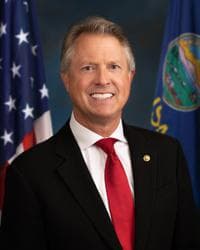
- Conservative Groups$1,092k
Full profile: /officials/M001198
Source: Congress.gov · FEC
Cosponsors (0)
Members who have signed on to support this bill since introduction. Source: Congress.gov.
No cosponsors on record. Bills can pass without cosponsors — this often means the sponsor introduced the bill alone, either because it's a messaging bill, a chairman's mark, or simply early in the legislative cycle.
Latest Action
The most recent step in the bill's legislative path. Committee Activity below shows referrals and reports; the full action-by-action history including floor proceedings lives at Congress.gov →
Read twice and referred to the Committee on Homeland Security and Governmental Affairs.
2026-08-04
Source: Congress.gov
Committee Activity
Currently in
- Senate Committee on Homeland Security and Governmental AffairsReferred To · 2026-08-04
Plain-English Summary
Plain-English summary pending. Introduced on 2026-08-04. Check back soon — summaries are generated as bills progress through Congress.
Subjects
Full Bill Text
Verbatim text published on Congress.gov via GovInfo. Use Cmd+F / Ctrl+F to search within this excerpt.
[Congressional Bills 119th Congress] [From the U.S. Government Publishing Office] [S. 5228 Introduced in Senate (IS)] <DOC> 119th CONGRESS 2d Session S. 5228 To amend the Revised Statutes to provide that a person who refuses to answer certain questions or is finally convicted of perjury before either House of Congress shall be debarred from Federal employment, and for other purposes. _______________________________________________________________________ IN THE SENATE OF THE UNITED STATES August 4, 2026 Mr. Marshall introduced the following bill; which was read twice and referred to the Committee on Homeland Security and Governmental Affairs _______________________________________________________________________ A BILL To amend the Revised Statutes to provide that a person who refuses to answer certain questions or is finally convicted of perjury before either House of Congress shall be debarred from Federal employment, and for other purposes. Be it enacted by the Senate and House of Representatives of the United States of America in Congress assembled, SECTION 1. SHORT TITLE. This Act may be cited as the ``Safeguarding Transparency and Oversight to Prevent the Spread of Washington's Administrative Misconduct and Partisanship Act'' or the ``STOP the SWAMP Act''. SEC. 2. CONGRESSIONAL AND COMMITTEE PROCEDURES; INVESTIGATIONS. (a) Debarment of Certain Witnesses From Federal Employment.-- Section 102 of the Revised Statutes of the United States (2 U.S.C. 192) is amended-- (1) by striking ``Every'' at the beginning and inserting the following: ``(a) Every''; (2) by striking ``, or who, having appeared, refuses to answer any question pertinent to the question under inquiry,''; and (3) by adding at the end the following: ``(b) Every person who having been summoned as a witness pursuant to subsection (a), having appeared, refuses to answer any question pertinent to the question under inquiry, shall, in addition to any other penalties provided by law, be-- ``(1) deemed guilty of a misdemeanor, punishable by a fine of not more than $1,000 nor less than $100 and imprisonment in a common jail for not less than one month nor more than twelve months; and ``(2) debarred from Federal employment. ``(c)(1) In this subsection, the term `finally convicted' means a conviction that-- ``(A) has not been appealed and is no longer appealable because the time for taking an appeal has expired; or ``(B) has been appealed and the appeals process for which is completed. ``(2) Every person who having been summoned as a witness pursuant to subsection (a), having appeared, is finally convicted of perjury under section 1621 of title 18, United States Code, or an offense under section 1001 of that title, shall, in addition to any other penalties provided by law, be debarred from Federal employment. ``(d) A person who is found in violation of subsection (b) or (c) who is a Federal employee shall, in addition to any other penalties provided by law, be removed from the civil service, as such term is defined in section 2101 of title 5, United States Code. ``(e) Any debarment from Federal employment pursuant to this section shall be subject to judicial review.''. (b) Procedures for Rescinding Salary Funds.--Section 104 of the Revised Statutes (2 U.S.C. 194) is amended-- (1) by striking ``Whenever'' at the beginning and inserting the following: ``(a) Whenever''; (2) by striking ``filed with the President of the Senate or the Speaker of the House, it shall be the duty of the said President of the Senate or Speaker of the House, as the case may be,'' and inserting ``filed with an appropriate Member of Congress, it shall be the duty of the said appropriate Member of Congress,''; and (3) by adding at the end the following: ``(b) Not later than 180 days after…
Show the remaining 457 wordsHide the remaining 457 words
the date of certification of a statement of facts to a United States attorney pursuant to subsection (a), any Member of either House may introduce a joint resolution to rescind funds appropriated or otherwise made available for the salary and expenses of a witness who is a Federal employee from the employing entity of the witness for the fiscal year. Such joint resolution shall be privileged, subject to judicial review, and further subject to the following procedures: ``(1) A joint resolution shall be referred to the Committee on Appropriations of the House of Representatives or the Committee on Appropriations of the Senate, as the case may be, and one such joint resolution shall be reported out by such committee together with its recommendations within 15 calendar days, unless such House shall otherwise determine by the yeas and nays. ``(2) A joint resolution so reported shall become the pending business of the House in question (in the case of the Senate the time for debate shall be equally divided between the proponents and the opponents) and shall be voted on within 20 calendar days thereafter, unless such House shall otherwise determine by yeas and nays. ``(3) A joint resolution passed by 1 House shall be referred to the committee of the other House named in subsection (a) and shall be reported out by such committee together with its recommendations within 15 calendar days and shall thereupon become the pending business of such House and shall be voted upon within 3 calendar days, unless such House shall otherwise determine by yeas and nays. ``(4) In the case of any disagreement between the 2 Houses of Congress with respect to a joint resolution passed by both Houses, conferees shall be promptly appointed and the committee of conference shall make and file a report with respect to such joint resolution within 6 calendar days after the legislation is referred to the committee of conference. Notwithstanding any rule in either House concerning the printing of conference reports in the Congressional Record or concerning any delay in the consideration of such reports, such report shall be acted on by both Houses not later than 6 calendar days after the conference report is filed. In the event the conferees are unable to agree within 15 days, the conferees shall report back to their respective Houses in disagreement. ``(c) In this section, the term `appropriate Member of Congress' means-- ``(1) the President of the Senate; ``(2) the Speaker of the House; ``(3) the chair or ranking member of the committee of the House of Congress in which the witness appeared pursuant to section 102; or ``(4) the chair or ranking member of the Committee on Oversight and Government Reform of the House of Representatives.''. <all>
Related legislation
Bills by the same sponsor or covering overlapping subjects.
- S2403Retire through Ownership ActPassed Senate · 2026-10-05
- S5672Patients First Act of 2026Referred to Committee · 2026-09-30
- S5156Retirement Simplification and Clarity ActReferred to Committee · 2026-07-29
- S2355Patients Deserve Price Tags ActReported by Committee · 2026-07-27