COLLUDE Act
Sponsor
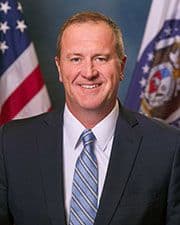
- Conservative Groups$1,449k
Full profile: /officials/S001227
Source: Congress.gov · FEC
Cosponsors (0)
Members who have signed on to support this bill since introduction. Source: Congress.gov.
No cosponsors on record. Bills can pass without cosponsors — this often means the sponsor introduced the bill alone, either because it's a messaging bill, a chairman's mark, or simply early in the legislative cycle.
Latest Action
The most recent step in the bill's legislative path. Committee Activity below shows referrals and reports; the full action-by-action history including floor proceedings lives at Congress.gov →
Read twice and referred to the Committee on Commerce, Science, and Transportation.
2025-01-09
Source: Congress.gov
Committee Activity
Currently in
- Senate Committee on Commerce, Science, and TransportationReferred To · 2025-01-09
Plain-English Summary
Curtailing Online Limitations that Lead Unconstitutionally to Democracy's Erosion Act or the COLLUDE Act This bill limits federal liability protection, sometimes referred to as Section 230 protection, that generally precludes providers and users of an interactive computer service (e.g., a social media company) from being held legally responsible for content provided by a third party. Specifically, the bill removes the protection if a provider restricts access to or availability of content containing political speech because of a governmental request unless the request serves a legitimate law enforcement or national security purpose. In addition, the bill changes legal procedures for applying the protection. Currently, the protection serves as broad immunity that typically allows the early dismissal of lawsuits, thereby preempting lawsuits and statutes that impose liability for third-party content. This bill makes the protection an affirmative defense, which means the provider or user must prove that the protection applies before the lawsuit may be dismissed.
Plain-English rewrite of the Congressional Research Service summary published on Congress.gov. Cached and reviewed.
Subjects
Related legislation
Bills by the same sponsor or covering overlapping subjects.
- S5617Combating Critical Infrastructure Vandalism Act of 2026Referred to Committee · 2026-09-30
- S5584Restoring American Citizenship Act of 2026Referred to Committee · 2026-09-29
- S5593Yaeli Martinez Child Protection ActReferred to Committee · 2026-09-29
- S5572Modern Skies ActReferred to Committee · 2026-09-28