American Housing and Economic Mobility Act of 2025
Sponsor
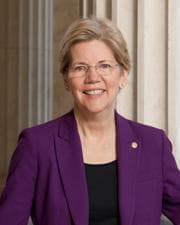
Full profile: /officials/W000817
Source: Congress.gov · FEC
Cosponsors (9)
Members who have signed on to support this bill since introduction. Source: Congress.gov.
- Andy Kim (D-NJ)Original· 2025-03-11
- Bernard Sanders (I-VT)Original· 2025-03-11
- Chris Van Hollen (D-MD)Original· 2025-03-11
- Edward J. Markey (D-MA)Original· 2025-03-11
- Mazie K. Hirono (D-HI)Original· 2025-03-11
- Peter Welch (D-VT)Original· 2025-03-11
- Raphael G. Warnock (D-GA)Original· 2025-03-11
- Richard Blumenthal (D-CT)Original· 2025-03-11
- Ben Ray Luján (D-NM)· 2025-03-14
Latest Action
The most recent step in the bill's legislative path. Committee Activity below shows referrals and reports; the full action-by-action history including floor proceedings lives at Congress.gov →
Plain-English Summary
American Housing and Economic Mobility Act of 2025 This bill addresses housing affordability and availability through grants, housing programs, and oversight of financial institutions. The bill also makes certain changes to the estate tax, such as by generally increasing the rate. The Department of Housing and Urban Development shall provide grants to (1) state, local, and tribal governments to remove barriers to building affordable units, (2) states to assist borrowers who have negative equity in their homes, (3) state housing finance agencies to support construction of affordable rental housing and prevent tenant displacement and harassment, and (4) eligible individuals (generally, lower income individuals who are first generation homebuyers) to help them purchase their first homes. The bill establishes and provides funding for the first-time homeowner grant program and the affordable rental housing construction program, and it also funds existing rural housing programs. The bill also requires financial regulators to generally assess the effectiveness of financial institutions in meeting the credit and lending needs of their communities, particularly of underserved populations. The bill also expands fair housing protections to prohibit discrimination based on sexual orientation, gender identity, marital status, source of income, veteran status, or an individual's perceived membership in a protected class (e.g., an individual's perceived race or sex). Additionally, the bill modifies the estate tax in various ways, including by reducing the number of brackets to three, increasing the tax rates, and reducing the basic exemption amount. The bill also places additional taxes on high-income estates and trusts.
Plain-English rewrite of the Congressional Research Service summary published on Congress.gov. Cached and reviewed.
Subjects
Related legislation
Bills by the same sponsor or covering overlapping subjects.
- S5685A bill to require the disclosure of supervisory records of certain financial institutions that relate to Jeffrey Epstein, and for other purposes.Referred to Committee · 2026-10-15
- S5651National Institutes of Clean Energy Act of 2026Referred to Committee · 2026-09-30
- SRES937A resolution recognizing the seriousness of polycystic ovary syndrome (PCOS) and expressing support for the designation of September 2026 as "PCOS Awareness Month".Introduced · 2026-09-30
- SJRES220Original Slavery Remembrance Day ResolutionReferred to Committee · 2026-09-30