Clean Energy Standard Act of 2010
Sponsor
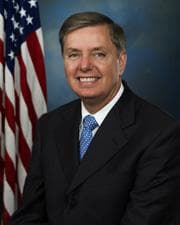
Full profile: /officials/G000359
Source: Congress.gov · FEC
Cosponsors (0)
Members who have signed on to support this bill since introduction. Source: Congress.gov.
No cosponsors on record. Bills can pass without cosponsors — this often means the sponsor introduced the bill alone, either because it's a messaging bill, a chairman's mark, or simply early in the legislative cycle.
Latest Action
The most recent step in the bill's legislative path. Committee Activity below shows referrals and reports; the full action-by-action history including floor proceedings lives at Congress.gov →
Read twice and referred to the Committee on Energy and Natural Resources.
2010-09-29
Source: Congress.gov
Plain-English Summary
Clean Energy Standard Act of 2010 - Amends the Public Utility Regulatory Policies Act of 1978 (PURPA) to establish a standard that requires electric utilities to obtain an increasing percentage of their base quantity of electricity that they sell to consumers from clean energy or energy efficiency (13% in 2013-2014, 15% in 2015-2019, 20% in 2020-2024, 25% in 2025-2029, 30% in 2030-2034, 35% in 2035-2039, 40% in 2040-2044, 45% in 2045-2049, and 50% in 2050). Requires the Secretary of Energy (DOE) to establish a clean energy credit trading program and an energy efficiency credit trading program, under which utilities will submit credits to comply with such standard. Provides for the issuance, borrowing of, trading, banking, tracking, and reporting of credits. Sets forth civil penalties for utilities that fail to meet such requirements. Allows the Secretary to delegate to: (1) a market-making entity the administration of a national clean energy credit market and a national energy efficiency credit market to create a transparent national market for the sale or trade of such credits, and (2) regional entities the tracking of dispatch of clean energy generation. Authorizes: (1) a state public utility commission or electric utility to request a variance from such clean energy and energy efficiency requirements, and (2) a utility to meet such requirements by submitting alternative compliance payments. Allows: (1) a governor to expend amounts in a state renewable energy escrow account solely for increasing the quantity of electric energy produced from a clean energy source in the state, promoting deployment and use of electric drive vehicles in the state, and offsetting the costs of carrying out this Act paid by consumers in the state through direct grants to electric consumers or energy efficiency investments; and (2) states to adopt or enforce laws concerning clean energy or energy efficiency or the regulation of electric utilities. Exempts from clean energy and energy efficiency requirements an electric utility that sold less than 4 million megawatt hours of electric energy to electric consumers during the preceding year or that is located in Hawaii. Requires the Secretary, when petitioned by the governor of a state or the Board of Directors of the Tennessee Valley Authority (TVA) in the case of TVA's power service area , to allow up to 25% of the clean energy and energy efficiency requirements associated with the sales of electricity of a utility to be met by submitting federal energy efficiency credits. Requires the Secretary to promulgate regulations regarding the measurement and verification of electricity savings. Requires the increment of electricity output of a new combined heat and power system that is attributable to the higher efficiency of the combined system, and the increment of electricity output attributable to incremental nuclear production and incremental fossil fuel production, to be considered electricity savings. Requires the Secretary to make loans available to electric utilities to: (1) construct a renewable energy generation facility, and (2) install an energy efficiency or electricity demand reduction technology. Terminates the authority provided by this Act on December 31, 2050.
Plain-English rewrite of the Congressional Research Service summary published on Congress.gov. Cached and reviewed.
Subjects
Related legislation
Bills by the same sponsor or covering overlapping subjects.
- S3859A bill to amend the Catawba Indian Tribe of South Carolina Land Claims Settlement Act of 1993 with respect to future membership in the Catawba Indian Nation.Referred to Committee · 2026-09-23
- S2644Camden National Battlefield Park Study ActReferred to Committee · 2026-09-16
- SRES786A resolution designating July 15, 2026, as "Glioblastoma Awareness Day".Introduced · 2026-06-23
- S2Secure America ActEnacted into Law · 2026-06-10