HR10684Referred to Committee
DOE Bioenergy Program Reauthorization Act
Introduced
In Committee
3
Passed One Chamber4
Passed Both5
Signed into Law119th
Congress
2026-10-01
Introduced
2
Cosponsors
HR
ⓘType
Sponsor
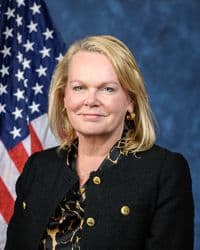
April McClain Delaney
Democrat · MD · Representative
Votes with party: 96.6% (654 recorded votes)
Full profile: /officials/M001232
Source: Congress.gov · FEC
Cosponsors (2)
Members who have signed on to support this bill since introduction. Source: Congress.gov.
Latest Action
The most recent step in the bill's legislative path. Committee Activity below shows referrals and reports; the full action-by-action history including floor proceedings lives at Congress.gov →
Committee Activity
Currently in
- House Committee on Science, Space, and TechnologyReferred To · 2026-10-01
Plain-English Summary
Plain-English summary pending. Introduced on 2026-10-01. Check back soon — summaries are generated as bills progress through Congress.
Full Bill Text
Verbatim text published on Congress.gov via GovInfo. Use Cmd+F / Ctrl+F to search within this excerpt.
[Congressional Bills 119th Congress] [From the U.S. Government Publishing Office] [H.R. 10684 Introduced in House (IH)] <DOC> 119th CONGRESS 2d Session H. R. 10684 To amend the Energy Policy Act of 2005 to support the research and development of bioenergy and renewable chemicals at the Department of Energy, and for other purposes. _______________________________________________________________________ IN THE HOUSE OF REPRESENTATIVES October 1, 2026 Mrs. McClain Delaney (for herself, Ms. Ross, and Ms. Lofgren) introduced the following bill; which was referred to the Committee on Science, Space, and Technology _______________________________________________________________________ A BILL To amend the Energy Policy Act of 2005 to support the research and development of bioenergy and renewable chemicals at the Department of Energy, and for other purposes. Be it enacted by the Senate and House of Representatives of the United States of America in Congress assembled, SECTION 1. SHORT TITLE. This Act may be cited as the ``DOE Bioenergy Program Reauthorization Act''. SEC. 2. DEPARTMENT OF ENERGY BIOENERGY PROGRAM. Section 932 of the Energy Policy Act of 2005 (42 U.S.C. 16232) is amended to read as follows: ``SEC. 932. BIOENERGY PROGRAM. ``(a) Definitions.--In this section: ``(1) Biobased products.--The term `biobased product' means an intermediate chemical, material or end use product, such as bioplastic produced from biomass, waste streams, or biomanufacturing. ``(2) Bioeconomy.--The term `bioeconomy' means economic activity derived from the life sciences, particularly in the areas of biotechnology and biomanufacturing, and includes industries, products, services, and the workforce. ``(3) Bioenergy.--The term `bioenergy' means energy, including biofuels and biopower, derived in whole or in significant part from biomass. ``(4) Biofuels.--The term `biofuels' means solid, liquid, or gaseous fuel produced from biomass, waste streams, or through biomanufacturing. ``(5) Biointermediate.--The term `biointermediate' means an intermediate product that is derived from biomass or waste streams. ``(6) Biomass.--The term `biomass' means any material of biological origin that is available on a renewable or recurring basis. ``(7) Biomanufacturing.--The term `biomanufacturing' means the use of biological systems, including the use of biomass as a feedstock, to produce commercially important goods and services. ``(8) Biopower.--The term `biopower' means the generation of electricity or process steam or both through the combustion of biomass or waste streams. ``(9) Biorefinery.--The term `biorefinery' means a facility that integrates conversion processes and equipment to produce fuels or other byproduct streams, such as power and chemicals intermediates from biomass or waste streams. ``(10) Biotechnology.--The term `biotechnology' means technology that applies to or is enabled by life sciences innovation or product development. ``(11) Circular bioeconomy.--The term `circular bioeconomy' means economic activity derived from the life sciences, particularly in the areas of biotechnology and biomanufacturing, that focuses on the sustainable or resource- efficient valorization of biomass, including waste streams and other sources of carbon. ``(12) Federal research agency.--The term `Federal research agency' means any Federal agency with an annual extramural research expenditure of over $100,000,000 in fiscal year 2025 constant dollars. ``(13) Historically black college or university.--The term `historically Black college or university' has the meaning given the term `part B institution' in section 322 of the Higher Education Act of 1965 (20 U.S.C. 1061). ``(14) Institution of higher education.--The term `institution of higher education' has the meaning given such term in section 101 of the Higher Education Act of 1965 (20 U.S.C. 1001). ``(15) Lignocellulosic feedstock.--The term `lignocellulosic feedstock' means any portion of a plant or coproduct from conversion, including crops, trees, forest residues, and agricultural residues not specifically grown for food, including from barley grain, grapeseed, rice bran, rice hulls, rice straw, soybean matter, and sugarcane bagasse. ``(16) Minority-serving institution.--The term `minority- serving institution' means the following: ``(A) A Hispanic-serving institution (as such term…
Show the remaining 1,670 wordsHide the remaining 1,670 words
is defined in section 502(a) of the Higher Education Act of 1965 (20 U.S.C. 1101a(a))). ``(B) An Alaska Native serving institution or Native Hawaiian-serving institution (as such term is defined in section 317(b) of the Higher Education Act of 1965 (20 U.S.C. 1059d(b))). ``(C) A Predominantly Black institution, Asian American and Native American Pacific Islander-serving institution, or Native American-serving nontribal institution (as such terms are defined in section 371(c) of the Higher Education Act of 1965 (20 U.S.C. 1067q(c))). ``(17) National laboratory.--The term `National Laboratory' has the meaning given such term in section 2 of the Energy Policy Act of 2005 (42 U.S.C. 15801). ``(18) Phytobiome.--The term `phytobiome' means a network of interactions of plants, their associated communities of organisms, and their environmental context. ``(19) Tribal college or university.--The term `Tribal College or University' has the meaning given such term in section 316 of the Higher Education Act of 1965 (20 U.S.C. 1059c). ``(20) Waste streams.--The term `waste streams' includes municipal solid waste, food waste, urban wood waste, construction and demolition wastes, animal manures, food processing and fermentation waste, sewage, biogas, industrial waste gases, carbon oxides, atmospheric oxides, and waste gases that are effluents or byproduct streams from various societal pursuits that are targeted toward disposal, discharge, or burning. ``(b) Program.--The Secretary shall conduct a program of research, development, demonstration, and commercial application for bioenergy and renewable chemicals and materials (in this section referred to as the `Program'), to carry out the following: ``(1) Identify and address technical challenges, as well as research and development opportunities, that support the availability of the following: ``(A) Renewable carbon resources, including biomass feedstocks, waste streams, and aquatic biomass, used as feedstocks for bioenergy, biobased products, or other purposes. ``(B) Technologies and processes, including fermentation, that break down or convert biomass or waste streams to useful biointermediates, biofuels, or biobased products. ``(C) Analyses, tests, and verifications for scale- up and deployment efforts, including how to integrate diverse components, unit operations, or subsystems to develop streamlined biomanufacturing processes. ``(D) Data, modeling, analysis, and tools to identify and examine high value products and the decarbonization potential for a circular bioeconomy. ``(2) Work with industry partners to identify priority research, development, and demonstration needs, especially regarding the commercialization of sustainable aviation fuel, other strategic transportation fuels, bioenergy, and renewable chemicals and materials. ``(3) Leverage data and modeling, including the development of tools and resources, to understand and quantify environmental and economic effects of emerging biofuel and biobased product technologies. ``(4) Support sustainability research, including the environmental, social, and economic effects of growing and using large quantities of biomass, and identify strategies to integrate biomass and bioenergy production into existing agricultural and forestry systems. ``(5) Support workforce development activities, including training at all levels that expands opportunities for untapped populations, develops new career pathways, and supports the full range of technology-driven jobs to meet domestic workforce demand. ``(6) Develop hiring and funding decisions, project plans, and community engagement to benefit all citizens regardless of background, socioeconomic status, location, or any other factor. ``(7) Conduct strategic communications with relevant external stakeholders. ``(c) Coordination and Collaboration.--As part of the Program, the Secretary, as practicable and appropriate, shall coordinate and collaborate on the following: ``(1) International and interagency efforts involving bioenergy, renewable chemicals and materials, and the bioeconomy, including activities through the following: ``(A) The Biomass Research and Development Board established pursuant to section 9008 of the Farm Security and Rural Investment Act of 2002 (7 U.S.C. 8108). ``(B) The interagency entity relating to sustainable chemistry (popularly referred to as the `Sustainable Chemistry Strategy Team') under subtitle E of title II of division A of the William M. (Mac) Thornberry National Defense Authorization Act for Fiscal Year 2021 (Public Law 116-283; 15 U.S.C. 9301 et seq.). ``(C) The National Engineering Biology Research and Development Initiative (section 10402 of the Research and Development, Competition, and Innovation Act; 42 U.S.C. 19132). ``(2) Education and workforce development activities with Federal agencies (including the National Science Foundation), private sector entities, National Laboratories, institutions of higher education, including historically Black colleges and universities, Minority-serving institutions, and Tribal Colleges and Universities, Tribal governments, rural community stakeholders, nonprofit organizations, and international bodies with relevant scientific expertise. ``(3) Engagement with and identification of bioenergy and renewable chemicals and materials research, development, demonstration, and commercial needs of the following: ``(A) The Department of Agriculture. ``(B) The Department of Transportation. ``(C) The Department of Defense. ``(D) The National Science Foundation. ``(E) The National Institute of Standards and Technology. ``(4) Other research, development, demonstration, extension, and commercial activities relating to bioenergy and renewable chemicals and materials with other relevant Federal research agencies. ``(d) Process Development Facilities.-- ``(1) In general.--Not later than two years after the date of the enactment of this section and as a part of the Program, the Secretary shall support at least four small-scale process development or scale-up facilities to assist researchers, industry, and the agricultural community in de-risking bioenergy technologies and in producing small quantities of advanced biofuels and biobased products for testing purposes. The Secretary shall ensure such facilities are geographically and technically diverse. ``(2) Request for information.--Not later than 90 days after the date of enactment of this section, the Secretary shall publish a request for information that shall be used by the Secretary to evaluate the following: ``(A) Existing process development facilities in the United States, including facilities dedicated to gas fermentation technologies. ``(B) Best practices, including artificial intelligence-ready data collection methods, for collaboration at such facilities. ``(C) Gaps and opportunities for incorporating innovation in manufacturing at such facilities. ``(D) How data derived at such facilities translates to the next scale-up of bioenergy technologies and how such data has enabled computational modeling. ``(3) Access.--The Secretary shall ensure that access to the facilities described in paragraph (2) is provided to eligible researchers on a competitive, technical merit-reviewed basis for activities that demonstrate advanced bioenergy technologies with the potential to lower the cost and improve the environmental impact of advanced biofuels and products, including improving the release of data to broaden the dissemination of information. ``(e) Bioenergy Incubator Funding.-- ``(1) In general.--As a part of the Program, the Secretary shall award grants and cooperative agreements on a competitive, technical merit-reviewed basis to eligible entities to support innovative technologies that are not represented in a significant way in the following: ``(A) The portfolio of bioenergy research activities carried out by the Department of Energy as of the date of the enactment of this section. ``(B) Technology roadmaps used by the Department of Energy as of such date of enactment. ``(2) Implementation.--In carrying out this subsection, the Secretary, as appropriate, shall coordinate across all relevant Department program offices, including the Office of Energy Efficiency and Renewable Energy, the Advanced Research Projects Agency-Energy, the Office of Science, the Office of Technology Transfer, the Office of Clean Energy Demonstrations, and the Office of Fossil Energy and Carbon Management. ``(f) Integrated Biorefinery Demonstration Projects.-- ``(1) In general.--The Secretary shall carry out a program to demonstrate the commercial application of integrated biorefineries. The Secretary shall ensure geographical distribution of biorefinery demonstrations under such program. In making awards under such program, the Secretary shall encourage the following: ``(A) The demonstration of a wide variety of lignocellulosic feedstock and other forms of feedstocks. ``(B) The commercial application of biomass technologies for a variety of uses, including the following: ``(i) Liquid transportation fuels. ``(ii) High-value biobased chemicals. ``(iii) Production of strategic or valuable biointermediates. ``(iv) Substitutes for petroleum-based feedstocks and products. ``(v) Energy in the form of electricity or useful heat. ``(C) The incorporation of advanced manufacturing technologies such as integrated and continuous manufacturing, automated systems, advanced sensors, digital modeling, and other technologies that can improve the efficiency, productivity, and sustainability of biorefineries. ``(D) The demonstration of the collection and treatment of a variety of biomass feedstocks. ``(2) Proposals.--Not later than six months after the date of the enactment of this Act, the Secretary shall solicit proposals for demonstrations of integrated biorefineries referred to in paragraph (1). The Secretary shall select only proposals that demonstrate that the project at issue will be able to operate profitably without direct Federal subsidy after initial construction costs are funded. ``(g) University Biodiesel Program.--The Secretary shall establish a demonstration program to determine the feasibility of the operation of diesel electric power generators, using biodiesel fuels with ratings as high as B100, at electric generation facilities owned by institutions of higher education. Such program shall examine the following: ``(1) Heat rates of diesel fuels with large quantities of cellulosic content. ``(2) The reliability of operation of various fuel blends. ``(3) Performance in cold or freezing weather. ``(4) Stability of fuel after extended storage. ``(5) Other criteria, as determined by the Secretary. ``(h) Strategic Plan.-- ``(1) In general.--Not later than one year after the date of the enactment of this section, the Secretary shall-- ``(A) develop a strategic plan to implement the Program; and ``(B) annually update such plan. ``(2) Scope.--The strategic plan required under paragraph (1) shall address near-term (up to two years), mid-term (up to seven years), and long-term (up to 15 years) research challenges to the advancement of biofuels and biobased products, including opportunities to work with other Federal departments and agencies and external stakeholders to establish a more findable, accessible, interoperable, and responsible data ecosystem for the United States bioeconomy. ``(3) Report.--Not later than one year after the date of the enactment of this section and at least once every two years thereafter, the Secretary shall provide, and make available to the public and Congress, a report on the findings of research conducted and activities carried out pursuant to this section, including the most current strategic plan under paragraph (1) and the progress made in implementing such plan. ``(i) Authorization of Appropriations.--There are authorized to be appropriated to the Secretary to carry out this section the following: ``(1) $318,150,000 for fiscal year 2027. ``(2) $334,057,500 for fiscal year 2028. ``(3) $350,760,375 for fiscal year 2029. ``(4) $368,299,000 for fiscal year 2030. ``(5) $368,713,950 for fiscal year 2031.''. <all>
Related legislation
Bills by the same sponsor or covering overlapping subjects.
- HR8981SCALE Biology ActReferred to Committee · 2026-07-21
- HR9286Broadband Deployment and Economic Impact Study Act of 2026Referred to Committee · 2026-06-11
- HR8825Democracy Without Intimidation ActReferred to Committee · 2026-05-14
- HR3159Improving SCRA Benefit Utilization ActReferred to Committee · 2026-05-14