Complete Streets Act of 2025
Sponsor
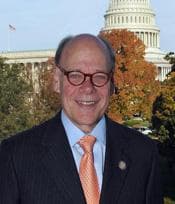
Full profile: /officials/C001068
Source: Congress.gov · FEC
Cosponsors (12)
Members who have signed on to support this bill since introduction. Source: Congress.gov.
- Adriano Espaillat (D-NY-13)Original· 2025-06-04
- Dina Titus (D-NV-1)Original· 2025-06-04
- Jake Auchincloss (D-MA-4)Original· 2025-06-04
- Valerie P. Foushee (D-NC-4)Original· 2025-06-04
- Jonathan L. Jackson (D-IL-1)· 2025-06-09
- Josh Gottheimer (D-NJ-5)· 2025-06-23
- George Latimer (D-NY-16)· 2025-07-16
- Mary Gay Scanlon (D-PA-5)· 2025-11-20
- Eleanor Holmes Norton (D-DC)· 2026-01-16
- Mike Thompson (D-CA-4)· 2026-03-04
Latest Action
The most recent step in the bill's legislative path. Committee Activity below shows referrals and reports; the full action-by-action history including floor proceedings lives at Congress.gov →
Committee Activity
Currently in
- House Committee on Transportation and InfrastructureReferred To · 2025-06-04
Previously
- Transportation and Infrastructure CommitteeReferred To · 2025-06-04
Plain-English Summary
Complete Streets Act of 2025 This bill supports the development of safe and accessible roads through complete streets design and construction grants, policies, and design standards. Under the bill, a complete street means a public road that provides safe and accessible travel options for multiple travel modes (e.g., walking, cycling, transit, mobility devices, automobiles, and freight) for people of all ages, abilities, and disabilities. In general, each state must establish a competitive grant program that provides a portion of its federal highway funds to eligible entities for complete streets grants and technical assistance. Eligible entities include local and tribal governments, local agencies, metropolitan planning organizations (MPOs), and nonprofit organizations. An eligible entity must develop a complete streets policy and a prioritization plan. The state or an MPO must approve the policy and plan. The Department of Transportation (DOT) must develop complete streets benchmarks and guidance for states and eligible entities. In addition, DOT and the Department of Justice must update and adopt certain accessibility standards (e.g., by including provisions for cognitive ability and language access). Further, DOT must require each state and MPO to adopt and implement design standards for the safe and adequate accommodation of all surface transportation network users. DOT must also establish complete streets design standards for federal projects and phase in their adoption, with exemptions for certain roadways, facilities, and projects. The standards must include (1) dedicated, protected bike lanes; (2) requirements for sidewalks and crosswalks; and (3) guidelines for lighting and signalization to promote safety.
Plain-English rewrite of the Congressional Research Service summary published on Congress.gov. Cached and reviewed.
Subjects
Related legislation
Bills by the same sponsor or covering overlapping subjects.
- HJRES218Proposing an amendment to the Constitution of the United States to abolish the electoral college and to provide for the direct election of the President and Vice President of the United States.Referred to Committee · 2026-10-01
- HR10653Police Training and Independent Review Act of 2026Referred to Committee · 2026-10-01
- HRES1575Impeaching Donald J. Trump, President of the United States, for high crimes and misdemeanors.Referred to Committee · 2026-09-24
- HR10516FAIR Fees Act of 2026Referred to Committee · 2026-09-21