HR3773Referred to Committee
PROTECT Act of 2025
Introduced
In Committee
3
Passed One Chamber4
Passed Both5
Signed into Law119th
Congress
2025-06-05
Introduced
19
Cosponsors
HR
ⓘType
Sponsor
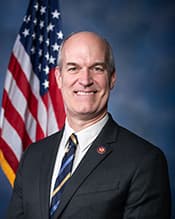
Rick Larsen
Democrat · WA · Representative
Votes with party: 97.5% (651 recorded votes)
Full profile: /officials/L000560
Source: Congress.gov · FEC
Cosponsors (19)
Members who have signed on to support this bill since introduction. Source: Congress.gov.
- Dan Newhouse (R-WA-4)Original· 2025-06-05
- Jeff Hurd (R-CO-3)Original· 2025-06-05
- Marie Gluesenkamp Perez (D-WA-3)Original· 2025-06-05
- Michael K. Simpson (R-ID-2)Original· 2025-06-05
- Ryan K. Zinke (R-MT-1)Original· 2025-06-05
- Tom Cole (R-OK-4)Original· 2025-06-05
- Brian K. Fitzpatrick (R-PA-1)· 2025-06-10
- Michael Baumgartner (R-WA-5)· 2025-07-02
- Suzan K. DelBene (D-WA-1)· 2025-07-02
- Adam Smith (D-WA-9)· 2025-07-10
- Sharice Davids (D-KS-3)· 2025-07-15
- Darrell Issa (R-CA-48)· 2025-08-05
- Jake Ellzey (R-TX-6)· 2025-09-18
- Ken Calvert (R-CA-41)· 2025-10-24
- Joe Neguse (D-CO-2)· 2026-01-13
- Emily Randall (D-WA-6)· 2026-02-11
Latest Action
The most recent step in the bill's legislative path. Committee Activity below shows referrals and reports; the full action-by-action history including floor proceedings lives at Congress.gov →
Referred to the Committee on the Judiciary, and in addition to the Committee on Natural Resources, for a period to be subsequently determined by the Speaker, in each case for consideration of such provisions as fall within the jurisdiction of the committee concerned.
2025-06-05
Source: Congress.gov
Committee Activity
Currently in
- House Committee on Natural ResourcesReferred To · 2025-06-05
- House Committee on the JudiciaryReferred To · 2025-06-05
Plain-English Summary
Protection for Reservation Occupants against Trafficking and Evasive Communications Today Act of 2025 or the PROTECT Act of 2025 This bill expands special tribal criminal jurisdiction (STCJ) to include certain controlled substance-related offenses and firearms offenses. It also allows tribal courts to execute warrants for electronic material. STCJ allows participating tribes to investigate, prosecute, convict, and sentence both Indian and non-Indian offenders who commit covered crimes in Indian country against Indian victims. Covered crimes currently include assault of tribal justice personnel, child violence, dating violence, domestic violence, obstruction of justice, sexual violence, sex trafficking, stalking, and a violation of a protection order. The bill expands STCJ to allow participating tribes to prosecute individuals for controlled substance-related offenses (i.e., drug trafficking, unlawful drug possession, or unlawful possession of drug paraphernalia) and firearms offenses (i.e., use or possession of a firearm in furtherance of a covered crime or by a person who has been convicted of domestic violence). Additionally, the bill allows participating tribes to exercise STCJ over a controlled substance-related offense or a firearms offense if neither the defendant nor the alleged victim is an Indian. (Currently, this exception only applies in cases of obstruction of justice or assault of tribal justice personnel.) The bill allows offenders convicted pursuant to STCJ to be incarcerated through the Bureau of Prisons Tribal Prisoner Program. The bill gives tribal courts the same authority as state courts to compel service providers to disclose stored electronic communication information through court-issued warrants, court orders, or administrative subpoenas.
Plain-English rewrite of the Congressional Research Service summary published on Congress.gov. Cached and reviewed.
Subjects
Native Americans
Full bill text is not yet cached locally.
Related legislation
Bills by the same sponsor or covering overlapping subjects.
- HR10679America Votes Act of 2026Referred to Committee · 2026-10-01
- HR9986Read for Reentry Act of 2026Referred to Committee · 2026-07-30
- HR9435EXCLAVE Act of 2026Referred to Committee · 2026-06-24
- HR2860Northwest Straits Marine Conservation Initiative Reauthorization Act of 2025Passed House · 2026-06-04