End Fentanyl Trafficking with Local Task Forces Act of 2026
Sponsor
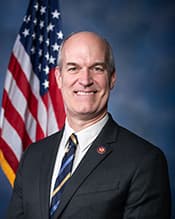
Full profile: /officials/L000560
Source: Congress.gov · FEC
Cosponsors (3)
Members who have signed on to support this bill since introduction. Source: Congress.gov.
Latest Action
The most recent step in the bill's legislative path. Committee Activity below shows referrals and reports; the full action-by-action history including floor proceedings lives at Congress.gov →
Committee Activity
Currently in
- House Committee on the JudiciaryReferred To · 2026-05-14
Plain-English Summary
The federal government would provide money to law enforcement agencies and communities to help stop the illegal drug trade involving opioids like fentanyl and heroin. These grants would support efforts such as investigating drug trafficking networks, training officers, and funding treatment and prevention programs in areas hit hardest by the opioid crisis. Police departments, prosecutors, public health officials, and addiction treatment providers would be the main groups receiving and using these funds.
AI-assisted summary generated from the official bill metadata (title, subjects, actions) sourced from Congress.gov. Cached and reviewed. Always verify against the official text linked below.
Subjects
Full Bill Text
Verbatim text published on Congress.gov via GovInfo. Use Cmd+F / Ctrl+F to search within this excerpt.
[Congressional Bills 119th Congress] [From the U.S. Government Publishing Office] [H.R. 8818 Introduced in House (IH)] <DOC> 119th CONGRESS 2d Session H. R. 8818 To establish grants to combat opioid trafficking. _______________________________________________________________________ IN THE HOUSE OF REPRESENTATIVES May 14, 2026 Mr. Larsen of Washington (for himself, Ms. Perez, and Mr. Newhouse) introduced the following bill; which was referred to the Committee on the Judiciary _______________________________________________________________________ A BILL To establish grants to combat opioid trafficking. Be it enacted by the Senate and House of Representatives of the United States of America in Congress assembled, SECTION 1. SHORT TITLE. This Act may be cited as the ``End Fentanyl Trafficking with Local Task Forces Act of 2026''. SEC. 2. GRANT AUTHORIZATION. (a) In General.--Title I of the Omnibus Crime Control and Safe Streets Act of 1968 (34 U.S.C. 10101 et seq.) is amended by adding at the end the following new part: ``PART PP--GRANTS TO COMBAT OPIOID TRAFFICKING ``SEC. 3061. AUTHORITY TO MAKE GRANTS TO COMBAT OPIOID TRAFFICKING. ``(a) Grant Authorization.--The COPS Director is authorized to make grants to eligible entities for the purpose of locating, investigating, and interdicting illicit activities relating to the distribution of opioids. ``(b) Eligible Entity.--For the purpose of the grants made under this part, eligible entities are States, State law enforcement agencies, units of local government, Indian Tribes, multi- jurisdictional task forces, and regional consortia. ``(c) Application.-- ``(1) In general.--To receive a grant under this part, an eligible entity shall submit to the COPS Director an application at such time, in such manner, and containing such information as the COPS Director may require. Each application shall include-- ``(A) a detailed explanation of-- ``(i) the intended uses of funds provided under the grant; and ``(ii) how the activities funded under the grant will meet the purpose of this part; ``(B) an assurance that the applicant shall maintain and report such data, records, and information (programmatic and financial) as the COPS Director may reasonably require; ``(C) a certification, made in a form acceptable to the COPS Director, that-- ``(i) the programs to be funded by the grant meet all the requirements of this part; ``(ii) all the information contained in the application is correct; and ``(iii) the applicant will comply with all provisions of this part and all other applicable Federal laws. ``(2) Guidelines.--Not later than 90 days after the date of enactment of this part, the COPS Director shall promulgate guidelines to implement this part, including the information that must be included and the requirements that eligible entities must meet, in submitting the applications required under this part. ``(3) Streamlining applications.--To the greatest extent possible, the COPS Director shall streamline the grant application process to minimize the administrative burden placed on eligible applicants and to prevent the collection of extraneous or duplicative information. ``(d) Use of Funds.--A grant made under this part shall be used-- ``(1) to hire and train law enforcement officers and other employees; ``(2) to hire and train law enforcement officers and other employees to establish new, or support and expand existing, multi-jurisdictional task forces, regional consortia, or both; ``(3) to procure equipment, technology, or support systems, or pay overtime; or ``(4) for any other activities or items the Attorney General determines appropriate to support the purpose described in subsection (a). ``(e) Duration.--A grant made under this part shall be for not less than 1 year and not more than 3 years. ``(f) Allocation of Grant Funding.-- ``(1) Set aside.--Of the funds allocated to carry out the grant program under this part not less than 20 percent shall be reserved for-- ``(A) direct grants to Indian…
Show the remaining 639 wordsHide the remaining 639 words
Tribes or Tribal law enforcement agencies; and ``(B) direct grants to multi-jurisdictional task forces. ``(2) Limitation.--In the case that a Tribal law enforcement officer or a law enforcement partner affiliated with an Indian Tribe is a member of a multi-jurisdictional task force receiving a direct grant, such membership shall not impact the eligibility of, or reduce the percentage otherwise available for, the Tribal law enforcement agency with jurisdiction over such officer or the Indian Tribe with jurisdiction over such officer or law enforcement partner for the funds reserved under paragraph (1)(A). ``(g) Contracts and Subawards.-- ``(1) In general.--A State, unit of local government, or Indian Tribe may, in using a grant under this part for purposes authorized under subsection (d), use the grant to contract with or make subawards to a State, local, or Tribal law enforcement agency, a unit of local government, an Indian Tribe, a Tribal organization, a multi-jurisdictional task force, or a regional consortium. ``(2) Limitation.--The receipt of a contract or subaward under paragraph (1) by an Indian Tribe, Tribal law enforcement agency, Tribal organization, or multi-jurisdictional task force shall not impact the eligibility of, or reduce the percentage otherwise available for, such Indian Tribe, the Indian Tribe with jurisdiction over such agency or organization, or the multi-jurisdictional task force for the funds set aside under subsection (f)(1). ``(h) Administrative Costs.--The COPS Director may reserve not more than 2 percent from amounts appropriated to carry out this part for administrative costs. ``(i) Technical Assistance.-- ``(1) In general.--The COPS Director shall provide technical assistance to the eligible entities described in subsection (b) in furtherance of the purposes described in subsection (d). ``(2) Training centers and facilities.--The technical assistance provided by the COPS Director may include the establishment and operation of training centers or facilities, either directly or by contracting or cooperative arrangements. The functions of the centers or facilities established under this paragraph may include instruction and seminars for police executives, managers, trainers, supervisors, and such others as the COPS Director considers to be appropriate for supporting efforts related to locating, investigating, and interdicting illicit activities relating to the distribution of opioids. ``(j) Priority.--In awarding grants under this part, the COPS Director shall give priority to applicants that will use awarded funds to establish new, or support and expand existing, multi-jurisdictional task forces or regional consortia. ``SEC. 3062. REPORT. ``Beginning not later than 2 years after the date of enactment of this part, and annually thereafter, the COPS Director shall submit to Congress a report describing effectiveness of this grant program and make recommendations for how it can be improved. ``SEC. 3063. DEFINITIONS. ``In this part: ``(1) COPS director.--The term `COPS Director' means the Attorney General, acting through the Director of the Office of Community Oriented Policing Services. ``(2) Indian tribe.--The term `Indian Tribe' means the governing body of any Indian or Alaska Native tribe, band, nation, pueblo, village, community, component band, or component reservation individually identified (including parenthetically) on the list published by the Secretary under section 104 of the Federally Recognized Indian Tribe List Act of 1994 (25 U.S.C. 5131). ``(3) Multi-jurisdictional task force.--The term `multi- jurisdictional task force' means any local law enforcement entity composed of law enforcement officers from different State, local, or Tribal law enforcement agencies, which may also include other support staff members or law enforcement partners affiliated with an Indian Tribe, the Federal Government, a State government, or a unit of local government. ``(4) Regional consortium.--The term `regional consortium' means any law enforcement entity composed of multi- jurisdictional task forces that cross State lines. ``SEC. 3064. AUTHORIZATION OF APPROPRIATIONS. ``There is authorized to be appropriated to carry out this part $70,000,000 for each of fiscal years 2027 through 2031.''. (b) Conforming Amendment.--Section 1701(m) of the Omnibus Crime Control and Safe Streets Act of 1968 (34 U.S.C. 10381(m)) is repealed. <all>
Related legislation
Bills by the same sponsor or covering overlapping subjects.
- HR10679America Votes Act of 2026Referred to Committee · 2026-10-01
- HR9986Read for Reentry Act of 2026Referred to Committee · 2026-07-30
- HR9435EXCLAVE Act of 2026Referred to Committee · 2026-06-24
- HR2860Northwest Straits Marine Conservation Initiative Reauthorization Act of 2025Passed House · 2026-06-04