Combating Global Corruption Act of 2025
Sponsor
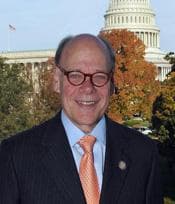
Full profile: /officials/C001068
Source: Congress.gov · FEC
Cosponsors (5)
Members who have signed on to support this bill since introduction. Source: Congress.gov.
Latest Action
The most recent step in the bill's legislative path. Committee Activity below shows referrals and reports; the full action-by-action history including floor proceedings lives at Congress.gov →
Referred to the Committee on Foreign Affairs, and in addition to the Committee on the Judiciary, for a period to be subsequently determined by the Speaker, in each case for consideration of such provisions as fall within the jurisdiction of the committee concerned.
2025-01-14
Source: Congress.gov
Committee Activity
Currently in
- House Committee on Foreign AffairsReferred To · 2025-01-14
- House Committee on the JudiciaryReferred To · 2025-01-14
Previously
- Judiciary CommitteeReferred To · 2025-01-14
- Foreign Affairs CommitteeReferred To · 2025-01-14
Plain-English Summary
Combating Global Corruption Act of 2025 This bill requires the Department of State to address corruption in foreign governments. The State Department must annually publish a ranking of foreign countries based on their government's efforts to eliminate corruption. Corruption, for the purposes of the bill, is the unlawful exercise of entrusted public power for private gain, including by bribery, nepotism, fraud, or embezzlement. The bill outlines the minimum standards that the State Department must consider when creating the ranking. These considerations include, for example, whether a country has criminalized corruption, adopted measures to prevent corruption, and complied with the United Nations Convention against Corruption and other relevant international agreements. Tier one countries meet the standards; tier two countries make some efforts to meet the standards; tier three countries make de minimis or no efforts to meet the standards. If a country is ranked in the second or third tier, the State Department must designate an anti-corruption contact at the U.S. diplomatic post in that country to promote good governance and combat corruption. The State Department must also evaluate whether there are foreign persons (individuals or entities) engaged in significant corruption in all third-tier countries for the purpose of potential imposition of sanctions under the Global Magnitsky Human Rights Accountability Act. The State Department must annually provide Congress with a list of those persons that the President has sanctioned pursuant to this evaluation, the dates sanctions were imposed, and the reasons for imposing sanctions.
Plain-English rewrite of the Congressional Research Service summary published on Congress.gov. Cached and reviewed.
Subjects
Related legislation
Bills by the same sponsor or covering overlapping subjects.
- HJRES218Proposing an amendment to the Constitution of the United States to abolish the electoral college and to provide for the direct election of the President and Vice President of the United States.Referred to Committee · 2026-10-01
- HR10653Police Training and Independent Review Act of 2026Referred to Committee · 2026-10-01
- HRES1575Impeaching Donald J. Trump, President of the United States, for high crimes and misdemeanors.Referred to Committee · 2026-09-24
- HR10516FAIR Fees Act of 2026Referred to Committee · 2026-09-21