CODIS Access Modernization Act
Sponsor
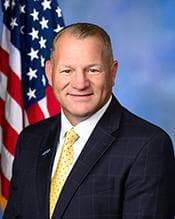
Full profile: /officials/N000026
Source: Congress.gov · FEC
Cosponsors (0)
Members who have signed on to support this bill since introduction. Source: Congress.gov.
No cosponsors on record. Bills can pass without cosponsors — this often means the sponsor introduced the bill alone, either because it's a messaging bill, a chairman's mark, or simply early in the legislative cycle.
Latest Action
The most recent step in the bill's legislative path. Committee Activity below shows referrals and reports; the full action-by-action history including floor proceedings lives at Congress.gov →
Committee Activity
Currently in
- House Committee on the JudiciaryReferred To · 2026-03-12
Previously
- Judiciary CommitteeReferred To · 2026-03-12
Plain-English Summary
This bill would update how law enforcement agencies access the national DNA database (CODIS) used to match crime scene evidence with criminal records, likely making it easier or faster for police to search for suspects. The changes would modernize the system's technology and procedures to help investigators solve crimes more efficiently while potentially addressing privacy or accuracy concerns with how the database currently operates. The bill affects police departments, crime labs, and potentially people whose DNA profiles are in the system.
AI-assisted summary generated from the official bill metadata (title, subjects, actions) sourced from Congress.gov. Cached and reviewed. Always verify against the official text linked below.
Subjects
Full Bill Text
Verbatim text published on Congress.gov via GovInfo. Use Cmd+F / Ctrl+F to search within this excerpt.
[Congressional Bills 119th Congress] [From the U.S. Government Publishing Office] [H.R. 7916 Introduced in House (IH)] <DOC> 119th CONGRESS 2d Session H. R. 7916 To amend title 34, United States Code, to authorize eligible privately owned and operated forensic DNA testing laboratories to directly upload qualifying DNA profiles to the National DNA Index System, and for other purposes. _______________________________________________________________________ IN THE HOUSE OF REPRESENTATIVES March 12, 2026 Mr. Nehls introduced the following bill; which was referred to the Committee on the Judiciary _______________________________________________________________________ A BILL To amend title 34, United States Code, to authorize eligible privately owned and operated forensic DNA testing laboratories to directly upload qualifying DNA profiles to the National DNA Index System, and for other purposes. Be it enacted by the Senate and House of Representatives of the United States of America in Congress assembled, SECTION 1. SHORT TITLE. This Act may be cited as the ``CODIS Access Modernization Act''. SEC. 2. FINDINGS. Congress finds the following: (1) Congress recognizes the essential role that publicly operated forensic laboratories and their dedicated scientific professionals play in supporting law enforcement investigations, administering justice, and protecting public safety. However, increasing case volumes, persistent DNA testing backlogs, and the challenges associated with implementing emerging forensic technologies within government systems can delay the timely processing of critical evidence. These delays may hinder the identification and apprehension of violent offenders, allowing serial perpetrators of crimes such as rape and homicide to remain unidentified and potentially continue victimizing additional individuals. Congress further finds that strategic public-private partnerships with accredited forensic laboratories can expand testing capacity, accelerate the processing of DNA evidence, and provide access to advanced technologies and specialized expertise. Such partnerships can also reduce delays in DNA profile entry into the National DNA Index System, accelerate investigative leads, increase case resolution rates, reduce burdens on publicly operated laboratories, enhance justice for victims and their families, and help prevent future crimes. (2) Accredited private forensic DNA laboratories, meeting the same FBI Quality Assurance Standards and ISO/IEC 17025 requirements as public laboratories, are currently barred from direct uploads to the Combined DNA Index System (CODIS), resulting in mandatory and costly redundant reviews that delay investigations by days to years. (3) Restricting CODIS access to public laboratories is detrimental to national security and public safety, as violent offenders often cross jurisdictions, while private labs already process thousands of cases annually for Federal, State, local, military, and homeland security agencies. (4) Precedent exists for non-law enforcement entities to officially perform traditional criminal justice agency functions, including the Department of Justice's partnership with the National Center for Missing and Exploited Children (NCMEC) which affords it vital access to the National Crime Information Center (NCIC) to help solve missing and unidentified children's cases across the United States. (5) The United States Government routinely relies on accredited private entities and government contractors to perform highly sensitive national security, intelligence, and law enforcement support functions, including cybersecurity operations, forensic analysis, intelligence processing, and classified systems management under strict Federal oversight and security requirements. The use of qualified private forensic laboratories to support DNA identification efforts represents a continuation of established Federal practices of leveraging private sector expertise to advance public safety. (6) Accredited private forensic DNA laboratories already perform forensic testing for Federal, State, local, military, and homeland security agencies while complying with the same FBI Quality Assurance Standards and ISO/IEC 17025 accreditation requirements as public laboratories. (7) Allowing qualified private forensic DNA laboratories to upload qualifying DNA profiles to the National DNA Index System under strict regulatory safeguards is consistent with longstanding Federal practices of utilizing accredited private entities to…
Show the remaining 515 wordsHide the remaining 515 words
enhance national security, public safety, and investigative capabilities. (8) The societal and economic costs of unsolved violent crimes are immense, with estimates of $122,000 per rape and $1.4 million per murder in medical, productivity, legal, and suffering-related expenses. Timely offender identification and apprehension also prevent future crimes as rapists commit on average more than 7 sexual assaults per year. (9) Granting direct CODIS upload authority to eligible private laboratories would accelerate case resolutions, increase DNA matches and arrests, reduce public lab burdens, prevent additional offenses, and advance bipartisan priorities of public safety, victim rights, and efficient private sector utilization. SEC. 3. DIRECT ACCESS FOR ELIGIBLE PRIVATE FORENSIC DNA LABORATORIES TO THE NATIONAL DNA INDEX SYSTEM. (a) In General.--The Attorney General shall allow eligible privately owned and operated forensic evidence DNA testing laboratories to directly upload qualifying DNA profiles to the National DNA Index System (NDIS). (b) Regulations.--The Department of Justice and the Federal Bureau of Investigation shall issue regulations to implement and carry out this section, including criteria for eligibility, procedures for direct upload, security and privacy safeguards, and any other requirements necessary to ensure compliance with Federal law, not later than six months after the date of enactment. (c) Limitation of Authority.--Nothing in this Act shall be construed to grant privately owned and operated forensic DNA laboratories access to search, query, or retrieve information from the National DNA Index System beyond the authorized submission of qualifying DNA profiles in accordance with Federal Bureau of Investigation regulations and applicable law. (d) Definitions.--In this section: (1) The term ``privately owned and operated forensic evidence DNA testing laboratory'' means a private DNA forensic evidence testing laboratory that-- (A) has been accredited for a minimum of five consecutive years to the ISO/IEC 17025 standards by a nationally recognized nonprofit professional association of persons actively involved in forensic science; (B) undergoes external audits every two years that demonstrate compliance with the Quality Assurance Standards established by the Director of the Federal Bureau of Investigation; (C) demonstrates compliance with the limited access requirements for DNA samples and records in accordance with Federal law; (D) demonstrates compliance with the provisions of the NDIS Memorandum of Understanding and the NDIS Operational Procedures Manual; and (E) is not owned or managed by a governmental organization. (2) The term ``qualifying DNA profiles'' means DNA profiles that meet the standards and eligibility requirements for entry into the National DNA Index System, as determined by the Federal Bureau of Investigation. (3) The term ``National DNA Index System'' or ``NDIS'' means the index established under section 12592 of title 34, United States Code. SEC. 4. CONFORMING AMENDMENTS. The Attorney General, in consultation with the Director of the Federal Bureau of Investigation, shall make such conforming amendments to regulations, policies, and procedures (including updates to the NDIS Memorandum of Understanding and the NDIS Operational Procedures Manual) as may be necessary to carry out this Act. SEC. 5. EFFECTIVE DATE. This Act shall take effect on the date of its enactment, except that the requirement to issue regulations under section 3(b) shall apply as specified in that subsection. <all>
Related legislation
Bills by the same sponsor or covering overlapping subjects.
- HR7553Aviation Innovation and Global Competitiveness ActReferred to Committee · 2026-09-15
- HR309National Law Enforcement Officers Remembrance, Support, and Community Outreach ActPassed House · 2026-09-15
- HR9071Preventing Trafficking of Minors Act of 2026Referred to Committee · 2026-05-29
- HR9037To direct the Administrator of the Federal Aviation Administration to improve and expand electronic filing capabilities for Federal Aviation Administration Form 337, and for other purposes.Referred to Committee · 2026-05-26