SAFER Act of 2026
Sponsor
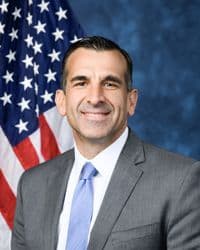
- Climate & Environment$5k
Full profile: /officials/L000607
Source: Congress.gov · FEC
Cosponsors (7)
Members who have signed on to support this bill since introduction. Source: Congress.gov.
Latest Action
The most recent step in the bill's legislative path. Committee Activity below shows referrals and reports; the full action-by-action history including floor proceedings lives at Congress.gov →
Committee Activity
Currently in
- House Committee on Financial ServicesReferred To · 2026-04-16
Previously
- Financial Services CommitteeReferred To · 2026-04-16
Plain-English Summary
This bill would protect people's investment accounts, stocks, and digital assets from being taken by states under "unclaimed property" laws, which currently allow states to seize dormant accounts after a period of inactivity. The legislation aims to prevent financial institutions from handing over these assets to state governments too quickly, giving account owners more time and opportunity to claim their own money before the state takes it. This would mainly affect individual investors and savers who might lose track of old accounts, as well as the financial institutions that hold these assets.
AI-assisted summary generated from the official bill metadata (title, subjects, actions) sourced from Congress.gov. Cached and reviewed. Always verify against the official text linked below.
Subjects
Full Bill Text
Verbatim text published on Congress.gov via GovInfo. Use Cmd+F / Ctrl+F to search within this excerpt.
[Congressional Bills 119th Congress] [From the U.S. Government Publishing Office] [H.R. 8338 Introduced in House (IH)] <DOC> 119th CONGRESS 2d Session H. R. 8338 To prevent the premature seizure of an individual's securities, digital assets, or investment accounts in the custody of a financial institution under State escheatment laws, and for other purposes. _______________________________________________________________________ IN THE HOUSE OF REPRESENTATIVES April 16, 2026 Mr. Liccardo (for himself and Mr. Lawler) introduced the following bill; which was referred to the Committee on Financial Services _______________________________________________________________________ A BILL To prevent the premature seizure of an individual's securities, digital assets, or investment accounts in the custody of a financial institution under State escheatment laws, and for other purposes. Be it enacted by the Senate and House of Representatives of the United States of America in Congress assembled, SECTION 1. SHORT TITLE. This Act may be cited as the ``Safeguarding Americans' Fairly Earned Retirement Act of 2026'' or the ``SAFER Act of 2026''. SEC. 2. ESCHEATMENT OF CERTAIN SECURITIES, DIGITAL ASSETS, OR INVESTMENT ACCOUNTS HELD BY CUSTODIANS. (a) In General.--With respect to any covered asset that is directly held or beneficially owned by a person or entity and custodied by a financial institution, the financial institution may not yield custody of the covered asset, any proceeds from the sale of the covered asset, or a payment related to the covered asset (such as a dividend, principal payment, fork, or airdrop) pursuant to a State unclaimed property law, regulation, or administrative action or other means of escheatment, unless-- (1) in the case of a covered asset directly held or beneficially owned by a natural person-- (A) the financial institution receives confirmation of the natural person's death at least 3 years before yielding custody; (B) no fiduciary appointed to represent the estate of the natural person has made an expression of interest in such asset, proceeds, or payment for at least 3 years before yielding custody; and (C) in the case of an asset, proceeds, or a payment where another natural person has an ownership interest, the financial institution receives confirmation of the other natural persons's death; or (2) in the case of a covered asset directly held or beneficially owned by a person or entity other than a natural person, the financial institution has no record of contact with a representative of the person or entity for at least 5 years. (b) Checking of Certain Inactive Accounts.-- (1) In general.--In the case of a covered asset described in subsection (a) that is directly held or beneficially owned by a natural person who has attained retirement age and custodied by a financial institution, at the end of the 5-year period beginning on the date that the financial institution last has a record of contact with the natural person (or a representative thereof), and every five years thereafter, the financial institution shall conduct a comparison of its records with a State or Federal Government database of deaths to identify whether the natural person is deceased. (2) Retirement age defined.--In this subsection and with respect to a natural person, the term ``retirement age'' means the applicable age, as defined in section 401(a)(9)(C)(v) of the Internal Revenue Code of 1986. (c) Death Determination.--For purposes of this section, a financial institution may confirm the death of a natural person if-- (1) the financial institution obtains a death certificate for the natural person; or (2) the financial institution obtains such other legal documents as the institution determines sufficient to confirm the death of the natural person. (d) Preemption.--This section preempts any State law, regulation, ordinance, or other provision that requires a financial…
Show the remaining 401 wordsHide the remaining 401 words
institution to remit, escheat, yield custody, or otherwise transfer any asset, security, or investment account to a State or local government in any manner that conflicts with this section. (e) Sense of Congress.--It is the sense of Congress that-- (1) this section does not preempt any State law, regulation, ordinance, or other provision requiring communication between the State and a financial institution or a person or entity that directly holds or beneficially owns a covered asset; and (2) this section does not prevent an owner of a covered asset from seeking remedies through State or Federal law for mishandling or improper escheatment of a covered asset. (f) Definitions.--In this section: (1) Covered asset.--The term ``covered asset''-- (A) means any-- (i) security; (ii) digital asset; or (iii) investment account; and (B) does not include an employee benefit plan subject to title I of the Employee Retirement Income Security Act of 1974. (2) Digital asset.--The term ``digital asset'' means any digital representation of value which is recorded on a cryptographically-secured distributed ledger or other similar technology. (3) Employee benefit plan.--The term ``employee benefit plan'' has the meaning given that term under section 3(3) of the Employee Retirement Income Security Act of 1974 (29 U.S.C. 1002(3)). (4) Financial institution.--The term ``financial institution''-- (A) has the meaning given that term under section 5312 of title 31, United States Code; and (B) includes any-- (i) national bank; (ii) transfer agent; or (iii) centralized digital asset exchange. (5) Investment account.--The term ``investment account'' means an account, including a retirement account, that can be used to hold, manage, buy, sell, or trade a digital asset or security. (6) Security.--The term ``security'' has the meaning given that term under section 3 of the Securities Exchange Act of 1934 (15 U.S.C. 78c). (7) State.--The term ``State'' means each of the several States, the District of Columbia, and each territory or possession of the United States. (g) Rule of Application.--This section shall apply to a covered asset, proceeds from the sale of a covered asset, and a payment related to a covered asset-- (1) that is held or beneficially owned by a person or entity on or after the date of enactment of this Act; and (2) the custody of which has not been yielded pursuant to a State unclaimed property law, regulation, or administrative action or other means of escheatment as of the date of enactment of this Act. <all>
Related legislation
Bills by the same sponsor or covering overlapping subjects.
- HR9557Ounce of Prevention ActReferred to Committee · 2026-06-30
- HR9438SKILL ActReferred to Committee · 2026-06-24
- HR8450Save Willy Act of 2026Referred to Committee · 2026-04-22
- HR8013Keep Innovators in America ActReferred to Committee · 2026-03-19