Commission on Natural Disaster Risk Management and Insurance Act
Sponsor
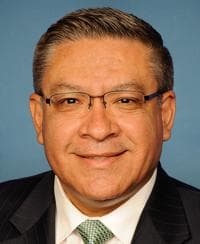
Full profile: /officials/C001112
Source: Congress.gov · FEC
Cosponsors (4)
Members who have signed on to support this bill since introduction. Source: Congress.gov.
Latest Action
The most recent step in the bill's legislative path. Committee Activity below shows referrals and reports; the full action-by-action history including floor proceedings lives at Congress.gov →
Referred to the Committee on Transportation and Infrastructure, and in addition to the Committee on Financial Services, for a period to be subsequently determined by the Speaker, in each case for consideration of such provisions as fall within the jurisdiction of the committee concerned.
2026-04-22
Source: Congress.gov
Committee Activity
Currently in
- House Committee on Financial ServicesReferred To · 2026-04-22
- House Committee on Transportation and InfrastructureReferred To · 2026-04-22
Previously
- Transportation and Infrastructure CommitteeReferred To · 2026-04-22
- Financial Services CommitteeReferred To · 2026-04-22
Plain-English Summary
The bill would create a new commission to study how the United States manages risks from natural disasters like hurricanes, earthquakes, and floods, and how insurance plays a role in protecting people and property. The commission would bring together experts to examine current policies and likely recommend ways to improve how the government and insurance companies work together to help communities prepare for and recover from disasters. This would affect homeowners, businesses, insurance companies, and government agencies involved in disaster response and recovery.
AI-assisted summary generated from the official bill metadata (title, subjects, actions) sourced from Congress.gov. Cached and reviewed. Always verify against the official text linked below.
Subjects
Full Bill Text
Verbatim text published on Congress.gov via GovInfo. Use Cmd+F / Ctrl+F to search within this excerpt.
[Congressional Bills 119th Congress] [From the U.S. Government Publishing Office] [H.R. 8439 Introduced in House (IH)] <DOC> 119th CONGRESS 2d Session H. R. 8439 To establish a nonpartisan commission on natural disaster risk management, insurance, and other financial and economic protections, and for other purposes. _______________________________________________________________________ IN THE HOUSE OF REPRESENTATIVES April 22, 2026 Mr. Carbajal (for himself, Mr. Evans of Colorado, Mr. Carter of Louisiana, and Mr. Ezell) introduced the following bill; which was referred to the Committee on Transportation and Infrastructure, and in addition to the Committee on Financial Services, for a period to be subsequently determined by the Speaker, in each case for consideration of such provisions as fall within the jurisdiction of the committee concerned _______________________________________________________________________ A BILL To establish a nonpartisan commission on natural disaster risk management, insurance, and other financial and economic protections, and for other purposes. Be it enacted by the Senate and House of Representatives of the United States of America in Congress assembled, SECTION 1. SHORT TITLE. This Act may be cited as the ``Commission on Natural Disaster Risk Management and Insurance Act''. SEC. 2. ESTABLISHMENT. There is established an independent, nonpartisan Commission on Natural Disaster Risk Management and Insurance (in this Act referred to as the ``Commission''). SEC. 3. MEMBERSHIP AND STRUCTURE. (a) Appointment.--The Commission shall be composed of-- (1) 8 members who shall have general knowledge and expertise in insurance, reinsurance, insurance regulation, policyholder concerns, emergency management, risk management, public finance, financial markets, actuarial analysis, flood mapping and planning, structural engineering, building standards, land use planning, natural disasters, meteorology, seismology, environmental issues, quantitative catastrophic risk modeling, or other pertinent qualifications, of which-- (A) 2 members shall be appointed by the majority leader of the Senate; (B) 2 members shall be appointed by the minority leader of the Senate; (C) 2 members shall be appointed by the Speaker of the House of Representatives; and (D) 2 members shall be appointed by the minority leader of the House of Representatives; (2) 8 members who shall have knowledge and expertise in insurance, reinsurance, policyholder concerns, risk management, financial markets, urban development or other pertinent financial services or housing qualifications, of which-- (A) 2 members shall be appointed by the Chair of the Committee on Banking, Housing, and Urban Affairs of the Senate; (B) 2 members shall be appointed by the Ranking Member of the Committee on Banking, Housing, and Urban Affairs of the Senate; (C) 2 members shall be appointed by the Chair of the Committee on Financial Services of the House of Representatives; and (D) 2 members shall be appointed by the Ranking Member of the Committee on Financial Services of the House of Representatives; (3) 8 members who shall have knowledge and expertise in disaster response and preparedness, emergency management, public financing, structural engineering, building standards, and other pertinent government response and investment qualifications, of which-- (A) 2 members shall be appointed by the Chair of the Committee on Transportation and Infrastructure of the House of Representatives; (B) 2 members shall be appointed by the Ranking Member of the Committee on Transportation and Infrastructure of the House of Representatives; (C) 2 members shall be appointed by the Chair of the Committee on Homeland Security and Governmental Affairs of the Senate; and (D) 2 members shall be appointed by the Ranking Member of the Committee on Homeland Security and Governmental Affairs of the Senate; and (4) 2 members who shall be State insurance commissioners, to be appointed by a selection process determined by the State insurance commissioners. (b) Limitations.--Members of the Commission appointed under-- (1) subsection (a)(1) through (a)(3) shall not…
Show the remaining 1,543 wordsHide the remaining 1,543 words
be officers or employees of the United States Government or any State government; and (2) subsection (a)(4) shall not be from the same political party. (c) Period of Appointment.-- (1) In general.--Each member of the Commission shall-- (A) be appointed not later than 30 days after the date of the enactment of this Act; and (B) serve for the duration of the Commission. (2) Vacancies.--A vacancy on the Commission-- (A) shall not affect the powers and duties of the Commission; and (B) shall be filled in the same manner as the original appointment. (d) Basic Pay.--Members of the Commission shall serve without pay. (e) Quorum.-- (1) Majority.--A majority of the members of the Commission shall constitute a quorum, but a lesser number, as determined by the Commission, may hold hearings. (2) Approval actions.--All recommendations and reports of the Commission required by this Act shall be approved only by a majority vote of all of the members of the Commission. (f) Chairperson.--The Commission shall, by majority vote of all of the members of the Commission, select 1 member of the Commission to serve as the Chairperson of the Commission. (g) Meetings.--The Commission shall meet at the call of the Chairperson of the Commission or a majority of the members of the Commission. (h) Information.-- (1) Access.-- (A) In general.--The Commission may enter into information-sharing agreements with Federal, State, local and Tribal government entities related to relevant information, including nonpublicly available data. (B) Limitation.--The Commission may not enter into an information sharing-agreement described in subparagraph (A) with respect to information that contains personal identifiable information. (2) Confidentiality.-- (A) Retention of privilege.--The sharing or submission of any nonpublicly available data and information to the Commission shall not constitute a waiver of, or otherwise affect, any privilege arising under Federal or State law (including the rules of any Federal or State court) to which the data or information is otherwise subject. (B) Continued application of prior confidentiality agreements.--Any requirement under Federal or State law to the extent otherwise applicable, or any requirement pursuant to a written agreement in effect between the original source of any nonpublicly available data or information and the source of such data or information to the Commission, regarding the privacy or confidentiality of any data or information in the possession of the source to the Commission, shall continue to apply to such data or information after the data or information has been provided to the Commission. (3) Limitation.--Nothing in this Act shall be construed to-- (A) require any Federal, State, local or Tribal government agency to share data or information to the Commission; (B) authorize the Commission to require data or information from any stakeholder; or (C) allow any Federal, State, local or Tribal government to collect information for which they do not already have for the sole purpose of the work of the Commission. (i) Gifts.--The Commission may not receive gifts to assist it in carrying out its duties without a specific authorization. SEC. 4. DUTIES OF THE COMMISSION. (a) Assessment.--The Commission shall examine the risks posed to the United States (both nationally and to individual States, localities, tribes and other geographic areas) by natural disasters and means for mitigating the risks and financial costs associated with losses caused by natural disasters, including the assessment of-- (1) the current exposure of the United States to natural disasters, including wildfires, hurricanes, earthquakes, volcanic eruptions, tsunamis, severe storms (including tornados, hail, and damaging winds), extreme heat, winter storms, flooding, droughts, and other natural disasters; (2) demographic trends, including population migration to high-risk areas and the associated development of the built environment, and the impact such trends could have on the cost of losses inflicted by future natural disasters; (3) the current efforts of States, communities, and individuals to mitigate their natural disaster risks, including the affordability and effectiveness of such mitigation; (4) the impact and benefits of strengthened land use regulations and building codes in areas at high risk for natural disasters, and methods to strengthen enforcement of structural mitigation and vulnerability reduction measures, such as zoning and building code compliance; (5) the role of Federal, State, and local governments in providing incentives for feasible risk mitigation efforts; (6) the current condition of, as well as the outlook for, the availability and affordability of property and casualty insurance in all regions of the country and an analysis of factors that may be adversely impacting such availability and affordability; (7) the impact of Federal and State laws, regulations, and policies (including rate regulation, market access requirements, reinsurance, accounting and tax policies, State residual markets, and State disaster funds) on-- (A) the affordability and availability of insurance for losses resulting from natural disaster; (B) the capacity of the private insurance market to cover losses resulting from natural disasters; (C) the commercial and residential development of high-risk areas; and (D) the costs of natural disasters to Federal and State taxpayers; (8) the present and long-term financial condition of State residual markets and natural disaster funds in high-risk regions, including the likelihood of insolvency following a natural disaster, the concentration of risks within such funds, the reliance on post-event assessments and State funding, and the adequacy of rates; (9) the various risk-sharing mechanisms for natural disasters (including the private insurance and reinsurance markets, State residual insurance markets, catastrophe bond markets, and government insurance programs) and the relevant benefits, risks and practices for providing insurance protection to different sectors of the population of the United States; (10) the role that innovation in financial services could play in improving the financial risk-sharing of the costs of natural disasters, specifically addressing measures that could foster the development of financial products designed to cover natural disaster risk, such as alternative risk transfer mechanisms, including parametric insurance and catastrophe bonds; (11) whether, and how, such risk-sharing mechanisms can be modified to resolve key obstacles currently impeding broader take-up rate of catastrophic risk management and financing; (12) the ability of the United States private insurance market to cover insured losses caused by natural disasters, including an estimate of the maximum amount of insured losses that could be sustained during a single year and the probability of natural disasters occurring in a single year that would inflict more insured losses than the United States insurance and reinsurance markets could sustain; (13) the need for financial feasibility and sustainability of a national, regional, or other cooperation designed to promote adequate property and casualty insurance take-up, including in current impacted or constrained markets; (14) the appropriate role, if any, for the Federal Government in the stabilization of property and casualty insurance, reinsurance, or other impacted markets following catastrophic loss events; (15) methods to promote the take-up of flood insurance policies through the National Flood Insurance Program to reduce financial losses caused by natural disasters in the uninsured sectors of the population of the United States; and (16) any unique needs of low-income communities to promote risk reduction and property and casualty insurance take-up in such communities. (b) Consultation and Public Engagement.--In conducting the assessments required in subsection (a), the Commission shall-- (1) coordinate with State insurance commissioners, both individually and collectively, on all insurance matters; (2) consult with relevant Federal agencies, as described in subsection (c), on matters related to the prevalence and cost of Federal financial assistance related to losses resulting from natural disasters; and (3) engage with relevant public stakeholders, including-- (A) insurers, reinsurers, and insurance agents and brokers; and (B) capital market participants with a focus on alternative risk transfer mechanisms. (c) Executive Branch Assistance.--The heads of the following agencies shall advise and consult with the Commission on matters within their respective areas of responsibility: (1) Federal Emergency Management Agency. (2) U.S. Army Corps of Engineers. (3) National Oceanic and Atmospheric Administration. (4) Department of Housing and Urban Development. (5) Department of Housing and Urban Development. (6) Federal Housing Finance Agency. (7) Federal Housing Administration. (8) Department of the Treasury. (9) Department of Agriculture. (10) Environmental Protection Agency. (11) Any other agency, as determined by the Commission. SEC. 5. REPORT. Not later than 2 years after the date of the enactment of this Act, the Commission shall submit to the Committee on Banking, Housing, and Urban Affairs of the Senate, the Committee on Financial Services of the House of Representatives, Committee on Homeland Security and Governmental Affairs of the Senate, and the Committee on Transportation and Infrastructure of the House of Representatives a report that contains-- (1) a detailed statement of the findings and assessments conducted by the Commission pursuant to section 4; and (2) any recommendations for legislative, regulatory, administrative, or other actions at the Federal, State, or local levels that the Commission considers appropriate to address the issues described in section 4. SEC. 6. TERMINATION. (a) In General.--The Commission shall terminate 90 days after the date on which the Commission submits the report under section 5. (b) Data and Information.--Upon the termination of the Commission, all data and information in possession of the Commission and its members shall be destroyed or returned to the respective owners of such data and information. SEC. 7. AUTHORIZATION OF APPROPRIATIONS. There are authorized to be appropriated to the Commission such sums as may be necessary to carry out this Act, to remain available until expended. <all>
Related legislation
Bills by the same sponsor or covering overlapping subjects.
- HR2175To designate the facility of the United States Postal Service located at 130 South Patterson Avenue in Santa Barbara, California, as the "Brigadier General Frederick R. Lopez Post Office Building".Passed House · 2026-09-14
- HRES1459Expressing support for the designation of July 2026 as "American Grown Flower and Foliage Month".Referred to Committee · 2026-07-27
- HR9185Alan S. Lowenthal Blue Whales, Blue Skies ActReferred to Committee · 2026-06-08
- HR8785Medium Transit Intensive Cities Authorization Act of 2026Referred to Committee · 2026-05-13