REVIVE VI Act
Sponsor
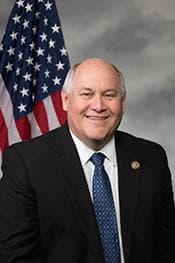
Full profile: /officials/E000298
Source: Congress.gov · FEC
Cosponsors (8)
Members who have signed on to support this bill since introduction. Source: Congress.gov.
8 cosponsors on record at Congress.gov. The named list is syncing into Govwatch and will appear here shortly — view on Congress.gov in the meantime.
Latest Action
The most recent step in the bill's legislative path. Committee Activity below shows referrals and reports; the full action-by-action history including floor proceedings lives at Congress.gov →
Committee Activity
Currently in
- House Committee on Ways and MeansReferred To · 2025-01-31
Plain-English Summary
Restore Economic Vitality and Investment in the Virgin Islands Act or the REVIVE VI Act This bill allows certain U.S. shareholders of a controlled foreign corporation to exclude qualified Virgin Islands service income from the calculation of global intangible low-taxed income (GILTI) for federal tax purposes. It also requires the Internal Revenue Service (IRS) to issue guidance on the exclusion. (Some limitations apply.) Under current law, U.S. shareholders that own 10% or more of a controlled foreign corporation are required to include in gross income the GILTI of the controlled foreign corporation. The calculation of GILTI is based, in part, on the controlled foreign corporation’s tested income (the controlled foreign corporation’s gross income excluding certain types of income and dividends). Under the bill, specified U.S. shareholders (individuals, trusts, estates, and certain closely-held C corporations) may exclude qualified Virgin Islands service income from a controlled foreign corporation’s gross income for purposes of calculating the controlled foreign corporation’s tested income. The bill defines qualified Virgin Islands service income as gross income that is compensation for labor or personal services performed in the Virgin Islands by a corporation formed under Virgin Islands laws, attributable to services performed in the Virgin Islands by individuals for the benefit of such corporation, and effectively connected with the conduct of a trade or business in the Virgin Islands. Finally, the bill requires the IRS to issue guidance on the exclusion of qualified Virgin Island service income from the GILTI calculation.
Plain-English rewrite of the Congressional Research Service summary published on Congress.gov. Cached and reviewed.
Subjects
Related legislation
Bills by the same sponsor or covering overlapping subjects.
- HR10334EFIN Verification Act of 2026Referred to Committee · 2026-09-16
- HR10431U.S. Innovation and Global Competitiveness Act of 2026Referred to Committee · 2026-09-16
- HRES1340Expressing strong opposition to the imposition of digital services taxes and other relevant similar measures by other countries that unfairly discriminate against United States companies.Referred to Committee · 2026-06-04
- HRES1152Expressing appreciation and recognition for the contributions of the American cowboy and historic cattle trails in advancing American history in celebration of the Nation's 250th anniversary.Referred to Committee · 2026-04-02