Modernizing Aeronautical Standards Act
Sponsor
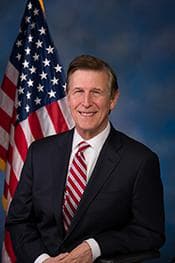
Full profile: /officials/B001292
Source: Congress.gov · FEC
Cosponsors (0)
Members who have signed on to support this bill since introduction. Source: Congress.gov.
No cosponsors on record. Bills can pass without cosponsors — this often means the sponsor introduced the bill alone, either because it's a messaging bill, a chairman's mark, or simply early in the legislative cycle.
Latest Action
The most recent step in the bill's legislative path. Committee Activity below shows referrals and reports; the full action-by-action history including floor proceedings lives at Congress.gov →
Committee Activity
Currently in
- House Committee on Science, Space, and TechnologyReferred To · 2026-07-09
Plain-English Summary
NASA would be required to study how aeronautical standards—the technical rules that govern aircraft design and safety—could be updated to reflect modern technology and practices. The study would help identify which current standards are outdated and what changes might be needed to keep aviation safe and competitive in today's world. This would affect aircraft manufacturers, airlines, and the Federal Aviation Administration that oversees aviation safety.
AI-assisted summary generated from the official bill metadata (title, subjects, actions) sourced from Congress.gov. Cached and reviewed. Always verify against the official text linked below.
Subjects
Full Bill Text
Verbatim text published on Congress.gov via GovInfo. Use Cmd+F / Ctrl+F to search within this excerpt.
[Congressional Bills 119th Congress] [From the U.S. Government Publishing Office] [H.R. 9622 Introduced in House (IH)] <DOC> 119th CONGRESS 2d Session H. R. 9622 To require NASA to conduct a study on the modernization of aeronautical standards, and for other purposes. _______________________________________________________________________ IN THE HOUSE OF REPRESENTATIVES July 9, 2026 Mr. Beyer introduced the following bill; which was referred to the Committee on Science, Space, and Technology _______________________________________________________________________ A BILL To require NASA to conduct a study on the modernization of aeronautical standards, and for other purposes. Be it enacted by the Senate and House of Representatives of the United States of America in Congress assembled, SECTION 1. SHORT TITLE. This Act may be cited as the ``Modernizing Aeronautical Standards Act''. SEC. 2. STUDY ON AERONAUTICAL STANDARDS. (a) Study Required.--The Administrator of the National Aeronautics and Space Administration (NASA), in consultation with the Administrator of the Federal Aviation Administration, the Administrator of the National Oceanic and Atmospheric Administration, and representatives of relevant academic, industry, nonprofit, or standards organizations as the Administrator of NASA determines appropriate, shall conduct a study on the modernization of aeronautical standards. (b) Designation.--The study conducted under subsection (a) shall be known as the ``Modernization of Aeronautical Standards and Aircraft Performance Study'' (in this section referred to as the ``study''). (c) Elements.--The study may include the following: (1) An assessment of-- (A) current atmospheric conditions, and (B) corresponding atmospheric conditions over the immediately preceding 50 years, including an assessment of significant variations between the conditions specified in subparagraphs (A) and (B). (2) An assessment of the state of current predictions for, or mapping of, future trends or variations in atmospheric conditions in the 50 years beginning after the date of the enactment of this Act. (3) An analysis of the impacts to operation, maintenance, and sustainment costs of covered commercial aircraft as a result of any significant variations related to atmospheric conditions assessed pursuant to paragraph (1). (4) An estimation of the number of weight restriction hours for covered commercial aircraft at covered commercial airports as a consequence of the assessment of atmospheric conditions pursuant to paragraph (1). (5) An assessment of required infrastructure investment at covered commercial airports as a result of the assessments of atmospheric conditions pursuant to paragraphs (1) and (2). (6) An assessment of recommended considerations for design modifications for future aircraft to account for the assessments of atmospheric conditions pursuant to paragraphs (1) and (2). (7) An analysis of impacts to operation, maintenance, and sustainment costs and aircraft performance of aircraft as a result of the atmospheric conditions assessed pursuant to paragraph (1). (8) Design requirements for aircraft owned by the Federal Government, or other equipment, which should be updated to account for atmospheric conditions. (9) Assessments of United States aeronautical and atmospheric standards, as a result of the assessments of atmospheric conditions pursuant to paragraphs (1) and (2). (10) Criteria under which future updates or supplements to atmospheric standards should be made. (d) Transmittal.--The Administrator NASA may transmit the results of the study to the Committee on Science, Space, and Technology of the House of Representatives and the Committee on Commerce, Science, and Transportation of the Senate not later than 18 months after the date of the enactment of this Act. (e) Definitions.--In this section: (1) Aircraft performance.--The term ``aircraft performance'' includes the following: (A) Range. (B) Payload capacity. (C) Runway length requirement. (D) Climb rate. (E) Turn rate. (F) Operating altitude. (G) Acceleration. (2) Atmospheric standards.--The term ``atmospheric standards'' means the following: (A) The United States Standard Atmosphere of 1976. (B) Any other standard as determined by the Administrator of…
Show the remaining 190 wordsHide the remaining 190 words
the National Aeronautics and Space Administration. (3) Covered commercial aircraft.--The term ``covered commercial aircraft'' means the ten aircraft types still in production with the highest number of operations at covered commercial airports in the most recent calendar year ending before the date of the enactment of this Act. (4) Covered commercial airports.--The term ``covered commercial airports'' means the following: (A) The 30 commercial service airports (as such term is defined in section 47102(7) of title 49, United States Code) with the most passenger boardings (as such term is defined in section 47102(15) of title 49, United States Code) in the most recent calendar year ending before the date of the enactment of this Act. (B) The five public airports (as such term is defined in section 47102(21) of title 49, United States Code) not described in subparagraph (A) with the highest all-cargo landed weight in the most recent calendar year ending before the date of the enactment of this Act. (5) Weight restriction hour.--The term ``weight restriction hour'' means an hour when the maximum temperature for that hour matches or exceeds the weight-restriction temperature threshold for a specific aircraft. <all>
Related legislation
Bills by the same sponsor or covering overlapping subjects.
- HR10249Kids Safety on Set Act of 2026Referred to Committee · 2026-09-03
- HR10120National Flood Impact Reduction and Resilience Act of 2026Referred to Committee · 2026-08-20
- HR10014Restoring Accountability in Appropriations ActReferred to Committee · 2026-08-03
- HR9977Homebuilding Materials Tariff Relief ActReferred to Committee · 2026-07-30