HRES1337Referred to Committee
Recognizing the contributions of academic medicine and observing Academic Medicine Week from June 8 through 12, 2026.
Introduced
In Committee
3
Passed One Chamber4
Passed Both5
Signed into Law119th
Congress
2026-06-03
Introduced
1
Cosponsors
HRES
ⓘType
Sponsor
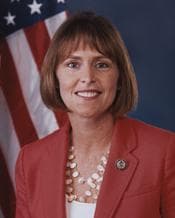
Kathy Castor
Democrat · FL · Representative
Votes with party: 96.5% (661 recorded votes)
Full profile: /officials/C001066
Source: Congress.gov · FEC
Cosponsors (1)
Members who have signed on to support this bill since introduction. Source: Congress.gov.
Latest Action
The most recent step in the bill's legislative path. Committee Activity below shows referrals and reports; the full action-by-action history including floor proceedings lives at Congress.gov →
Committee Activity
Currently in
- House Committee on Energy and CommerceReferred To · 2026-06-03
Plain-English Summary
This resolution designates June 8-12, 2026 as Academic Medicine Week to recognize the work of doctors, researchers, and educators at teaching hospitals and medical schools across the country. The measure honors how academic medical centers train the next generation of physicians, conduct medical research, and provide patient care in their communities. No new laws or funding are created; this is primarily a symbolic recognition of the contributions these institutions make to American healthcare and medicine.
AI-assisted summary generated from the official bill metadata (title, subjects, actions) sourced from Congress.gov. Cached and reviewed. Always verify against the official text linked below.
Subjects
Health
Full Bill Text
Verbatim text published on Congress.gov via GovInfo. Use Cmd+F / Ctrl+F to search within this excerpt.
[Congressional Bills 119th Congress] [From the U.S. Government Publishing Office] [H. Res. 1337 Introduced in House (IH)] <DOC> 119th CONGRESS 2d Session H. RES. 1337 Recognizing the contributions of academic medicine and observing Academic Medicine Week from June 8 through 12, 2026. _______________________________________________________________________ IN THE HOUSE OF REPRESENTATIVES June 3, 2026 Ms. Castor of Florida (for herself and Mr. Fitzpatrick) submitted the following resolution; which was referred to the Committee on Energy and Commerce _______________________________________________________________________ RESOLUTION Recognizing the contributions of academic medicine and observing Academic Medicine Week from June 8 through 12, 2026. Whereas the week of June 8 through 12, 2026, is designated Academic Medicine Week to recognize the contributions of academic medicine to medical research, clinical care, medical education, and community health nationwide; Whereas academic medicine--the Nation's medical schools, academic health systems, teaching hospitals, and resident physicians, faculty physicians, students, and medical researchers--serves a vital and unique role in the United States health care system; Whereas these providers and institutions, including the AAMC (Association of American Medical Colleges) network of nearly 500 academic health systems and teaching hospitals and 163 medical schools, focus on 4 missions: (1) educating and training the nation's health care workforce; (2) conducting groundbreaking medical research; (3) delivering cutting-edge patient care, including care for the sickest and most complex patients; and (4) collaborating with communities to improve the health of people everywhere, while also serving as vital economic engines; Whereas the AAMC is celebrating 150 years of leading and serving the United States' medical schools, academic health systems and teaching hospitals, and individuals across academic medicine--including more than 210,000 full-time faculty members, 100,000 medical students, 162,000 resident physicians, and 60,000 graduate students and postdoctoral researchers in the biomedical sciences; Whereas for 150 years, the AAMC has served as the national voice and advocate for academic medicine by leading and serving its member institutions to train the next generation of doctors and scientists, deliver excellent care, foster breakthroughs to save lives, and prepare for health crises; Whereas the unique environment at AAMC-member institutions is essential to advancing lifesaving medical research, training the next generation of physicians and health care professionals, and caring for patients in every community nationwide; Whereas AAMC-member institutions drive medical research and innovation, and the unique partnership between the National Institutes of Health (``NIH'') and the Nation's medical schools and teaching hospitals, forged just after World War II, deepens the understanding of the mechanisms of human health and disease, leading to advancements in treatments, therapies, and medical technologies that bring hope to patients and families; Whereas approximately 60 percent of all NIH extramural research is conducted by AAMC-member institutions; Whereas AAMC-member institutions and the Department of Veterans Affairs (``VA'') have forged and maintained an 80-year partnership, built on the shared missions of strengthening medical education, health care, and medical research, which has improved the lives of veterans and improved health equity for veterans by ensuring they have access to advanced health care; Whereas through this historic collaboration, the VA has become the largest single provider of medical training in the country, with approximately 70 percent of all physicians in the United States completing at least part of their training in VA facilities; Whereas America's academic health systems and teaching hospitals are a vital part of the nation's health care infrastructure and are where expert patient care and state-of-the-art medical innovation connect to save lives; Whereas AAMC-member academic health systems and teaching hospitals provide 32% of all hospital-based charity care; 22% of Medicare inpatient days; 29% of Medicaid inpatient days; 100% of all National Cancer Institute- designated comprehensive cancer centers; 56% of all…
Show the remaining 533 wordsHide the remaining 533 words
level-one trauma centers; and 65% of all pediatric intensive care unit beds; Whereas the AAMC continues to project that physician demand will grow faster than the supply (primarily driven by a growing, aging United States population), leading to a persistent physician shortage?, so action is needed now to address the physician shortage, AAMC-member teaching health systems and hospitals train 70 percent of medical residents; Whereas a key element of addressing the physician shortage and ensuring access to care for all communities is strengthening the physician workforce and increasing Medicare support for graduate medical education, which will help patients receive care when they need it, particularly in rural and other underserved areas; Whereas continued support is needed for the Health Resources and Services Administration Title VII health professions and Title VIII nursing workforce development programs--which invest in K-16 health outreach and education programs through partnerships between health professions schools and local community-based organizations--that are critical to addressing workforce shortages by training and supporting a robust health care workforce, including in rural and other underserved areas, through scholarships, mentorship, community-based and interdisciplinary training, and well-being programs; Whereas the perspectives of learners have been represented and augmented through the AAMC on important issues--including pathways to careers in medicine, STEM education, student loans, faculty mentorship, and training programs--and bipartisan approaches to strengthening medical education continues; Whereas AAMC-member institutions equip medical students with the knowledge, skills, and behaviors to positively impact patients, health care organizations, and society generally by improving the clinical learning environment, health care quality, health outcomes, and patient satisfaction; Whereas medical schools, academic health systems and teaching hospitals collaborate across rural, urban, and underserved areas to address the physician shortage by building the physician workforce and strengthening the pathway for international physicians who are willing to practice in underserved areas after completing residency training; Whereas AAMC-member institutions support the physician workforce by expanding training for medical students, especially in communities with health professions shortages; Whereas medical schools, academic health systems, and teaching hospitals contributed in 2019 more than $728 billion in gross domestic product (``GDP''), 3.2% of the United States' GDP, an economic impact comparable in size to other important sectors such as transportation, warehousing, and food services; Whereas AAMC-member institutions generate approximately $2,218 in economic impact per person and support more than 7.1 million jobs in the United States across multiple industries, which was approximately 4.4% of the 2019 labor force nationwide, and paid an average of more than $68,000 in wages, salaries, and benefits per job; Whereas academic medicine's four mission areas are so deeply interconnected that inadequate financing or reductions in funding for one mission area limit the effectiveness of the others; Resolved, That the House of Representatives-- (1) supports the designation of ``Academic Medicine Week''; (2) affirms the unique and critical impact of academic medicine on patients and communities nationwide; (3) recognizes the importance of ensuring strong federal support for programs that support academic medicine's leadership in medical research, cutting-edge patient care, innovative medical education, and critical community collaborations; and (4) encourages the people of the United States to recognize the critical role of the Nation's medical schools, academic health systems and teaching hospitals in improving the health of all. <all>
Related legislation
Bills by the same sponsor or covering overlapping subjects.
- HR1054021st Century FTC ActReferred to Committee · 2026-09-24
- HR10110Housing Price Transparency ActReferred to Committee · 2026-08-17
- HR9843Enhancing Electric Grid Resilience ActReferred to Committee · 2026-07-22
- HR9084Department of Energy Nuclear Transparency ActReferred to Committee · 2026-07-14