HRES1647Referred to Committee
Expressing support for the recognition of the week of November 1 through November 7, 2026, as "Drowsy Driving Prevention Week".
Introduced
In Committee
3
Passed One Chamber4
Passed Both5
Signed into Law119th
Congress
2026-11-02
Introduced
1
Cosponsors
HRES
ⓘType
Sponsor
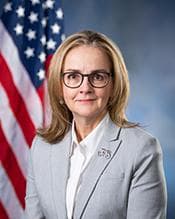
Madeleine Dean
Democrat · PA · Representative
Votes with party: 99.2% (663 recorded votes)
Top industries funding sponsor:
- Climate & Environment$1k
Full profile: /officials/D000631
Source: Congress.gov · FEC
Cosponsors (1)
Members who have signed on to support this bill since introduction. Source: Congress.gov.
Latest Action
The most recent step in the bill's legislative path. Committee Activity below shows referrals and reports; the full action-by-action history including floor proceedings lives at Congress.gov →
Committee Activity
Currently in
- House Committee on Transportation and InfrastructureReferred To · 2026-11-02
Plain-English Summary
Plain-English summary pending. Introduced on 2026-11-02. Check back soon — summaries are generated as bills progress through Congress.
Subjects
Transportation and Public Works
Full Bill Text
Verbatim text published on Congress.gov via GovInfo. Use Cmd+F / Ctrl+F to search within this excerpt.
[Congressional Bills 119th Congress] [From the U.S. Government Publishing Office] [H. Res. 1647 Introduced in House (IH)] <DOC> 119th CONGRESS 2d Session H. RES. 1647 Expressing support for the recognition of the week of November 1 through November 7, 2026, as ``Drowsy Driving Prevention Week''. _______________________________________________________________________ IN THE HOUSE OF REPRESENTATIVES November 2, 2026 Ms. Dean of Pennsylvania (for herself and Mr. Fitzpatrick) submitted the following resolution; which was referred to the Committee on Transportation and Infrastructure _______________________________________________________________________ RESOLUTION Expressing support for the recognition of the week of November 1 through November 7, 2026, as ``Drowsy Driving Prevention Week''. Whereas the Centers for Disease Control and Prevention defines drowsy driving as ``operating a motor vehicle while fatigued or sleepy''; Whereas drowsy driving creates a serious risk on the road by making drivers less attentive, slowing reaction times, and affecting the ability to make decisions; Whereas the National Safety Council considers drowsy driving to be a profound impairment that mimics alcohol-impaired driving in many ways, including impaired attention, mental processing, judgment, and decision making; Whereas studies show that being awake for 18 hours results in impairment equivalent to or worse than a blood alcohol content (BAC) of 0.05 percent and being awake for 24 hours results in a BAC of 0.1 percent, higher than the legal limit of 0.08 percent BAC in all States; Whereas the National Sleep Foundation advises that healthy adults need between 7 and 9 hours of sleep per night; Whereas drivers who work the night shift, work multiple jobs, or have irregular work schedules are at increased risk for motor vehicle crashes caused by drowsy driving; Whereas the National Sleep Foundation consistently finds that over 60 percent of adult drivers report driving while drowsy and an estimated 1 in 25 adult drivers (aged 18 or older) report having fallen asleep while driving in the previous 30 days; Whereas an estimated 328,000 crashes and 21 percent of all fatal crashes annually, 6,400 deaths per year, involve a drowsy driver; Whereas the National Highway Traffic Safety Administration conservatively estimates that 100,000 police-reported crashes each year are caused primarily by drowsy driving and that such crashes result in more than 1,550 deaths, 71,000 injuries, and $12,500,000,000 in monetary losses; Whereas numerous States across the Nation promote and participate in Drowsy Driving Prevention Week; Whereas Drowsy Driving Prevention Week informs communities about preventative measures against drowsy driving such as improving overall sleep habits and avoiding medication that causes drowsiness; Whereas the goal of Drowsy Driving Prevention Week is to reduce the number of drivers who drive while sleep deprived; and Whereas drowsy driving deaths are preventable, and lives can be saved through awareness, prevention, and intervention: Now, therefore, be it Resolved, That the House of Representatives-- (1) supports the designation of ``Drowsy Driving Prevention Week'' to raise awareness about the dangers of drowsy driving; and (2) encourages people across the United States to take preventable steps against drowsy driving. <all>
Related legislation
Bills by the same sponsor or covering overlapping subjects.
- HR10733Improving Justice Programs through Science Act of 2026Referred to Committee · 2026-10-05
- HR10659Removing Access Barriers to Running for Elected Office for People with Disabilities ActReferred to Committee · 2026-10-01
- HR10661Beyond the Box for Higher Education Act of 2026Referred to Committee · 2026-10-01
- HR10660AID Local Government Leadership ActReferred to Committee · 2026-10-01