National Talent Strategy Act of 2026
Sponsor
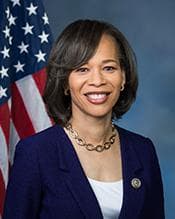
Full profile: /officials/B001303
Source: Congress.gov · FEC
Cosponsors (1)
Members who have signed on to support this bill since introduction. Source: Congress.gov.
Latest Action
The most recent step in the bill's legislative path. Committee Activity below shows referrals and reports; the full action-by-action history including floor proceedings lives at Congress.gov →
Read twice and referred to the Committee on Health, Education, Labor, and Pensions.
2026-09-24
Source: Congress.gov
Committee Activity
Currently in
- Senate Committee on Health, Education, Labor, and PensionsReferred To · 2026-09-24
Plain-English Summary
Plain-English summary pending. Introduced on 2026-09-24. Check back soon — summaries are generated as bills progress through Congress.
Full Bill Text
Verbatim text published on Congress.gov via GovInfo. Use Cmd+F / Ctrl+F to search within this excerpt.
[Congressional Bills 119th Congress] [From the U.S. Government Publishing Office] [S. 5506 Introduced in Senate (IS)] <DOC> 119th CONGRESS 2d Session S. 5506 To authorize the Secretary of Labor to develop a comprehensive Federal Talent Strategy. _______________________________________________________________________ IN THE SENATE OF THE UNITED STATES September 24, 2026 Ms. Blunt Rochester (for herself and Mr. Budd) introduced the following bill; which was read twice and referred to the Committee on Health, Education, Labor, and Pensions _______________________________________________________________________ A BILL To authorize the Secretary of Labor to develop a comprehensive Federal Talent Strategy. Be it enacted by the Senate and House of Representatives of the United States of America in Congress assembled, SECTION 1. SHORT TITLE. This Act may be cited as the ``National Talent Strategy Act of 2026''. SEC. 2. TALENT WORKING GROUP. (a) Establishment.--Not later than 120 days after the date of enactment of this Act, the Secretary of Labor shall establish a working group to be known as the ``American Talent Working Group'' (in this Act referred to as the ``Working Group'')-- (1) to serve as a standing forum for aligning Federal policy, funding, and data infrastructure related to education, workforce, and talent; and (2) to support coordination of State and local efforts to meet the needs of the labor market. (b) Composition.--The Working Group shall be composed of the following: (1) The Secretary of Labor. (2) The Secretary of Agriculture. (3) The Secretary of Commerce. (4) The Secretary of Defense. (5) The Secretary of Education. (6) The Secretary of Energy. (7) The Secretary of Health and Human Services. (8) The Secretary of Homeland Security. (9) The Secretary of Transportation. (10) The Chief Executive Officer of the Corporation for National and Community Service. (11) A representative from the Council of Economic Advisers. (12) A representative from the Domestic Policy Council. (13) The Chief Executive Officer of the Internal Revenue Service. (14) The Commissioner of Labor Statistics. (15) The Director of the National Science Foundation. (16) The Director of the Office of Management and Budget. (17) The Director of the Office of Personnel Management. (18) The Director of the Office of Science and Technology Policy. (c) Activities.--The Working Group shall-- (1) drive the development of the Federal strategic talent plan outlined in section 3; (2) meet not less often than once a year to report on workforce development activities to improve communication and alignment of programs, to discuss progress made on the recommendations outlined in the Federal strategic talent plan, and to identify barriers to the adoption of recommendations; (3) identify challenges and barriers to the reach, utilization, and successful outcomes of workforce development programs that may inform updates to the Federal strategic talent plan; (4) submit a report, not later than 30 days after the date of a meeting, to the Committee on Health, Education, Labor, and Pensions of the Senate and the Committee on Education and Workforce of the House of Representatives summarizing-- (A) key points from the meeting; (B) progress on enactment of the Federal strategic talent plan, including specific goals that have been met, specific actions taken by each member of the Working Group to implement the Federal strategic talent plan, and a description of the metrics used to evaluate success; (C) common barriers identified and common projected trends that may impact the Federal strategic talent plan; and (D) any legislative recommendations; (5) engage not less often than annually with State and local government leaders, business owners and industry leaders, labor union representatives, local chambers of commerce, local boards and State boards (as such terms are defined in section 3 of the Workforce Innovation and Opportunity Act…
Show the remaining 1,003 wordsHide the remaining 1,003 words
(29 U.S.C. 3102)), education officials from secondary schools (as defined in section 8101 of the Elementary and Secondary Education Act of 1965 (20 U.S.C. 7801)), postsecondary schools, and area career and technical education schools (as defined in section 3 of the Carl D. Perkins Career and Technical Education Act of 2006 (20 U.S.C. 2302)), institutions of higher education, and Tribal leaders, which shall include direct conversations and the collection and consideration of recommendations; (6) host regional meetings to better understand varied needs for job development across the Nation; and (7) ensure that workforce programs are aligned with updates to the President's List of Critical and Emerging Technologies (CET) and consider related skills needs and talent development strategies. (d) Sunset.--The Working Group shall cease to exist effective on the date that is 8 years after the date of enactment of this Act, unless reauthorized by an Act of Congress. SEC. 3. COMPREHENSIVE FEDERAL STRATEGIC PLAN. (a) In General.--Not later than 1 year after the date of enactment of this Act, the Secretary of Labor, in coordination with the Working Group and with representatives from industries and labor organizations (as defined in section 2 of the National Labor Relations Act (29 U.S.C. 152)) that are connected with Federal workforce development programs, shall develop a comprehensive Federal strategic talent plan covering a 4-year period that shall serve as a strategic planning document for all Federal agencies engaged in workforce development activities. (b) Evaluation of Workforce Programs Across the Federal Government.-- (1) In general.--The Federal strategic talent plan developed under subsection (a) shall-- (A) evaluate all workforce programs across the Federal Government; (B) provide analysis on program participation, program outcomes for participants, and program effectiveness in meeting statutory goals; (C) provide analysis on larger indicators, including unemployment, earnings growth, and labor participation; (D) identify areas of overlap among programs; and (E) identify areas where programs could have more efficient strategic alignment. (2) Insight from report.--The evaluation described in paragraph (1) shall leverage relevant insights from the Government Accountability Office report ``Employment and Training Programs: Department of Labor Should Assess Efforts to Coordinate Services Across Programs'', GAO-19-200, March 2019, including from any updates to such report. (c) Identification and Evaluation of Barriers.-- (1) In general.--The Federal strategic talent plan developed under subsection (a) shall-- (A) identify and evaluate barriers to national workforce readiness with a focus on the areas described in paragraph (2); and (B) identify the capacity of existing national workforce development programs to support reducing the identified barriers. (2) Focus areas.--The areas described in this paragraph are the following: (A) Industries projected to have significant job growth in the next decade, including those identified by the Bureau of Labor Statistics as the fastest- growing occupations. (B) Industries in sectors critical to national success facing significant workforce shortages. (C) Industries of importance to global economic competitiveness. (D) Domestic manufacturing and industrial capacity. (E) Industries that offer consistent, high-wage career pathways for workers. (F) Industries of importance to national security, national defense, and research and development capacity, including areas listed under the Critical and Emerging Technologies (CET) List, the Cybersecurity and Infrastructure Security Agency critical infrastructures sectors, and the key technology focus areas under section 10387 of the CHIPS Act of 2022 (42 U.S.C. 19107). (G) Members of the Armed Forces transitioning to civilian employment or serving in the National Guard or Reserves, and veterans reentering the civilian workforce. (H) Workers in occupations and industries most susceptible to disruption from automation, artificial intelligence, and other emerging technologies. (3) Interagency strategic plan.--The Federal strategic talent plan developed under subsection (a) shall create an interagency strategic plan to-- (A) address barriers identified in paragraph (1) through existing or new Federal workforce development initiatives; (B) improve cross-agency implementation of programs; (C) increase labor force participation across populations; (D) increase the reach of Federal workforce programs to populations such programs are intended to serve; (E) identify and obtain data that is necessary to improve Federal workforce development programs and supports for workers; (F) increase utilization of apprenticeships registered under the Act of August 16, 1937 (commonly known as the ``National Apprenticeship Act''; 50 Stat. 664, chapter 663; 29 U.S.C. 50 et seq.); and (G) support workers affected by automation or other disruptive impacts of artificial intelligence and emerging technologies through re-skilling, upskilling, and educational opportunities. (4) Recommendations.--The Federal strategic talent plan developed under subsection (a) shall include recommendations to Congress to resolve inefficiencies and address barriers in Federal workforce development programs. (d) Submission and Update.-- (1) In general.--The Federal strategic talent plan developed under subsection (a) shall be submitted to the Committee on Health, Education, Labor, and Pensions of the Senate and the Committee on Education and Workforce of the House of Representatives in unclassified form, but may include a classified annex. (2) Updates.--The Federal strategic talent plan developed under subsection (a) shall be reviewed and updated not less often than once every 2 years and updated in its entirety not less often than once every 4 years. Each such update shall be submitted to the Committee on Health, Education, Labor, and Pensions of the Senate and the Committee on Education and Workforce of the House of Representatives in unclassified form, but may include a classified annex. (e) Sunset.--The Federal strategic talent plan developed under subsection (a) shall cease to exist effective on the date that is 8 years after the date of enactment of this Act, unless reauthorized by an Act of Congress. SEC. 4. EVALUATIONS. At the end of the 4-year period described in section 3(a), the Comptroller General of the United States shall conduct an evaluation of the effectiveness of the Working Group and the Federal strategic talent plan developed under section 3(a), including an assessment of the degree of participation of participants in the Working Group and the success of the Federal agencies engaged in workforce development activities in meaningfully executing the Federal strategic talent plan. The Comptroller General shall conduct an additional evaluation of each update of the Federal strategic talent plan described in section 3(d)(2). <all>
Related legislation
Bills by the same sponsor or covering overlapping subjects.
- SRES930A resolution expressing support for the recognition of October 2026, as "World Menopause Awareness Month" and for global awareness and access to care during menopausal transition and post-menopause.Referred to Committee · 2026-09-30
- S5640Data Center Transparency Act of 2026Referred to Committee · 2026-09-30
- S5500Affordable Housing Preservation and Protection Act of 2026Referred to Committee · 2026-09-24
- S5536No Surprise Bills for Seniors ActReferred to Committee · 2026-09-24