ACRES Act
Sponsor
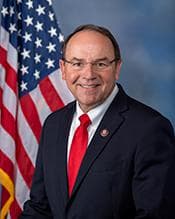
Full profile: /officials/T000165
Source: Congress.gov · FEC
Cosponsors (0)
Members who have signed on to support this bill since introduction. Source: Congress.gov.
No cosponsors on record. Bills can pass without cosponsors — this often means the sponsor introduced the bill alone, either because it's a messaging bill, a chairman's mark, or simply early in the legislative cycle.
Latest Action
The most recent step in the bill's legislative path. Committee Activity below shows referrals and reports; the full action-by-action history including floor proceedings lives at Congress.gov →
Placed on Senate Legislative Calendar under General Orders. Calendar No. 490.
2026-07-23
Source: Congress.gov
Committee Activity
Currently in
- Senate Committee on Energy and Natural ResourcesReported By · 2026-07-23
- House Committee on Natural ResourcesReferred To · 2025-01-03
- House Committee on AgricultureReferred To · 2025-01-03
Previously
- Energy and Natural Resources CommitteeMarkup By · 2026-03-04
- Senate Committee on Energy and Natural ResourcesMarkup By · 2026-03-04
- Energy and Natural Resources CommitteeReferred To · 2025-01-22
- Senate Committee on Energy and Natural ResourcesReferred To · 2025-01-22
- Agriculture CommitteeReferred To · 2025-01-03
Plain-English Summary
Accurately Counting Risk Elimination Solutions Act or the ACRES Act This bill establishes requirements regarding reports about hazardous fuels reduction activities and standardized procedures for tracking data for hazardous fuels reduction. Hazardous fuels reduction activities means any vegetation management activities that reduce the risk of wildfire but excludes the award of contracts to conduct hazardous fuels reduction activities. First, the Department of Agriculture (USDA) and the Department of the Interior must include in the materials submitted in support of the President's budget each fiscal year a report on the number of acres of federal land on which such activities were carried out during the preceding year. Next, USDA and Interior must implement standardized procedures for tracking data related to such activities. The standardized procedures must include regular, standardized data reviews of the accuracy and timely input of data used to track hazardous fuels reduction activities; verification methods that validate whether such data accurately correlates to such activities; an analysis of the short- and long-term effectiveness of such activities on reducing the risk of wildfire; and for hazardous fuels reduction activities that occur partially within the wildland-urban interface, methods to distinguish which acres are located within and which located outside the wildland-urban interface. Finally, the Government Accountability Office must (1) conduct a study on this bill's implementation, and (2) submit a report to Congress with the results of the study.
Plain-English rewrite of the Congressional Research Service summary published on Congress.gov. Cached and reviewed.
Subjects
Full Bill Text
Verbatim text published on Congress.gov via GovInfo. Use Cmd+F / Ctrl+F to search within this excerpt.
[Congressional Bills 119th Congress] [From the U.S. Government Publishing Office] [H.R. 204 Engrossed in House (EH)] <DOC> 119th CONGRESS 1st Session H. R. 204 _______________________________________________________________________ AN ACT To require that the Secretary of Agriculture and the Secretary of the Interior submit accurate reports regarding hazardous fuels reduction activities, and for other purposes. Be it enacted by the Senate and House of Representatives of the United States of America in Congress assembled, SECTION 1. SHORT TITLE. This Act may be cited as the ``Accurately Counting Risk Elimination Solutions Act'' or the ``ACRES Act''. SEC. 2. ACCURATE HAZARDOUS FUELS REDUCTION REPORTS. (a) Inclusion of Hazardous Fuels Reduction Report in Materials Submitted in Support of the President's Budget.-- (1) In general.--Beginning with the first fiscal year that begins after the date of the enactment of this Act, and each fiscal year thereafter, the Secretary concerned shall include in the materials submitted in support of the President's budget pursuant to section 1105 of title 31, United States Code, a report on the number of acres of Federal land on which the Secretary concerned carried out hazardous fuels reduction activities during the preceding fiscal year. (2) Requirements.--For purposes of the report required under paragraph (1), the Secretary concerned shall-- (A) in determining the number of acres of Federal land on which the Secretary concerned carried out hazardous fuels reduction activities during the period covered by the report-- (i) record acres of Federal land on which hazardous fuels reduction activities were completed during such period; and (ii) record each acre described in clause (i) once in the report, regardless of whether multiple hazardous fuels reduction activities were carried out on such acre during such period; and (B) with respect to the acres of Federal land recorded in the report, include information on-- (i) which such acres are located in the wildland-urban interface; (ii) the level of wildfire risk (high, moderate, or low) on the first and last day of the period covered by the report; (iii) the types of hazardous fuels activities completed for such acres, delineating between whether such activities were conducted-- (I) in a wildfire managed for resource benefits; or (II) through a planned project; (iv) the cost per acre of hazardous fuels activities carried out during the period covered by the report; (v) the region or system unit in which the acres are located; and (vi) the effectiveness of the hazardous fuels reduction activities on reducing the risk of wildfire. (3) Transparency.--The Secretary concerned shall make each report submitted under paragraph (1) publicly available on the website of the Department of Agriculture and the Department of the Interior, as applicable. (b) Accurate Data Collection.-- (1) In general.--Not later than 90 days after the date of the enactment of this Act, the Secretary concerned shall implement standardized procedures for tracking data related to hazardous fuels reduction activities carried out by the Secretary concerned. (2) Elements.--The standardized procedures required under paragraph (1) shall include-- (A) regular, standardized data reviews of the accuracy and timely input of data used to track hazardous fuels reduction activities; (B) verification methods that validate whether such data accurately correlates to the hazardous fuels reduction activities carried out by the Secretary concerned; (C) an analysis of the short- and long-term effectiveness of the hazardous fuels reduction activities on reducing the risk of wildfire; and (D) for hazardous fuels reduction activities that occur partially within the wildland-urban interface, methods to distinguish which acres are located within the wildland-urban interface and which acres are located outside the wildland-urban interface. (3) Report.--Not later than 2 weeks after implementing the standardized procedures required under paragraph…
Show the remaining 333 wordsHide the remaining 333 words
(1), the Secretary concerned shall submit to Congress a report that describes-- (A) such standardized procedures; and (B) program and policy recommendations to Congress to address any limitations in tracking data related to hazardous fuels reduction activities under this subsection. (c) GAO Study.--Not later than 2 years after the date of enactment of this Act, the Comptroller General of the United States shall-- (1) conduct a study on the implementation of this Act, including any limitations with respect to-- (A) reporting hazardous fuels reduction activities under subsection (a); or (B) tracking data related to hazardous fuels reduction activities under subsection (b); and (2) submit to Congress a report that describes the results of the study under paragraph (1). (d) Definitions.--In this Act: (1) Hazardous fuels reduction activity.--The term ``hazardous fuels reduction activity''-- (A) means any vegetation management activity to reduce the risk of wildfire, including mechanical treatments and prescribed burning; and (B) does not include the awarding of contracts to conduct hazardous fuels reduction activities. (2) Federal lands.--The term ``Federal lands'' means lands under the jurisdiction of the Secretary of the Interior or the Secretary of Agriculture. (3) Secretary concerned.--The term ``Secretary concerned'' means-- (A) the Secretary of Agriculture, with respect to National Forest System lands; and (B) the Secretary of the Interior, with respect to public lands and units of the National Park System. (4) Wildland-urban interface.--The term ``wildland-urban interface'' has the meaning given the term in section 101 of the Healthy Forests Restoration Act of 2003 (16 U.S.C. 6511). (e) No Additional Funds Authorized.--No additional funds are authorized to carry out the requirements of this Act, and the activities authorized by this Act are subject to the availability of appropriations made in advance for such purposes. Passed the House of Representatives January 21, 2025. Attest: Clerk. 119th CONGRESS 1st Session H. R. 204 _______________________________________________________________________ AN ACT To require that the Secretary of Agriculture and the Secretary of the Interior submit accurate reports regarding hazardous fuels reduction activities, and for other purposes.
Related legislation
Bills by the same sponsor or covering overlapping subjects.
- HR3937Wabeno Economic Development ActPassed House · 2026-07-23
- HR9536FEES Act of 2026Referred to Committee · 2026-06-30
- HR8240SAFER Act of 2026Referred to Committee · 2026-04-09
- HR7780One Nation, One Visa Policy ActReferred to Committee · 2026-03-03