HR3881Referred to Committee
Stop Dangerous Sanctuary Cities Act
Introduced
In Committee
3
Passed One Chamber4
Passed Both5
Signed into Law119th
Congress
2025-06-10
Introduced
20
Cosponsors
HR
ⓘType
Sponsor
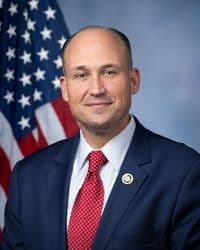
Nicholas A. Langworthy
Republican · NY · Representative
Votes with party: 97.6% (662 recorded votes)
Full profile: /officials/L000600
Source: Congress.gov · FEC
Cosponsors (20)
Members who have signed on to support this bill since introduction. Source: Congress.gov.
20 cosponsors on record at Congress.gov. The named list is syncing into Govwatch and will appear here shortly — view on Congress.gov in the meantime.
Latest Action
The most recent step in the bill's legislative path. Committee Activity below shows referrals and reports; the full action-by-action history including floor proceedings lives at Congress.gov →
Referred to the Committee on the Judiciary, and in addition to the Committees on Transportation and Infrastructure, and Financial Services, for a period to be subsequently determined by the Speaker, in each case for consideration of such provisions as fall within the jurisdiction of the committee concerned.
2025-06-10
Source: Congress.gov
Committee Activity
Currently in
- House Committee on Transportation and InfrastructureReferred To · 2025-06-10
- House Committee on the JudiciaryReferred To · 2025-06-10
- House Committee on Financial ServicesReferred To · 2025-06-10
Plain-English Summary
Stop Dangerous Sanctuary Cities Act This bill addresses issues related to state and local government cooperation with federal immigration enforcement efforts, including by prohibiting uncooperative jurisdictions from receiving certain grants. Specifically, the bill prohibits a sanctuary jurisdiction from receiving grants under certain Economic Development Assistance Programs and the Community Development Block Grant Program. Under the bill, a sanctuary jurisdiction is a state or local government that has in effect a statute, policy, or practice that prohibits or restricts (1) information sharing with another government entity about an individual's immigration status, or (2) compliance with a lawfully issued Department of Homeland Security (DHS) detainer request or notification of release request. When complying with a DHS-issued detainer, a state or local government shall be deemed to be acting as an agent of DHS with all authority available to DHS officers and employees. The bill also limits the legal liability of a state or local government for complying with a detainer.
Plain-English rewrite of the Congressional Research Service summary published on Congress.gov. Cached and reviewed.
Subjects
Immigration
Full bill text is not yet cached locally.
Related legislation
Bills by the same sponsor or covering overlapping subjects.
- HR10628Biosimilars Access and Affordability ActReferred to Committee · 2026-09-28
- HR10571Surge to Save Newborns ActReferred to Committee · 2026-09-24
- HR10522Companion Animal Protection Against Cruel Testing ActReferred to Committee · 2026-09-21
- HR10163American Quantum Competitiveness ActReferred to Committee · 2026-09-16