No Welfare for the Wealthy Act of 2025
Sponsor
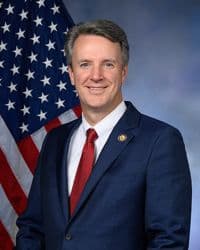
Full profile: /officials/C001118
Source: Congress.gov · FEC
Cosponsors (11)
Members who have signed on to support this bill since introduction. Source: Congress.gov.
- Clay Higgins (R-LA-3)Original· 2025-01-15
- Jake Ellzey (R-TX-6)Original· 2025-01-15
- Josh Brecheen (R-OK-2)Original· 2025-01-15
- Keith Self (R-TX-3)· 2025-01-21
- Jefferson Van Drew (D-NJ-2)· 2025-03-10
- Michael Cloud (R-TX-27)· 2025-05-07
- Mark Harris (R-NC-8)· 2025-10-03
- Michael Guest (R-MS-3)· 2026-04-02
- Scott Perry (R-PA-10)· 2026-04-02
- Thomas P. Tiffany (R-WI-7)· 2026-04-09
Latest Action
The most recent step in the bill's legislative path. Committee Activity below shows referrals and reports; the full action-by-action history including floor proceedings lives at Congress.gov →
Committee Activity
Currently in
- House Committee on AgricultureReferred To · 2025-01-15
Previously
- Agriculture CommitteeReferred To · 2025-01-15
Plain-English Summary
No Welfare for the Wealthy Act of 2025 This bill requires all households participating in the Supplemental Nutrition Assistance Program (SNAP) to meet the program's income and asset requirements, thereby eliminating certain alternative SNAP eligibility pathways. Currently, a household may be eligible for SNAP by meeting program-specific federal eligibility requirements, which include both income and asset tests. A household may also be automatically or categorically eligible for SNAP based on eligibility for or receiving cash benefits from other specified low-income assistance programs (e.g., Temporary Assistance for Needy Families [TANF]). Under this categorical eligibility, households that already meet financial eligibility rules in a program like TANF are not required to go through a SNAP financial eligibility determination. A majority of states also provide broad-based categorical eligibility (BBCE), a policy that makes most households with an income below a certain threshold categorically eligible for SNAP. Under BBCE, these states typically make households categorically eligible through receiving or being authorized to receive a minimal non-cash TANF benefit or service (e.g., a pamphlet). A state may set its own BBCE financial eligibility requirements for a household so long as the gross income requirement is below a certain level. A state's requirements do not have to match SNAP program-specific eligibility requirements. For example, most states that provide BBCE do not have an asset test for SNAP eligibility. The bill requires all SNAP households, including those that qualify under categorical eligibility, to meet the program's income and asset requirements.
Plain-English rewrite of the Congressional Research Service summary published on Congress.gov. Cached and reviewed.
Subjects
Related legislation
Bills by the same sponsor or covering overlapping subjects.
- HR7730Bankruptcy Threshold Adjustment ActPassed House · 2026-10-14
- HR10016Veterans Entrepreneurship Act of 2026Referred to Committee · 2026-08-03
- HR9701Daughters of the American Revolution Membership Integrity Act.Referred to Committee · 2026-07-15
- HR2675Protecting Our Courts from Foreign Manipulation ActReferred to Committee · 2026-06-15