Stop Hate Crimes Act of 2025
Sponsor
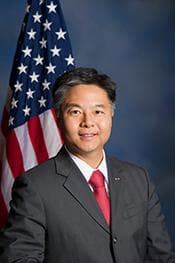
Full profile: /officials/L000582
Source: Congress.gov · FEC
Cosponsors (8)
Members who have signed on to support this bill since introduction. Source: Congress.gov.
8 cosponsors on record at Congress.gov. The named list is syncing into Govwatch and will appear here shortly — view on Congress.gov in the meantime.
Latest Action
The most recent step in the bill's legislative path. Committee Activity below shows referrals and reports; the full action-by-action history including floor proceedings lives at Congress.gov →
Committee Activity
Currently in
- House Committee on the JudiciaryReferred To · 2025-06-26
Plain-English Summary
Stop Hate Crimes Act of 2025 This bill lowers the standard for establishing that a defendant's conduct constitutes a federal hate crime offense. Currently, federal law prohibits willfully causing bodily injury or using a dangerous weapon to attempt to do so because of the actual or perceived protected characteristic (e.g., race or religion) of any person. In a prosecution for a hate crime offense, the government must establish that the defendant committed prohibited conduct because of a specific protected characteristic. The phrase because of is not defined. However, since 2014, courts have generally held that because of relates to causation and requires the government to establish but-for causation. For example, the U.S. Court of Appeals for the Sixth Circuit held in United States v. Miller that in a prosecution for a hate crime offense, the phrase because of required the government to establish that but for the religion of the victims, the defendants would not have committed the assaults. This bill replaces the because of standard, which relates to causation, with a new standard related to motive. Under the new standard, willfully causing bodily injury or using a dangerous weapon to attempt to do so is a hate crime offense if the actual or perceived protected characteristic of any person is a contributory motivating factor in the offense.
Plain-English rewrite of the Congressional Research Service summary published on Congress.gov. Cached and reviewed.
Subjects
Related legislation
Bills by the same sponsor or covering overlapping subjects.
- HR2004Tyler’s LawPassed House · 2026-09-16
- HRES1544Electing a Member to a certain standing committee of the House of Representatives.Passed House · 2026-09-16
- HR10055Congressional Authorization for Federal Building Names ActReferred to Committee · 2026-08-06
- HR9917AI Kill Switch ActReferred to Committee · 2026-07-24