Foreign Adversary AI Risk Assessment and Diplomacy Act
Sponsor
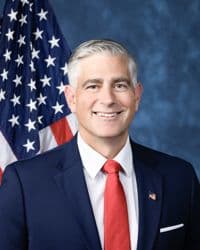
Full profile: /officials/B001322
Source: Congress.gov · FEC
Cosponsors (10)
Members who have signed on to support this bill since introduction. Source: Congress.gov.
- Abraham J. Hamadeh (R-AZ-8)Original· 2026-01-14
- Maria Elvira Salazar (R-FL-27)Original· 2026-01-14
- Mike Ezell (R-MS-4)Original· 2026-01-14
- Jefferson Shreve (R-IN-6)· 2026-01-20
- Michael Lawler (R-NY-17)· 2026-01-20
- John H. Rutherford (R-FL-5)· 2026-01-21
- Addison P. McDowell (R-NC-6)· 2026-01-23
- Mike Haridopolos (R-FL-8)· 2026-01-23
- Matt Van Epps (R-TN-7)· 2026-01-30
- Randy Fine (R-FL-6)· 2026-03-16
Latest Action
The most recent step in the bill's legislative path. Committee Activity below shows referrals and reports; the full action-by-action history including floor proceedings lives at Congress.gov →
Committee Activity
Currently in
- House Committee on Foreign AffairsMarkup By · 2026-03-26
Previously
- Foreign Affairs CommitteeMarkup By · 2026-03-26
- Foreign Affairs CommitteeReferred To · 2026-01-14
- House Committee on Foreign AffairsReferred To · 2026-01-14
Plain-English Summary
This bill would require the U.S. government to assess and monitor artificial intelligence development by foreign adversaries like China and Russia, and to develop diplomatic strategies for managing the risks posed by their AI capabilities. It aims to help policymakers understand how competing nations are advancing AI technology and to coordinate international efforts to prevent misuse of AI for military, espionage, or other harmful purposes. The bill affects government agencies responsible for national security and foreign policy, as well as international relations with other countries.
AI-assisted summary generated from the official bill metadata (title, subjects, actions) sourced from Congress.gov. Cached and reviewed. Always verify against the official text linked below.
Subjects
Full Bill Text
Verbatim text published on Congress.gov via GovInfo. Use Cmd+F / Ctrl+F to search within this excerpt.
[Congressional Bills 119th Congress] [From the U.S. Government Publishing Office] [H.R. 7058 Introduced in House (IH)] <DOC> 119th CONGRESS 2d Session H. R. 7058 To require the Secretary of State to conduct assessments of the risks posed to the United States by foreign adversaries who utilize generative artificial intelligence for malicious activities, and for other purposes. _______________________________________________________________________ IN THE HOUSE OF REPRESENTATIVES January 14, 2026 Mr. Baumgartner (for himself, Mr. Hamadeh of Arizona, Ms. Salazar, and Mr. Ezell) introduced the following bill; which was referred to the Committee on Foreign Affairs _______________________________________________________________________ A BILL To require the Secretary of State to conduct assessments of the risks posed to the United States by foreign adversaries who utilize generative artificial intelligence for malicious activities, and for other purposes. Be it enacted by the Senate and House of Representatives of the United States of America in Congress assembled, SECTION 1. SHORT TITLE. This Act may be cited as the ``Foreign Adversary AI Risk Assessment and Diplomacy Act''. SEC. 2. SENSE OF CONGRESS. It is the sense of Congress that-- (1) while generative artificial intelligence has the potential to provide substantial societal and economic benefits when developed and used responsibly, the increasing use of generative artificial intelligence by foreign adversaries may represent a national security risk, and the challenges posed by such use is not well understood; and (2) the Department of State, in consultation with the heads of other relevant Federal departments and agencies, must take diplomatic steps to recognize, assess, and address the use of generative artificial intelligence by foreign adversaries, including through bilateral and multilateral engagements and the promotion of responsible state behavior in international fora, to reduce the national security risks to the United States. SEC. 3. ASSESSMENTS OF THE RISKS POSED TO THE UNITED STATES BY FOREIGN ADVERSARIES WHO UTILIZE GENERATIVE ARTIFICIAL INTELLIGENCE FOR MALICIOUS ACTIVITIES. (a) In General.--Not later than 180 days after the date of the enactment of this Act, and annually thereafter for three years, the Secretary of State, in consultation with the heads of other relevant Federal departments and agencies as appropriate shall submit to the appropriate congressional committees an assessment of the risks posed to the United States by foreign adversaries who utilize generative artificial intelligence for malicious activities. (b) Contents.--Each assessment under subsection (a) shall include the following: (1) An analysis of incidents during the preceding calendar year in which foreign adversaries have utilized, or attempted to utilize, generative artificial intelligence for malicious activities against the United States and its allies, including the following: (A) To disseminate or produce synthetic media, including foreign anti-United States propaganda or conduct foreign malign influence operations targeting the United States, its citizens, or its allies. (B) To enhance their ability to develop or deploy chemical, biological, radiological, or nuclear weapons. (C) To facilitate malicious cyber operations. (D) To develop or enhance other military, surveillance, or intelligence capabilities. (2) An analysis of emerging trends in the use of generative artificial intelligence by foreign adversaries, including the following: (A) The extent to which such activities may be attributable to specific foreign adversaries. (B) The implications of such trends for United States foreign policy, diplomatic engagement, and the development of United States and allied-led international norms and standards. (3) Recommendations to mitigate and counter the risks posed to the United States and allies by foreign adversaries who utilize generative artificial intelligence applications for malicious activities. (c) Form.--Each assessment under subsection (a) shall be submitted in unclassified form, but may include a classified annex only for the protection of intelligence sources and methods relating to the matters contained in the assessment.…
Show the remaining 149 wordsHide the remaining 149 words
The Secretary of State shall post on a publicly available website of the Department of State the unclassified portion of each assessment. SEC. 4. DEFINITIONS. In this Act: (1) Appropriate congressional committees.--The term ``appropriate congressional committees'' means the Committee on Foreign Affairs of the House of Representatives and the Committee on Foreign Relations of the Senate. (2) Artificial intelligence.--The term ``artificial intelligence'' has the meaning given such term in section 5002(3) of the National Artificial Intelligence Initiative Act of 2020 (15 U.S.C. 9401(3)). (3) Foreign adversary.--The term ``foreign adversary'' has the meaning given the term ``covered nation'' in section 4872(f) of title 10, United States Code. (4) Generative artificial intelligence applications.--The term ``generative artificial intelligence applications'' means the class of artificial intelligence models that emulate the structure and characteristics of input data in order to generate derived synthetic content, including images, videos, audio, text, and other digital content. <all>
Related legislation
Bills by the same sponsor or covering overlapping subjects.
- HR9834No Racketeers on our Shores ActReferred to Committee · 2026-09-16
- HR9621Northwest Endangered Salmon Predation Prevention Act of 2026Referred to Committee · 2026-09-15
- HR4584To make technical amendments to update statutory references to certain provisions which were formerly classified to chapters 14 and 19 of title 25, United States Code, and to correct related technical errors.Passed House · 2026-09-14
- HR10109Wildfire Event Contract Prohibition ActReferred to Committee · 2026-08-17