HR7918Referred to Committee
Kids in Classes Act
Introduced
In Committee
3
Passed One Chamber4
Passed Both5
Signed into Law119th
Congress
2026-03-12
Introduced
0
Cosponsors
HR
ⓘType
Sponsor
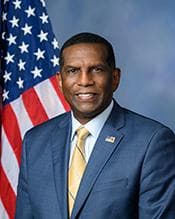
Burgess Owens
Republican · UT · Representative
Votes with party: 97.7% (658 recorded votes)
Full profile: /officials/O000086
Source: Congress.gov · FEC
Cosponsors (0)
Members who have signed on to support this bill since introduction. Source: Congress.gov.
No cosponsors on record. Bills can pass without cosponsors — this often means the sponsor introduced the bill alone, either because it's a messaging bill, a chairman's mark, or simply early in the legislative cycle.
Latest Action
The most recent step in the bill's legislative path. Committee Activity below shows referrals and reports; the full action-by-action history including floor proceedings lives at Congress.gov →
Committee Activity
Currently in
- House Committee on Education and WorkforceReferred To · 2026-03-12
Previously
- Education and Workforce CommitteeReferred To · 2026-03-12
Plain-English Summary
The bill aims to address education policy, though the specific provisions aren't detailed in the available information. Based on the title's focus on "kids in classes," it likely proposes changes to how students attend school or participate in classroom instruction. The measure would affect students, teachers, and schools across the country once it's reviewed by the House Committee on Education and Workforce.
AI-assisted summary generated from the official bill metadata (title, subjects, actions) sourced from Congress.gov. Cached and reviewed. Always verify against the official text linked below.
Subjects
Education
Full Bill Text
Verbatim text published on Congress.gov via GovInfo. Use Cmd+F / Ctrl+F to search within this excerpt.
[Congressional Bills 119th Congress] [From the U.S. Government Publishing Office] [H.R. 7918 Introduced in House (IH)] <DOC> 119th CONGRESS 2d Session H. R. 7918 To establish an alternative use of certain Federal education funds when in-person instruction is not available. _______________________________________________________________________ IN THE HOUSE OF REPRESENTATIVES March 12, 2026 Mr. Owens introduced the following bill; which was referred to the Committee on Education and Workforce _______________________________________________________________________ A BILL To establish an alternative use of certain Federal education funds when in-person instruction is not available. Be it enacted by the Senate and House of Representatives of the United States of America in Congress assembled, SECTION 1. SHORT TITLE. This Act may be cited as the ``Kids in Classes Act''. SEC. 2. FINDINGS. Congress finds the following: (1) Research indicates that children living in the poorest 20 percent of neighborhoods in the United States will experience the most negative and long-lasting effects of school closures. (2) Researchers predict that 1 year of school closures will cost ninth graders in the poorest communities a 25-percent decrease in their post-educational earning potential, even if that year of closure is followed by 3 years of normal schooling. By contrast, the same researchers predict no substantial losses for students from the richest 20 percent of neighborhoods. (3) Long periods of school closures during the COVID-19 pandemic deprive low-income students and students of color the equalizing force of education. (4) School closures will widen educational inequality and the learning gaps created by these closures will persist as students progress through high school, putting their future prospects at risk. (5) Data shows that closed classrooms were disproportionately composed of disadvantaged students, as well as students with low mathematics scores, students with limited English proficiency, or students who qualify for a free or reduced priced lunch. (6) School shutdowns contribute to disproportionate learning loss for disadvantaged students, compounding existing gaps. SEC. 3. USE OF TITLE I FUNDS IF IN-PERSON INSTRUCTION IS NOT AVAILABLE. Section 1112 of the Elementary and Secondary Education Act of 1965 (20 U.S.C. 6312) is amended-- (1) in subsection (c)-- (A) in paragraph (6), by striking ``and'' after the semicolon; (B) in paragraph (7), by striking the period at the end and inserting ``; and''; and (C) by adding at the end the following: ``(8) comply with the in-person instruction requirements described in subsection (f).''; and (2) by adding at the end the following: ``(f) In-Person Instruction Requirements.-- ``(1) Definitions.--In this subsection: ``(A) Covered funding amount.--The term `covered funding amount' means the quotient of-- ``(i) an amount equal to-- ``(I) the funds provided under this part to a particular elementary school or secondary school; divided by ``(II) the number of students who attend that school; divided by ``(ii) the number of school days for which such funds have been provided. ``(B) Covered school.--The term `covered school' means a public elementary school or secondary school that receives funds provided under this part. ``(C) Qualified educational expenses.--The term `qualified educational expenses' means curriculum and curricular materials, books or instructional materials, technological educational materials, online educational materials, tutoring or educational classes outside the home, private school tuition, testing fees, diagnostic tools, and educational therapies for students with disabilities. ``(2) Distribution of covered funding.--Not later than the beginning of the first school year that begins after the date of enactment of the Kids in Classes Act, and notwithstanding any other provision of law, in order to be eligible to receive funds under this part, each local educational agency shall-- ``(A) establish a failure to open direct payment plan in accordance with paragraph (3); and ``(B) agree to carry out such…
Show the remaining 315 wordsHide the remaining 315 words
plan in the event that a covered school served by the local educational agency fails for more than 3 days during a school year, for reasons related to public health emergency or collective bargaining action, to make available in- person instruction for all students who wish to attend. ``(3) Failure to open direct payment plan.-- ``(A) In general.--Each local educational agency shall establish a failure to open direct payment plan that establishes and explains how a parent of each child who attends a covered school served by the local educational agency will be directly paid, for use on qualified educational expenses, the amount described in subparagraph (B), if that covered school fails for more than 3 days during a school year, for reasons related to public health emergency or collective bargaining action, to make available in-person instruction for all students who wish to attend. ``(B) Amount of payment.--The amount of payment shall be an amount equal to-- ``(i) the covered funding amount; multiplied by ``(ii) the number of days in which such school fails, for reasons related to public health emergency or collective bargaining action, to make available in-person instruction for all students who wish to attend. ``(C) Timing of payment.--To the greatest extent practicable, direct payments made to parents under this subsection shall be made to parents on each day that a covered school fails to open as described in subparagraph (A). ``(D) Receipts.--As part of the failure to open direct payment plan, each local educational agency shall require that parents receiving direct payments under this subsection-- ``(i) submit receipts to the local educational agency to demonstrate that such direct payments have been spent on qualified educational expenses; or ``(ii) return any amounts of such direct payments that are not used for qualified educational expenses to the local educational agency not later than 30 days after the covered school has resumed in-person instruction.''. <all>
Related legislation
Bills by the same sponsor or covering overlapping subjects.
- HR9926PATH ActReferred to Committee · 2026-07-23
- HR8347RURAL Healthcare ActReferred to Committee · 2026-07-21
- HR8183MATCH Act of 2026Referred to Committee · 2026-07-21
- HR9604Less Bureaucracy, Better Tribal Education ActReferred to Committee · 2026-07-15