Voluntary Consumer AI Disclosure Pilot Act
Sponsor
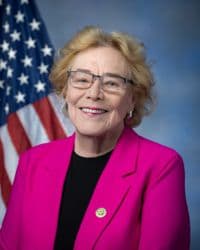
- Progressive Groups$78k
Full profile: /officials/L000397
Source: Congress.gov · FEC
Cosponsors (0)
Members who have signed on to support this bill since introduction. Source: Congress.gov.
No cosponsors on record. Bills can pass without cosponsors — this often means the sponsor introduced the bill alone, either because it's a messaging bill, a chairman's mark, or simply early in the legislative cycle.
Latest Action
The most recent step in the bill's legislative path. Committee Activity below shows referrals and reports; the full action-by-action history including floor proceedings lives at Congress.gov →
Committee Activity
Currently in
- House Committee on Science, Space, and TechnologyReferred To · 2026-06-24
Plain-English Summary
The federal government would create a test program requiring private companies to voluntarily disclose how they use artificial intelligence systems and what risks those systems might pose. NIST, a scientific agency, would develop standards and guidelines to help companies be transparent about their AI use. This would affect tech companies, businesses using AI, and potentially consumers who interact with AI systems.
AI-assisted summary generated from the official bill metadata (title, subjects, actions) sourced from Congress.gov. Cached and reviewed. Always verify against the official text linked below.
Subjects
Full Bill Text
Verbatim text published on Congress.gov via GovInfo. Use Cmd+F / Ctrl+F to search within this excerpt.
[Congressional Bills 119th Congress] [From the U.S. Government Publishing Office] [H.R. 9439 Introduced in House (IH)] <DOC> 119th CONGRESS 2d Session H. R. 9439 To amend the National Institute of Standards and Technology Act to direct the Director of the National Institute of Standards and Technology to establish a pilot program and develop voluntary disclosure standards relating to the use of artificial intelligence systems by private sector entities, and for other purposes. _______________________________________________________________________ IN THE HOUSE OF REPRESENTATIVES June 24, 2026 Ms. Lofgren introduced the following bill; which was referred to the Committee on Science, Space, and Technology _______________________________________________________________________ A BILL To amend the National Institute of Standards and Technology Act to direct the Director of the National Institute of Standards and Technology to establish a pilot program and develop voluntary disclosure standards relating to the use of artificial intelligence systems by private sector entities, and for other purposes. Be it enacted by the Senate and House of Representatives of the United States of America in Congress assembled, SECTION 1. SHORT TITLE. This Act may be cited as the ``Voluntary Consumer AI Disclosure Pilot Act''. SEC. 2. PILOT PROGRAM. Section 22A of the National Institute of Standards and Technology Act (15 U.S.C. 278h-1) is amended-- (1) by redesignating subsections (c) through (h) as subsections (d) through (i), respectively; (2) by inserting after subsection (b) the following new subsection: ``(c) Pilot Program; Consumer Disclosure for Real-Time Interaction.-- ``(1) In general.--Not later than 1 year after the date of the enactment of this subsection, the Director shall carry out the following: ``(A) Establish a pilot program-- ``(i) to evaluate voluntary approaches for provenance and disclosures of content produced or manipulated by artificial intelligence, including how a private sector entity may disclose to a user of a product or service of such entity-- ``(I) any content generated by an artificial intelligence system with which such user may engage; and ``(II) instances of any direct, real-time interaction by such user with such system; and ``(ii) that is informed by consumer product labeling programs in existence as of such date of establishment. ``(B) Based on such pilot program, support the development of guidelines, best practices, and voluntary standards for the disclosure of content produced or manipulated by artificial intelligence described in subparagraph (A). ``(C) Not later than 180 days after completing the pilot program under subparagraph (A), submit to the Committee on Science, Space, and Technology, and the Committee on Energy and Commerce of the House of Representatives and the Committee on Commerce, Science, and Transportation of the Senate a report on the outcomes of the pilot program, including-- ``(i) findings regarding the feasibility, usefulness, and limitations of the disclosure and content provenance approaches evaluated through the pilot program; and ``(ii) recommendations, if any, for further congressional or administrative action. ``(2) Consultation.--In carrying out paragraph (1), the Director shall carry out the following: ``(A) Consult with the heads of appropriate Federal departments and agencies. ``(B) Seek to consult with the following: ``(i) Appropriate private sector entities of different sizes. ``(ii) Civil society. ``(iii) Academia.''; and (3) by adding at the end the following new subsection: ``(j) Definitions.--In this section: ``(1) Artificial intelligence.--The term `artificial intelligence' has the meaning given the term in section 5002 of the National Artificial Intelligence Initiative Act of 2020 (15 U.S.C. 9401). ``(2) Artificial intelligence system.--The term `artificial intelligence system' means a data system, software, hardware, application, tool, service, or utility that operates in whole or in part using artificial intelligence. ``(3) Content provenance.--The term `content provenance' means the chronology of the origin and history associated with digital content.''. <all>
Related legislation
Bills by the same sponsor or covering overlapping subjects.
- HR10574American Leadership in Fusion ActReferred to Committee · 2026-09-24
- HR10575Deterring Extraterritorial Foreign Exploitation of Networks Damaging Intellectual Property (DEFEND IP) Act of 2026Referred to Committee · 2026-09-24
- HR6207Chip EQUIP ActReported by Committee · 2026-09-16
- HR9334Workforce for AI Trust ActReferred to Committee · 2026-06-25