Examining Opioid Treatment Infrastructure Act of 2026
Sponsor
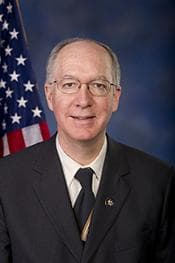
Full profile: /officials/F000454
Source: Congress.gov · FEC
Cosponsors (0)
Members who have signed on to support this bill since introduction. Source: Congress.gov.
No cosponsors on record. Bills can pass without cosponsors — this often means the sponsor introduced the bill alone, either because it's a messaging bill, a chairman's mark, or simply early in the legislative cycle.
Latest Action
The most recent step in the bill's legislative path. Committee Activity below shows referrals and reports; the full action-by-action history including floor proceedings lives at Congress.gov →
Referred to the Committee on Energy and Commerce, and in addition to the Committee on Natural Resources, for a period to be subsequently determined by the Speaker, in each case for consideration of such provisions as fall within the jurisdiction of the committee concerned.
2026-07-14
Source: Congress.gov
Committee Activity
Currently in
- House Committee on Natural ResourcesReferred To · 2026-07-14
- House Committee on Energy and CommerceReferred To · 2026-07-14
Plain-English Summary
The federal government would study how many treatment facilities exist across the country for people struggling with opioid addiction, whether they have enough capacity to help everyone who needs it, and what gaps exist in available services. A government official called the Comptroller General would investigate both hospital-based and outpatient treatment options and report back to Congress with findings and recommendations. This would help lawmakers understand the current state of addiction treatment resources and identify where more help is needed.
AI-assisted summary generated from the official bill metadata (title, subjects, actions) sourced from Congress.gov. Cached and reviewed. Always verify against the official text linked below.
Subjects
Full Bill Text
Verbatim text published on Congress.gov via GovInfo. Use Cmd+F / Ctrl+F to search within this excerpt.
119 HR 9676 IH: Examining Opioid Treatment Infrastructure Act of 2026 U.S. House of Representatives 2026-07-14 text/xml EN Pursuant to Title 17 Section 105 of the United States Code, this file is not subject to copyright protection and is in the public domain. I119th CONGRESS2d SessionH. R. 9676IN THE HOUSE OF REPRESENTATIVESJuly 14, 2026Mr. Foster introduced the following bill; which was referred to the Committee on Energy and Commerce, and in addition to the Committee on Natural Resources, for a period to be subsequently determined by the Speaker, in each case for consideration of such provisions as fall within the jurisdiction of the committee concernedA BILLTo direct the Comptroller General of the United States to evaluate and report on the inpatient and outpatient treatment capacity, availability, and needs of the United States with respect to opioid-use disorders, and for other purposes. 1.Short titleThis Act may be cited as the Examining Opioid Treatment Infrastructure Act of 2026. 2.Study on treatment infrastructure for opioid-use disordersNot later than 24 months after the date of enactment of this Act, the Comptroller General of the United States shall initiate an evaluation of, and submit to Congress a report on, the inpatient and outpatient treatment capacity, availability, and needs of the United States with respect to opioid-use disorders, including, to the extent data are available— (1)the capacity of acute residential or inpatient detoxification programs; (2)the capacity of inpatient clinical stabilization programs, transitional residential support services, and residential rehabilitation programs; (3)the capacity of demographic specific residential or inpatient treatment programs, such as those designed for pregnant women or adolescents; (4)geographical differences in the availability of residential and outpatient treatment and recovery options across the continuum of care; (5)the availability of residential and outpatient treatment programs that offer treatment options based on reliable scientific evidence of efficacy for the treatment of substance-use disorders, including the use of Food and Drug Administration-approved medicines and evidence-based nonpharmacological therapies; (6)the number of patients in residential and specialty outpatient treatment services; (7)an assessment of the need for residential and outpatient treatment across the continuum of care; (8)the availability of residential and outpatient treatment programs to American Indians and Alaska Natives through an Indian health program (as defined by section 4 of the Indian Health Care Improvement Act (25 U.S.C. 1603)); and (9)the barriers (including technological barriers) at the Federal, State, and local levels to real-time reporting of de-identified information on drug overdoses and ways to overcome such barriers.
Related legislation
Bills by the same sponsor or covering overlapping subjects.
- HR10298Public Service Loan Forgiveness Inclusion Act of 2026Referred to Committee · 2026-09-04
- HR10230Strengthening Oversight for the Financial Sector Act of 2026Referred to Committee · 2026-09-02
- HR9902Federal Naming Standards ActReferred to Committee · 2026-07-23
- HR9803Protecting Immigrants From Legal Exploitation Act of 2026Referred to Committee · 2026-07-21