HRES1577Referred to Committee
Expressing support for the designation of September 2026 as "Sickle Cell Disease Awareness Month" in order to educate communities across the United States about sickle cell disease and the need for research, early detection methods, effective treatments, and preventative care programs with respect to complications from sickle cell disease and conditions related to sickle cell disease.
Introduced
In Committee
3
Passed One Chamber4
Passed Both5
Signed into Law119th
Congress
2026-09-24
Introduced
0
Cosponsors
HRES
ⓘType
Sponsor
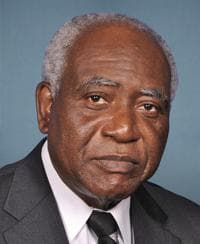
Danny K. Davis
Democrat · IL · Representative
Votes with party: 98.4% (645 recorded votes)
Full profile: /officials/D000096
Source: Congress.gov · FEC
Cosponsors (0)
Members who have signed on to support this bill since introduction. Source: Congress.gov.
No cosponsors on record. Bills can pass without cosponsors — this often means the sponsor introduced the bill alone, either because it's a messaging bill, a chairman's mark, or simply early in the legislative cycle.
Latest Action
The most recent step in the bill's legislative path. Committee Activity below shows referrals and reports; the full action-by-action history including floor proceedings lives at Congress.gov →
Committee Activity
Currently in
- House Committee on Oversight and Government ReformReferred To · 2026-09-24
Plain-English Summary
Plain-English summary pending. Introduced on 2026-09-24. Check back soon — summaries are generated as bills progress through Congress.
Subjects
Health
Full Bill Text
Verbatim text published on Congress.gov via GovInfo. Use Cmd+F / Ctrl+F to search within this excerpt.
[Congressional Bills 119th Congress] [From the U.S. Government Publishing Office] [H. Res. 1577 Introduced in House (IH)] <DOC> 119th CONGRESS 2d Session H. RES. 1577 Expressing support for the designation of September 2026 as ``Sickle Cell Disease Awareness Month'' in order to educate communities across the United States about sickle cell disease and the need for research, early detection methods, effective treatments, and preventative care programs with respect to complications from sickle cell disease and conditions related to sickle cell disease. _______________________________________________________________________ IN THE HOUSE OF REPRESENTATIVES September 24, 2026 Mr. Davis of Illinois submitted the following resolution; which was referred to the Committee on Oversight and Government Reform _______________________________________________________________________ RESOLUTION Expressing support for the designation of September 2026 as ``Sickle Cell Disease Awareness Month'' in order to educate communities across the United States about sickle cell disease and the need for research, early detection methods, effective treatments, and preventative care programs with respect to complications from sickle cell disease and conditions related to sickle cell disease. Whereas sickle cell disease (referred to in this preamble as ``SCD'') is an inherited blood disorder that is a major health problem in the United States and worldwide; Whereas SCD can result in multiple medical complications, including anemia, jaundice, gallstones, strokes, restricted blood flow, damaged tissue in the liver, spleen, and kidneys, and death; Whereas SCD causes acute and chronic episodes of severe pain; Whereas SCD affects an estimated 100,000 individuals in the United States; Whereas approximately 1,800 to 2,000 babies are born with SCD each year in the United States, with the disease occurring in approximately 1 in 365 newborn Black or African American infants and 1 in 16,300 newborn Hispanic American infants, and can be found in individuals of Mediterranean, Middle Eastern, Asian, and Indian origin; Whereas more than 2,000,000 individuals in the United States have the sickle cell trait and 1 in 13 Black or African Americans carries the trait; Whereas there is a 1 in 4 chance that a child born to parents who both have the sickle cell trait will have the disease; Whereas the life expectancy of an individual with SCD in the United States is often severely limited, with some estimates showing a shortened life expectancy of more than 20 years; Whereas sickle cell anemia is a common cause of childhood stroke, and in 2019, fewer than half of children with sickle cell anemia who were 2 to 16 years old received the recommended screening for stroke; Whereas, in 2019, only 2 in 5 children with sickle cell anemia who were 2 to 9 years old used recommended medication that can prevent sickle cell anemia complications; Whereas, in 2020, the National Academies of Science, Engineering, and Medicine developed a comprehensive strategic plan and blueprint for action to address sickle cell disease, which, among other things, cited the need for new innovative therapies and promoting widespread patient access to approved treatments; Whereas, in 2023, hematopoietic stem cell transplantation (commonly known as ``HSCT'') was the only cure for SCD, and the Food and Drug Administration has since approved 2 gene therapies that have been demonstrated to cure SCD; Whereas, in 2023, the Food and Drug Administration approved Casgevy and Lyfgenia, the first 2 cell-based gene therapies to treat certain patients with SCD; Whereas, on July 1, 2026, the Food and Drug Administration expanded the approval of Casgevy to include certain patients aged 2 years and older with SCD and recurrent vaso-occlusive crises or transfusion-dependent b thalassemia; Whereas more research is needed to find more treatments and cures to help individuals with SCD; Whereas the Centers for Medicare &…
Show the remaining 182 wordsHide the remaining 182 words
Medicaid Services is operating the cell and gene therapy access model to support outcomes-based agreements between participating Medicaid programs and manufacturers of gene therapies for SCD; Whereas 32 States, the District of Columbia, and Puerto Rico, representing approximately 84 percent of Medicaid beneficiaries living with SCD, are participating in the cell and gene therapy access model; and Whereas September 2026 has been designated as ``Sickle Cell Disease Awareness Month'' in order to educate communities across the United States about SCD, including early detection methods, effective treatments, and preventative care programs with respect to complications from SCD and conditions related to SCD: Now, therefore, be it Resolved, That the House of Representatives-- (1) supports the goals and ideals of Sickle Cell Disease Awareness Month; and (2) encourages the people of the United States to hold appropriate programs, events, and activities during Sickle Cell Disease Awareness Month to raise public awareness of the sickle cell trait, preventative care programs, treatments, and other patient services for those suffering from sickle cell disease, complications from sickle cell disease, and conditions related to sickle cell disease. <all>
Related legislation
Bills by the same sponsor or covering overlapping subjects.
- HR10429To designate the facility of the United States Postal Service located at 901 Lake Street in Oak Park, Illinois, as the "Detective Allan Reddins Post Office Building".Referred to Committee · 2026-09-16
- HRES1432Of inquiry requesting the President and directing the Secretary of Health and Human Services to transmit, respectively, certain documents to the House of Representatives relating to the freeze on State-based Temporary Assistance for Needy Families, Child Care and Development Fund, and Social Services Block Grant payments for California, Colorado, Illinois, Minnesota, and New York.Referred to Committee · 2026-07-15
- HRES1371Expressing support for a "World Sickle Cell Awareness Day" in order to increase public awareness across the United States and global community about sickle cell disease and the continued need for empirical research, early detection screenings, novel effective treatments leading to a cure, and preventative care programs with respect to complications from sickle cell anemia and conditions relating to sickle cell disease.Referred to Committee · 2026-06-18
- HR8887Julius Rosenwald and Rosenwald Schools National Historical Park ActReferred to Committee · 2026-05-19