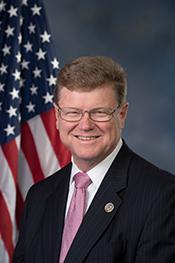
Mark E. Amodei
RRepublicanNV-2 · Representative
46
/ 100
Below Average
Attendance97
Avg: 96
Independence2
Avg: 4
Bipartisan Tone0
Avg: 15
Ethics Record100
Avg: 99
Transparency8
Avg: 53
Accountability Score — composite of attendance, independence, bipartisan tone, ethics record & transparency.
Methodology10
Bills Sponsored
0
Enacted into Law
2
Passed a Chamber
8
In Committee
All Sponsored Bills
HR10306In Committee
Technical Correction to the Shoshone-Paiute Tribes of the Duck Valley Reservation Water Rights Settlement Act of 2025
HR2317Passed House
Northern Nevada Economic Development and Conservation Act of 2026
Northern Nevada Economic Development and Conservation Act of 2025 This bill provides for the designation, conveyance, exchange, sale, or disposal of certain federal lands in Nevada. Specifically, the bill provides for the transfer of ownership of federal lands from the Forest Service and the Bureau of Land Management to the State of Nevada, counties (Douglas, Clark, Pershing, and Elko Counties), cities (Carson City, City of Elko, the City of Fernley, and the City of Sparks), the Incline Village General Improvement District, and the Truckee River Flood Management Authority for economic development, recreation, or certain public purposes. It also designates specified parcels of federal land as wilderness and as components of the National Wilderness Preservation System. The bill also releases the reversionary interest of the United States in the Jean Prison site, thereby allowing the State of Nevada to use the land for purposes unrelated to the prison. It also allows the Department of the Interior and the Forest Service to establish a federal complex for specified Bureau of Land Management, Forest Service, U.S. Fish and Wildlife Service, Bureau of Reclamation, and Bureau of Indian Affairs offices or headquarters in Nevada on certain federal lands. Additionally, the bill takes land into trust for the Washoe Tribe of Nevada and California.
HR9310In Committee
Department of Homeland Security Appropriations Act, 2027
Department of Homeland Security Appropriations Act, 2027 This bill provides FY2027 appropriations for the Department of Homeland Security (DHS). Specifically, the bill provides appropriations to DHS for Departmental Management, Intelligence, Situational Awareness, and Oversight, including the Office of the Secretary and Executive Management; the Management Directorate; Intelligence, Analysis, and Situational Awareness; and the Office of Inspector General. In addition, the bill provides appropriations for Security, Enforcement, and Investigations, including U.S. Customs and Border Protection, U.S. Immigration and Customs Enforcement, the Transportation Security Administration, the U.S. Coast Guard, and the U.S. Secret Service. The bill provides appropriations for Protection, Preparedness, Response, and Recovery, including the Cybersecurity and Infrastructure Security Agency, and the Federal Emergency Management Agency (FEMA). The bill provides appropriations for Research, Development, Training, and Services, including U.S. Citizenship and Immigration Services, the Federal Law Enforcement Training Centers, and the Science and Technology Directorate. The bill also sets forth requirements and restrictions for using funds provided by this and other appropriations acts.
HR1366Passed House
Mining Regulatory Clarity Act
Mining Regulatory Clarity Act This bill allows mining operators to use federal lands for activities ancillary to mining, such as waste disposal, regardless of whether those lands contain mineral deposits valuable enough to be mined (mineral validity). It also establishes the Abandoned Hardrock Mine Fund. The bill addresses a 2022 decision in the U.S. Court of Appeals for the Ninth Circuit related to the Rosemont Copper Mine in Arizona (commonly known as the Rosemont decision , described further in CRS Report R48166 ). The court held that mining claims are only allowed where mineral validity has been established and that mill site claims are more appropriate means for establishing a mining waste disposal site under the Mining Act. The bill allows a mining operator to (1) locate and include within its plan of operations as many mill site claims (e.g., areas for waste rock disposal) as are reasonably necessary for its operations, and (2) use or occupy public land in accordance with an approved plan of operations. Additionally, the bill requires any revenue generated from fees for such mill site claims to be deposited into the Abandoned Hardrock Mine Fund. The Department of the Interior must use the fund for certain abandoned hardrock mine reclamation activities.
HR7276In Committee
To impose a 30 percent duty on sheep products and lamb products from Australia or New Zealand.
This bill directs the President to impose an additional 30% duty (i.e., tariff) on sheep and lamb products originating from Australia or New Zealand.
HR4213In Committee
Department of Homeland Security Appropriations Act, 2026
Department of Homeland Security Appropriations Act, 2026 This bill provides FY2026 appropriations for the Department of Homeland Security (DHS). Specifically, the bill provides appropriations to DHS for Departmental Management, Intelligence, Situational Awareness, and Oversight, including the Office of the Secretary and Executive Management; the Management Directorate; Intelligence, Analysis, and Situational Awareness; and the Office of Inspector General. In addition, the bill provides appropriations for Security, Enforcement, and Investigations, including U.S. Customs and Border Protection, U.S. Immigration and Customs Enforcement, the Transportation Security Administration, the U.S. Coast Guard, and the U.S. Secret Service. The bill provides appropriations for Protection, Preparedness, Response, and Recovery, including the Cybersecurity and Infrastructure Security Agency, and the Federal Emergency Management Agency (FEMA). The bill provides appropriations for Research, Development, Training, and Services, including U.S. Citizenship and Immigration Services, the Federal Law Enforcement Training Centers, and the Science and Technology Directorate. The bill also sets forth requirements and restrictions for using funds provided by this and other appropriations acts.
HR1400In Committee
To amend title 38, United States Code, to establish a presumption that certain veterans were exposed to radiation and other toxins at the Nevada Test and Training Range for purposes of the treatment of certain disabilities under the laws administered by the Secretary of Veterans Affairs, and for other purposes.
This bill establishes eligibility for certain disability compensation and benefits for individuals who served at the Nevada Test and Training Range (NTTR). The bill establishes that onsite participation on or after January 1, 1972, and before January 1, 2005, at certain NTTR locations where there was a potential of toxic exposure is a radiation-risk activity, therefore providing a presumption of service-connection for specified conditions. The bill specifies the covered NTTR locations include a location at Indian Springs Auxiliary Airfield but do not include a location at Nellis Air Force Base or Creech Air Force Base. The bill also establishes a presumption of toxic exposure for veterans who performed active service at such NTTR locations, including airspace above such locations. Additionally, lipomas and tumor related conditions must be considered as service-connected conditions for veterans who served at the NTTR locations.
HRES152In Committee
Reaffirming the deep and steadfast United States-Canada partnership and the ties that bind the two countries in support of economic and national security.
HR1399In Committee
Prior Approval Reform Act
Prior Approval Reform Act This bill allows a trade association or a separate segregated fund established by a trade association to solicit contributions from a member corporation's stockholders and executive or administrative personnel and their families without the approval of the member corporation. Such a solicitation may be made by more than one trade association in a calendar year.
HR1278In Committee
Coin Metal Modification Authorization and Cost Savings Act of 2025
Coin Metal Modification Authorization and Cost Savings Act of 2025 This bill authorizes the United States Mint to modify the metallic composition of circulating coins (including by prescribing reasonable manufacturing tolerances with respect to those coins) if a study and analysis conducted by the Mint indicates that the modification will reduce costs incurred by the taxpayers; be seamless, which means that the coins must have the same weight and diameter as current coins and that the coins work interchangeably in most coin acceptors using electromagnetic signature technology; and have as minimal an adverse impact as possible on the public and stakeholders. The Mint must notify Congress before making the modification and provide a justification for the modification. Congress may disapprove of any proposed modification through a joint resolution.