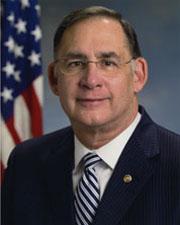
John Boozman
RRepublicanAR · Senator
64
/ 100
Average
Attendance98
Avg: 97
Independence23
Avg: 23
Bipartisan Tone38
Avg: 14
Ethics Record100
Avg: 100
Transparency50
Avg: 47
Accountability Score — composite of attendance, independence, bipartisan tone, ethics record & transparency.
Methodology25
Bills Sponsored
0
Enacted into Law
0
Passed a Chamber
16
In Committee
All Sponsored Bills
S5588In Committee
Ecological Restoration Project Permitting Act of 2026
SRES923Introduced
A resolution expressing support for the designation of October 4 through October 10, 2026, as "National 4-H Week".
S5526Introduced
Agricultural Act of 2026
S5464In Committee
VOICE for Women Veterans Act
SRES830Introduced
A resolution recognizing the 80th anniversary of the Fulbright Program.
S5180In Committee
Provider Reimbursement Stability Act of 2026
Provider Reimbursement Stability Act of 2026 This bill allows for larger annual adjustments to the Medicare physician fee schedule. It also requires the Centers for Medicare & Medicaid Services (CMS) to make certain corrections to compensate for expenditures under the fee schedule that exceed a certain amount in a given year, and it limits how much certain adjustment factors may vary each year. Current law prohibits annual adjustments to the Medicare physician fee schedule that would result in a more than $20 million difference between the adjusted amount and the non-adjusted amount of total expenditures. The bill increases this threshold to $57.64 million beginning in 2028, with adjustments for inflation every five years beginning in 2033. Additionally, for certain services, the bill requires the CMS to determine the difference between expenditures based on estimated utilization of the service and expenditures based on actual utilization. If this difference exceeds a certain percentage of total expenditures under the fee schedule, the CMS must reconcile this difference by adjusting payments for the following year. This requirement applies to services for which payment was bundled with another service and there was a separate or add-on payment during the previous year. Finally, the CMS must update the prices and rates of each category of direct costs that affect payments (e.g., prices of equipment) at least every five years, with updates made to each category in the same year. The bill also prohibits the CMS from varying a certain adjustment factor by more than 2.5% each year.
S5017In Committee
More Paid Leave for More Americans Act
The federal government would give money to states to help them create or expand paid leave programs, allowing workers to take time off work while still receiving some income for reasons like having a baby, caring for a sick family member, or recovering from their own illness. The bill would also establish a network where states can share information and best practices about running these paid leave programs. This would affect workers who need time away from their jobs and the employers and states that would help fund these benefits.
S4624In Committee
Medicare Access to Radiology Care Act of 2026
Medicare would start paying for services provided by radiologist assistants, who are specially trained healthcare workers who help radiologists perform imaging procedures like X-rays and CT scans. This change would allow patients to receive these services under Medicare coverage and give hospitals and imaging centers another option for staffing their radiology departments. The bill is currently being reviewed by the Senate Finance Committee.
SRES656Introduced
A resolution designating the third week of March 2026 as "National CACFP Week".
This resolution designates the week beginning on March 15, 2026, as National CACFP Week. It also recognizes the role of the Child and Adult Care Food Program (CACFP) in improving the health of the children and adults in child care centers, family day care homes, emergency shelters, adult day care facilities, and after-school care in the United States by providing nutritious meals and snacks.
S297In Committee
PSA Screening for HIM Act
This bill would likely establish or modify screening guidelines and insurance coverage requirements for prostate-specific antigen (PSA) tests, which doctors use to screen men for prostate cancer. The legislation would affect how health insurance plans cover these screening tests and potentially influence which men are recommended to get tested, impacting millions of male patients and their healthcare providers.
S2309In Committee
Veteran Burial Timeliness and Death Certificate Accountability Act
This bill would require the Department of Veterans Affairs to bury deceased veterans within a specific timeframe and establish accountability measures when those deadlines are missed. It aims to prevent long delays in funeral services for veterans and their families by setting clear standards and consequences for the VA when burials are delayed. The legislation also addresses issues with death certificates to ensure accurate and timely documentation for veterans' families.
S4064Introduced
Digital Commodity Intermediaries Act
This bill would create new rules for companies that act as middlemen in buying and selling digital assets like cryptocurrencies, clarifying what regulations they must follow and what licenses they need. The legislation aims to bring more oversight to the digital asset market by defining how these intermediaries operate and what consumer protections apply to them. It would affect cryptocurrency exchanges, brokers, and other financial firms that handle digital asset transactions.
S3967In Committee
FLOWS Act of 2026
The bill addresses water resources development, likely focusing on how water is managed, distributed, and protected across the country. Based on its referral to the Environment and Public Works Committee, it probably affects farmers, municipalities, environmental groups, and water utilities that depend on federal water management policies and infrastructure projects.
S3898In Committee
Gerald’s Law Reauthorization Act of 2026
This bill reauthorizes a program or policy related to military personnel or veterans' affairs, though the specific details aren't clear from the title alone. Based on its referral to the Veterans' Affairs Committee, it likely addresses benefits, services, or support systems for military members or veterans. The bill would extend funding and authority for whatever program "Gerald's Law" originally established, allowing it to continue operating beyond its current expiration date.
S3755Introduced
Digital Commodity Intermediaries Act
This bill would create new rules for companies that act as middlemen in buying and selling digital assets like cryptocurrencies, requiring them to register with financial regulators and follow certain safety standards to protect customers' money and data. The legislation aims to bring digital asset trading platforms under similar oversight as traditional financial intermediaries, affecting crypto exchanges and similar businesses that currently operate with minimal federal regulation. The bill would give regulators clearer authority to supervise these platforms and establish requirements for how they handle customer funds and information.
S3572In Committee
Roadway Safety Modernization Act of 2025
The legislation would update federal safety standards for roads and highways, requiring states to implement modern traffic management systems and improve infrastructure for pedestrians and cyclists. It would affect state transportation departments, local governments, and road construction companies that would need to meet new safety requirements. The bill aims to reduce traffic accidents and fatalities by modernizing aging road systems across the country.
S3095Introduced
An original bill to require the Secretary of Agriculture to convey a parcel of property of the Forest Service to Perry County, Arkansas, and for other purposes.
This bill directs the Forest Service to convey approximately one acre of land to Perry County, Arkansas, upon the request of the county. The county must use the land for public purposes, such as supporting education and youth development. If it ceases to be used for such purposes, then the property must, at the discretion of the Forest Service, revert to the United States. The exact acreage of land to be conveyed must be determined by a survey satisfactory to the Forest Service. The conveyance must be subject to valid existing rights, made without consideration, made by quitclaim deed, and subject to other terms and conditions that the Forest Service considers to be appropriate to protect the interests of the United States. As a condition of the conveyance, the county must pay costs associated with the conveyance, including the cost of a survey, any environmental analysis or resources survey required under federal law, and any analysis required to comply with the National Historic Preservation Act. The bill prohibits the Forest Service from having to provide any covenant or warranty for the property and improvements conveyed to the county.
S3015In Committee
AWRC Act of 2025
Based on the title and water resources subject matter, this bill likely addresses how the federal government manages and develops water infrastructure projects across the country. The legislation probably affects states, local communities, and water utilities by establishing rules or funding mechanisms for dams, flood control systems, irrigation projects, or other water management facilities. The bill has been sent to the Senate's environmental committee for review and debate.
SRES434Introduced
A resolution expressing support for the designation of October 5 through October 11, 2025, as "National 4-H Week".
This resolution supports the designation of October 5-11, 2025, as National 4–H Week and recognizes the important role of 4–H as the youth development program of the Cooperative Extension System and the Department of Agriculture.
SRES225In Committee
A resolution designating the week of September 14 through September 20, 2025, as "National Truck Driver Appreciation Week".
This resolution designates September 14-September 20, 2025, as National Truck Driver Appreciation Week.
S2896In Committee
STARS Act
Semiquincentennial Tourism and Access to Recreation Sites Act or the STARS Act This bill directs the Department of the Interior and the Forest Service to designate September 17, 2026, as an entrance-fee free date in honor of the 250th anniversary of the United States of America. On that date, Interior must waive (1) the entrance fees for all visitors of National Park Service or National Wildlife Refuge System sites; and (2) the standard amenity recreation fees for all visitors to each site managed by the Bureau of Land Management or the Bureau of Reclamation. The Forest Service must waive the standard amenity recreation fees on that date for all visitors to sites it manages.
S2439In Committee
Resident Physician Shortage Reduction Act of 2025
Resident Physician Shortage Reduction Act of 2025 This bill increases the number of residency positions eligible for graduate medical education payments under Medicare for qualifying hospitals, including hospitals in rural areas and health professional shortage areas. The bill provides for an additional increase of 2,000 positions per fiscal year from FY2027-FY2033; during this period, each hospital may receive up to 75 additional positions in total under the bill and current law. The bill also requires the Government Accountability Office to report on strategies to increase the diversity of the health professional workforce, including with respect to representation from rural, low-income, and minority communities.
S1918In Committee
Access Technology Affordability Act of 2025
This bill would likely make assistive technology devices—such as hearing aids, screen readers, mobility aids, and other equipment that helps people with disabilities—more affordable by reducing their cost through tax credits or deductions. The changes would help disabled individuals and families afford these often expensive tools that enable them to work, learn, and participate in daily life. The proposal is currently being reviewed by the Senate Finance Committee.
SRES131Introduced
A resolution designating the third week of March 2025 as "National CACFP Week".
This resolution designates the week beginning on March 16, 2025, as National CACFP Week. It also recognizes the role of the Child and Adult Care Food Program (CACFP) in improving the health of the children and adults in child care centers, family day care homes, emergency shelters, adult day care facilities, and after-school care in the United States by providing nutritious meals and snacks.
SRES57In Committee
An original resolution authorizing expenditures by the Committee on Agriculture, Nutrition, and Forestry.
This resolution authorizes the Senate Committee on Agriculture, Nutrition, and Forestry to make specified expenditures and employ personnel for the 119th Congress.