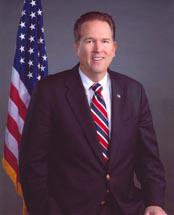
Vern Buchanan
RRepublicanFL-16 · Representative
64
/ 100
Average
Attendance90
Avg: 96
Independence3
Avg: 4
Bipartisan Tone39
Avg: 15
Ethics Record100
Avg: 99
Transparency84
Avg: 53
Accountability Score — composite of attendance, independence, bipartisan tone, ethics record & transparency.
Methodology27
Bills Sponsored
0
Enacted into Law
4
Passed a Chamber
23
In Committee
All Sponsored Bills
HR6130In Committee
ASAP Act
I don't have enough information to write an accurate summary. The bill title "ASAP Act" is too vague, and the subjects listed only indicate it relates to health without specifying what health policy it addresses. To provide a meaningful explanation of what this bill would actually do and who it affects, I would need the bill's full text or a more detailed description of its provisions.
HR9501In Committee
AI Tax Integrity Act of 2026
AI Tax Integrity Act of 2026 This bill requires the Internal Revenue Service to establish a pilot program to use artificial intelligence to identify inaccurate federal tax returns. Upon completion of the pilot program, the Government Accountability Office must submit a report to Congress describing the aggregate amount of improper tax refunds or reduced tax liability attributable to fraud detected by the pilot program, aggregate amount recovered as a result of the pilot program, and accuracy of the artificial intelligence tools used in the pilot program in identifying fraudulent federal tax returns.
HR139Passed House
Sunshine Protection Act of 2025
Sunshine Protection Act of 2025 This bill makes daylight saving time the new, permanent standard time. States with areas exempt from daylight saving time may choose the standard time for those areas.
HR5347Passed House
Health Care Efficiency Through Flexibility Act
Health Care Efficiency Through Flexibility Act This bill delays certain requirements relating to the reporting of quality measures by accountable care organizations (ACOs) under the Medicare Shared Savings Program. It also requires the Centers for Medicare & Medicaid Services (CMS) to establish a pilot program that tests alternative digital reporting methods for ACOs. The Medicare Shared Savings Program enables ACOs to receive payments for savings stemming from care coordination and management. In 2024, the CMS issued a rule requiring ACOs to report on quality measures using a certain electronic system beginning in 2025. The bill allows ACOs to continue to use prior methods of reporting quality measures through 2029. Additionally, the CMS must establish a pilot program to test other digital reporting methods from 2028-2032; ACOs that participate in the pilot program are exempt from using other methods. The CMS must publicly post an analysis of the program and any related recommendations for using the tested methods.
HR8959In Committee
Semiconductor Superiority Act
The proposal would clarify tax rules so that companies building semiconductor manufacturing facilities in outer space could qualify for federal tax credits designed to encourage advanced manufacturing investments. This would allow space-based semiconductor manufacturers to receive the same tax breaks currently available to companies building similar facilities on Earth. The change affects technology companies and manufacturers interested in producing computer chips and related components in space.
HR7786In Committee
AI Fraud Accountability Act
This bill would establish rules to hold companies accountable when they use artificial intelligence systems to commit fraud or enable fraudulent activities. It likely aims to create legal liability and penalties for businesses that deploy AI technology to deceive consumers, steal money, or commit other financial crimes. The legislation would affect tech companies, financial institutions, and other businesses that use AI systems, as well as consumers who could be targeted by AI-enabled fraud schemes.
HR6513In Committee
MINKS are Superspreaders Act
This bill addresses concerns about minks spreading diseases, likely by establishing new regulations or requirements for mink farms to prevent disease transmission to other animals or humans. The legislation would probably affect mink farmers and potentially public health officials by setting standards for how mink populations are monitored and managed. The bill has been sent to the House Agriculture Committee for review.
HR6514In Committee
Protecting Animals in Military Training Act
HR4313Passed House
Hospital Inpatient Services Modernization Act
Hospital Inpatient Services Modernization Act This bill extends the Acute Hospital Care at Home Program under Medicare and requires an additional study regarding the program. The program allows hospitals to treat certain patients from emergency departments or inpatient hospital beds at home. Specifically, the bill extends the program through FY2030 and requires the Centers for Medicare & Medicaid Services to conduct a study of the program with respect to several metrics, including the quality of care, incurred costs, types of services, and demographics of patients under the program compared to inpatient settings.
HR4974In Committee
DETECT Act of 2025
Digital Evaluation for Tax Enforcement and Compliance Tracking Act of 2025 or the DETECT Act of 2025 This bill directs the Government Accountability Office to submit a report to Congress within 180 days from the date of enactment on the potential of artificial intelligence to assist the Internal Revenue Service in detecting tax fraud.
HR4548In Committee
Small Nonprofit Retirement Security Act of 2025
This bill would make it easier and cheaper for small nonprofits to set up retirement savings plans for their employees by reducing administrative costs and regulatory requirements. The changes would help nonprofits compete with larger organizations in attracting and retaining staff by offering retirement benefits similar to what for-profit companies provide. Nonprofit employees and the organizations that employ them would be the main beneficiaries of these tax and regulatory adjustments.
HR3904In Committee
U.S. Bicycle Production and Assembly Act
The legislation would encourage bicycle manufacturing and assembly to happen in the United States by potentially adjusting tariffs or trade rules related to imported bike parts and finished bicycles. This would affect American bicycle manufacturers, assembly workers, and bike shops by making domestically-produced bicycles more competitive compared to foreign imports. The goal is to boost U.S. production capacity and jobs in the bicycle industry.
HR1661In Committee
SAFE Act of 2025
Save America's Forgotten Equines Act of 2025 or the SAFE Act of 2025 This bill permanently prohibits the slaughter of equines (e.g., horses and mules) for human consumption. (Current law prohibits the slaughter of dogs and cats for human consumption. This bill extends the prohibition to equines.) Specifically, this bill prohibits a person from knowingly (1) slaughtering an equine for human consumption; or (2) shipping, transporting, possessing, purchasing, selling, or donating an equine to be slaughtered for human consumption or equine parts for human consumption. The bill subjects a violator to a fine. The bill applies to conduct in or affecting interstate or foreign commerce or within the special maritime and territorial jurisdiction of the United States. However, it does not apply to an activity carried out by an Indian for a religious ceremony. As background, in recent years, the appropriations acts have prohibited the Department of Agriculture (USDA) from using federal funds to inspect horses before they are slaughtered for human consumption. Therefore, there are currently no USDA-inspected horse slaughter facilities in the United States.
HR2172In Committee
Preserving Patient Access to Home Infusion Act
Preserving Patient Access to Home Infusion Act This bill specifically includes pharmacy services and home infusion drugs that are administered without a pump as part of covered home infusion therapy under Medicare. The bill also allows nurses and physician assistants to establish and review the plan of care for home infusion therapy, and it specifies that payment may be made regardless of whether a practitioner is physically present in the home at the time the drug is administered.
HR919Passed House
Chronic Disease Flexible Coverage Act
Chronic Disease Flexible Coverage Act This bill provides statutory authority for guidance from the Internal Revenue Service (IRS) that expands the types of preventive care that may be offered under a high deductible health plan (HDHP) without requiring a deductible or with a deductible below the minimum threshold. Under current law, to be considered health savings account-eligible, an HDHP must have a deductible above a certain minimum threshold amount, which is adjusted annually. However, an HDHP may cover certain types of preventive care without requiring a deductible or with a deductible below the minimum threshold. The IRS issued guidance expanding the types of preventive care that may be covered by an HDHP without requiring a deductible or with a deductible below the minimum threshold to include angiotensin converting enzyme inhibitors for individuals with congestive heart failure, diabetes, or coronary artery disease; anti-resorptive therapy for individuals with osteoporosis or osteopenia; beta-blockers for individuals with congestive heart failure or coronary artery disease; blood pressure monitors for individuals with hypertension; inhaled corticosteroids and peak flow meters for individuals with asthma; insulin and other glucose lowering agents, retinopathy screening, glucometers, and hemoglobin A1c testing for individuals with diabetes; international normalized ratio testing for individuals with liver disease or bleeding disorders; low-density lipoprotein testing for individuals with heart disease; statins for individuals with heart disease or diabetes; and selective serotonin reuptake inhibitors for individuals with depression. The bill provides statutory authority for the IRS's guidance.
HR1778In Committee
American Innovation Act of 2025
The bill likely proposes tax changes designed to encourage innovation and investment in American businesses, though the specific details aren't yet clear from the title alone. Based on its focus on taxation, it could include measures like tax credits for research and development, incentives for startups, or changes to how companies are taxed on new technologies and inventions. Businesses involved in innovation, investors, and potentially workers in tech and research sectors would be most directly affected by these tax policy changes.
HR1407In Committee
Permanent Telehealth from Home Act
Permanent Telehealth from Home Act This bill permanently allows any site to serve as an originating site (i.e., the location of the beneficiary) for purposes of Medicare telehealth services, including a beneficiary's home.
HR1406In Committee
Lung Cancer Screening and Prevention Act of 2025
Lung Cancer Screening and Prevention Act of 2025 This bill authorizes Medicare coverage of additional types of lung cancer screening tests that are approved by the Food and Drug Administration, regardless of whether they are recommended by the United States Preventive Services Task Force. The Centers for Medicare & Medicaid Services must set coverage and payment limits for such tests. (Currently, Medicare covers screening tests for the early detection of lung cancer if they are recommended by the task force.)
HR1185In Committee
Human Trafficking and Exploitation Prevention Training Act
Human Trafficking and Exploitation Prevention Training Act This bill establishes demonstration grants to train students, teachers, and school personnel how to better understand, recognize, prevent, and respond to human trafficking and the exploitation of children and youth. Eligible grantees include nonprofits, state and local educational agencies, and elementary and secondary schools. The Office on Trafficking in Persons within the Administration for Children and Families must award the grants.
HR920In Committee
Federal Initiative to Guarantee Health by Targeting Fentanyl Act
Federal Initiative to Guarantee Health by Targeting Fentanyl Act This bill places fentanyl-related substances as a class into schedule I of the Controlled Substances Act. A schedule I controlled substance is a drug, substance, or chemical that has a high potential for abuse; has no currently accepted medical value; and is subject to regulatory controls and administrative, civil, and criminal penalties under the Controlled Substances Act. Additionally, the bill prohibits the application of a mandatory minimum prison term for certain drug offenses involving fentanyl-related substances.
HR661In Committee
MIRACLE Medical Technology Act of 2025
Maximizing Israel-U.S. Research Advancement and Collaborative Leadership in Emerging Medical Technology Act of 2025 or the MIRACLE Medical Technology Act of 2025 This bill requires the Department of Health and Human Services (HHS) to implement a program for the United States and Israel to collaborate on developing and delivering health care products and services. The program must include coordinated activities in specified areas, including research and development, use of innovative technology, intellectual property protection, regulatory harmonization, disease prevention, and biological product manufacturing. The bill authorizes HHS to establish a joint United States-Israel Health Care Collaboration Center in the United States to leverage existing expertise for advancing the program’s purposes.
HR483In Committee
Health Care Efficiency Through Flexibility Act
Health Care Efficiency Through Flexibility Act This bill requires the Centers for Medicare & Medicaid Services (CMS) to delay certain requirements relating to the reporting of quality measures by accountable care organizations (ACOs) under the Medicare Shared Savings Program and to also test alternative reporting methods for ACOs. (The Medicare Shared Savings Program enables ACOs to receive payments for savings stemming from care coordination and management.) Specifically, the CMS must delay the requirement that ACOs use a specified electronic system for reporting quality measures until January 1, 2030. Additionally, the CMS must establish a pilot program to test other digital reporting methods; ACOs that participate in the pilot program are exempt from using the existing electronic system. The CMS must also implement standards for digital reporting by January 1, 2030, that ensure all electronic health record systems used by ACOs are able to support reporting across a range of practice sizes, specialties, and geographic locations. ACOs may use existing reporting methods until the standards are implemented.
HR378In Committee
Thin Blue Line Act
Thin Blue Line Act This bill expands the list of statutory aggravating factors in death penalty determinations to also include killing or targeting a law enforcement officer, firefighter, or other first responder.
HR138In Committee
Lowering Costs for Caregivers Act of 2025
This bill would provide tax breaks and financial assistance to people who care for family members or dependents, such as parents caring for aging relatives or adults supporting disabled children. The goal is to reduce the financial burden on caregivers by making it easier for them to afford care-related expenses and maintain their own financial stability. The proposal is currently being reviewed by the House Committee on Ways and Means to determine what specific tax benefits or credits would be included.
HR137In Committee
TCJA Permanency Act
TCJA Permanency Act This bill makes permanent multiple federal tax provisions enacted in 2017 by the Tax Cuts and Jobs Act. The bill makes permanent the individual tax rates of 10%, 12%, 22%, 24%, 32%, 35%, and 37%; increased standard deduction; personal exemption allowance repeal; exclusion from income of student loans discharged due to death or disability; qualified business income tax deduction (199A tax deduction); allowance of ABLE account contributions in excess of the annual gift tax exclusion amount; base estate and gift tax exclusion amount of $10 million (adjusted annually); and alternative minimum tax exemption and phaseout amounts for noncorporate taxpayers. The bill makes permanent the child tax credit amounts of $2,000 per child and $500 for dependents, the $200,000 phaseout threshold ($400,000 for joint filers), and the refundable portion of the tax credit. The bill expands the expenses eligible for tax-free withdrawals from qualified tuition plans (529 plans) to include additional expenses associated with homeschool and elementary and secondary schools (e.g., instructional materials, tutoring, test and enrollment fees, and educational therapies). The bill permanently eliminates certain miscellaneous itemized deductions and makes permanent the state and local tax deduction limit of $10,000 ($5,000 for married individuals filing separately), mortgage interest tax deduction limit of $750,000 ($375,000 for married individuals filing separately), limit on the deduction of cash charitable contributions to 60% of a taxpayer’s adjusted gross income, and certain limits on casualty loss tax deductions. The bill also permanently eliminates the exclusion from income for employer-reimbursed bicycle commuting expenses.
HR134In Committee
Protecting our Communities from Sexual Predators Act
Protecting our Communities from Sexual Predators Act This bill requires the Department of Justice (DOJ) to detain certain non-U.S. nationals ( aliens under federal law) who have been arrested for sexual assault. The bill also provides for the inadmissibility and deportability of certain individuals convicted of sexual assault. Under this bill, the DOJ must detain an individual who (1) is unlawfully present in the United States, made certain misrepresentations, or did not possess the necessary documents when applying for admission; and (2) has been charged with, arrested for, convicted of, or admits to having committed acts which constitute the essential elements of, an offense involving sexual assault. The bill also establishes under statute that a conviction for certain crimes related to sexual assault shall be grounds for (1) barring an individual from entering the United States, and (2) deportability. (Under current law, convictions for certain crimes, including crimes involving moral turpitude, are grounds for inadmissibility and deportability.)
HR135In Committee
Manatee Protection Act of 2025
Manatee Protection Act of 2025 This bill requires the Department of the Interior to include the West Indian manatee ( Trichechus manatus ) in the endangered species list and give the species protections provided to endangered species.