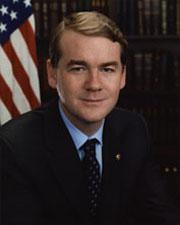
Michael F. Bennet
DDemocratCO · Senator
63
/ 100
Average
Attendance91
Avg: 97
Independence17
Avg: 23
Bipartisan Tone8
Avg: 14
Ethics Record100
Avg: 100
Transparency100
Avg: 47
Accountability Score — composite of attendance, independence, bipartisan tone, ethics record & transparency.
Methodology63
Bills Sponsored
0
Enacted into Law
1
Passed a Chamber
59
In Committee
All Sponsored Bills
S2754Passed Senate
Crystal Reservoir Conveyance Act
This bill would authorize the construction and operation of a water conveyance system to transport water from Crystal Reservoir to communities and agricultural areas that need it. The project would affect water users, farmers, and municipalities in the region by potentially providing them with more reliable access to water supplies. The bill has been referred to congressional committees that oversee public lands and natural resources for further review.
S5621In Committee
Safe Spaces for All Act
S5630In Committee
Stop Orphaned Wells Act
S5533In Committee
Segal AmeriCorps Education Award Tax Relief Act of 2026
S5535In Committee
Eviction Crisis Act of 2026
S5444In Committee
New Essential Education Discoveries Act of 2026
SRES857In Committee
A resolution commemorating 1 year since the tragic act of violence on September 10, 2025, in Evergreen, Colorado, recognizing the victims, survivors, and responders, and expressing condolences and support to their families and their communities.
S5101In Committee
Glenwood Hot Springs Protection Act
The federal government would be prevented from allowing a limestone quarry near Glenwood Springs, Colorado to expand its operations or increase its size. This would affect the quarry company's ability to grow its mining business in that area, while potentially protecting local communities and the environment from increased mining activity. The bill is currently under review by Congress's energy and natural resources committee.
SRES844Introduced
A resolution honoring the lives and service of Emily Barker, Nicholas Hutcherson, Sydney Watson, Nathan Matthews, Nicholas Dale, and all those who serve on the front lines of wildland firefighting efforts in the United States.
S5290In Committee
Emergency Mountain Pine Beetle Response and Coordination Act
S5142In Committee
A bill to amend the Internal Revenue Code of 1986 to improve the process for providing refunds to taxpayers.
The proposal would make changes to how the IRS processes and delivers tax refunds to people who overpay their taxes throughout the year. It aims to streamline the refund system to potentially speed up how quickly taxpayers receive their money back or improve the overall experience of claiming refunds. The changes would affect millions of Americans who file tax returns annually.
S5141In Committee
A bill to amend the Internal Revenue Code of 1986 to improve the notice and review procedure with respect to multi-year bans on claiming credits.
The bill would change how the IRS handles penalties when businesses or individuals are banned from claiming certain tax credits for multiple years, by improving the notice they receive and giving them a better chance to challenge the decision. Currently, taxpayers may not get clear information about why they're being penalized or have adequate opportunity to dispute it, so this legislation aims to make the process more transparent and fair. The changes would primarily affect businesses and individuals who claim tax credits on their returns.
S5144In Committee
A bill to amend the Internal Revenue Code of 1986 to eliminate installment agreement fees for certain individuals.
The proposal would remove fees that the IRS currently charges low-income and middle-income taxpayers when they set up payment plans to pay their taxes over time instead of all at once. This change would make it cheaper for struggling individuals to arrange installment agreements with the IRS, potentially saving them money on fees while they pay off their tax debt gradually.
S5143In Committee
A bill to amend the Internal Revenue Code of 1986 to modify procedural requirements for penalties and disallowance periods.
The proposal would change how the IRS handles tax penalties and the time limits for challenging denied tax deductions or credits, making the process more flexible for taxpayers who disagree with the agency's decisions. These changes would affect individuals and businesses that face penalties or have their tax claims rejected by the IRS, potentially giving them more opportunities to dispute these determinations.
S1787Reported
Dolores River National Conservation Area and Special Management Area Act
Dolores River National Conservation Area and Special Management Area Act This bill establishes the Dolores River National Conservation Area and the Dolores River Special Management Area in Colorado to protect certain natural, recreational, scenic, cultural, historical, and other values of the areas. The conservation area must consist of approximately 52,872 acres of Bureau of Land Management land. The special management area must consist of approximately 15,452 acres of federal land in the San Juan National Forest. A management plan must be developed for each area. The bill directs the Department of the Interior to allow for the continued use of the areas by members of Indian tribes for traditional ceremonies and as a source of traditional plants and other materials. Additionally, Interior must manage the portions of the areas identified as Ponderosa Gorge in a manner that maintains its wilderness character, including by prohibiting (1) road construction; (2) the use of motor vehicles, motorized equipment, or mechanical transport; and (3) projects undertaken for the purpose of harvesting commercial timber. Interior must also establish the Dolores River National Conservation Area Advisory Council. Finally, the bill releases segments of the Dolores River inside the areas from further study for potential addition to the Wild and Scenic Rivers System.
S5077In Committee
Better Jobs through Evidence and Innovation Act
The federal government would provide grants to states and organizations to test, expand, and study job training programs that have proven effective at helping people find and keep work. These grants would support innovative approaches to workforce development, such as apprenticeships, skills training, and career pathways in growing industries. The money would help evaluate which programs work best so that successful models can be expanded to help more workers prepare for available jobs.
S1791In Committee
Gunnison Outdoor Resources Protection Act of 2025
This bill would protect a specific area around Gunnison, Colorado from certain types of development by designating it as protected public land. The protection would likely restrict mining, oil and gas drilling, and other extractive activities while allowing outdoor recreation like hiking and hunting. Local communities, outdoor enthusiasts, and conservation groups would benefit from preserving the landscape, while companies interested in resource extraction in the region would face new limitations.
S4872In Committee
Keep Kids in School Act
Schools would receive federal funding and support to address chronic absenteeism—when students miss too many days of school—and to improve safety in their buildings. The money could be used for programs that help keep students engaged and attending class regularly, as well as initiatives to make school environments safer for both students and staff. This would primarily affect public elementary and secondary schools, students, teachers, and school administrators.
S4867In Committee
Small Farm Conservation Act
The proposal would create a special program within the Agriculture Department's environmental incentives initiative specifically designed to help small farms adopt practices that protect soil, water, and wildlife. Small farmers would receive financial assistance and technical support to implement conservation improvements on their land, making it easier for them to participate in environmental programs that might otherwise be too complex or costly. This targeted approach aims to give smaller agricultural operations better access to funding and guidance that larger farms already use.
S4862In Committee
A bill to direct the Secretary of Agriculture to consider certain acreage not planted due to a lack of irrigation water to be eligible for prevented planting payments, and for other purposes.
Farmers who cannot plant crops because they don't have enough water for irrigation would become eligible for government payments that normally go to farmers whose crops are prevented from being planted by weather or other disasters. This would help agricultural producers in water-scarce regions recover some of their lost income when drought or water shortages force them to leave fields unplanted. The bill directs the Department of Agriculture to treat lack of irrigation water the same way it treats other prevented planting situations.
S4875In Committee
PASTEUR Act of 2026
The government would create a new program to help develop new antibiotics and other antimicrobial drugs that can fight the most dangerous and hard-to-treat infections, including bacteria that have become resistant to existing medicines. This program would support pharmaceutical companies and researchers working on these difficult medical challenges where current treatments are failing. The goal is to speed up the creation of new drugs to combat serious infections that pose major public health threats.
S4866In Committee
Farmers’ Market Local Revitalization Act of 2026
The bill would increase federal funding and support for farmers' markets and nutrition programs that help low-income people buy fresh produce from local farmers. By expanding these programs, the legislation aims to make healthy food more accessible to communities while helping small farmers increase their sales and income. The changes would affect farmers, shoppers on limited budgets, and rural communities looking to strengthen their local food systems.
S4865In Committee
Latonya Reeves Freedom Act of 2026
The bill would prevent discrimination against people with disabilities when they seek long-term care services and supports, such as nursing home care, in-home assistance, or community-based programs. It would ensure that individuals with disabilities have equal access to these services regardless of their disability type or severity. The measure affects disabled individuals, healthcare providers, and long-term care facilities across the country.
S4589In Committee
OPEN Act
The bill would require immigration enforcement agencies to be more transparent about their operations and hold officers accountable for misconduct, while also protecting people's civil rights during immigration enforcement actions. It would establish new reporting requirements so the public and Congress can better understand how immigration enforcement is being conducted and whether officers are following proper procedures. The measure affects immigration enforcement personnel, immigrants, and the general public who want oversight of government agencies.
S4590In Committee
KIDS Act
The Department of Homeland Security would be prohibited from detaining children and people with cognitive disabilities, and immigration agents would need a court-issued criminal warrant before conducting enforcement actions at sensitive locations like schools, hospitals, and courthouses. This would affect immigration enforcement practices and protect vulnerable populations and public institutions from immigration raids. The bill is currently under review by the Senate Judiciary Committee.
S4596In Committee
TRUST Act
The bill would establish stricter requirements for hiring and training immigration enforcement officers, including better background checks and screening procedures before they can be hired. It would also create uniform standards for how these officers dress, carry identification, and conduct themselves on the job to ensure consistency and professionalism across immigration enforcement agencies. These changes would affect the Department of Homeland Security and its immigration enforcement operations, potentially improving accountability and public trust in how immigration laws are enforced.
S4575In Committee
SMART Community Policing Act
The bill would provide federal funding to help police departments try new approaches to community policing, improve mental health services in their communities, and develop programs aimed at making neighborhoods safer. The money would support innovations and experiments in how law enforcement and communities work together to prevent crime and address underlying issues like mental illness. This would affect local police departments, mental health providers, and the communities they serve.
SRES680In Committee
A resolution commemorating the 10th anniversary of the Columbine Day of Service and honoring the memories of the victims, survivors, and their families.
This resolution marks the 10th anniversary of the Columbine Day of Service, a community initiative created to honor the 13 people killed in the 1999 Columbine High School shooting and support the survivors and their families. The resolution recognizes the ongoing impact of this tragedy on the Columbine community and celebrates the volunteer service efforts that have grown from remembering those lost. It serves as a formal congressional acknowledgment of the victims' memories and the resilience of those affected by the shooting.
S4455In Committee
Public Lands Integrity Act
Public Lands Integrity Act This bill generally prohibits provisions that result in the sale, disposal, or transfer of federal lands from being included in reconciliation legislation by requiring the provisions to be considered extraneous under the Senate's Byrd Rule. The Senate's Byrd Rule (named after it's principal author, Senator Robert Byrd of West Virginia) prohibits the inclusion of matter in reconciliation legislation that is extraneous to a congressional committee's reconciliation directives in the associated congressional budget resolution. Reconciliation is an expedited method by which Congress may adopt changes in spending and revenue laws to achieve the budgetary goals reflected in a congressional budget resolution. Reconciliation bills are considered by Congress using expedited legislative procedures that prevent a filibuster and restrict amendments in the Senate. For additional information, see CRS Report R48640, The Senate’s Byrd Rule: Frequently Asked Questions.
S4433In Committee
Disaster Declaration Transparency Act of 2026
When a governor asks the President to declare a major disaster so a state can receive federal emergency aid, this bill would let Congress override the President's decision if they disagree with it. Currently, if the President says no to a disaster declaration, states have limited options to challenge that decision, but this bill would create a formal process for Congress to vote on reversing the President's denial. This would affect states and communities seeking federal disaster relief funds for emergencies like hurricanes, floods, or other major disasters.
SJRES139In Committee
A joint resolution providing for congressional disapproval under chapter 8 of title 5, United States Code, of the rule submitted by the Environmental Protection Agency relating to "Air Plan Disapproval; Colorado; Regional Haze Plan for the Second Implementation Period".
Congress is considering blocking an EPA rule that rejected Colorado's plan for reducing air pollution haze in the state during a specific time period. If approved, this resolution would overturn the EPA's disapproval and allow Colorado to proceed with its own approach to meeting regional haze standards. The decision affects Colorado's air quality regulations and how the state manages pollution from industrial sources and other contributors to haze.
S4381In Committee
Western Tribal Water Act of 2026
The legislation would address water rights and water management issues for Native American tribes in western states, likely establishing new agreements or clarifying existing water allocations that tribes depend on for drinking water, agriculture, and other uses. The bill affects tribal governments, their members, and potentially state and federal water management agencies that work with tribes on shared water resources.
S4234In Committee
Healthy Watersheds, Healthy Communities Act of 2026
This bill would likely establish programs and funding to protect and restore watersheds—the areas of land where water drains into rivers, streams, and groundwater—while improving water quality for communities that depend on these resources. It would probably support conservation efforts, help farmers and landowners implement water-friendly practices, and address pollution that affects drinking water and local ecosystems. The bill aims to benefit both rural communities that rely on clean water and agricultural areas by balancing environmental protection with land management needs.
S4223In Committee
First Island Chain Deterrence Act
This bill would likely strengthen U.S. military support and partnerships with countries in the Pacific region—particularly Taiwan, Japan, the Philippines, and other nations near China—to deter potential military aggression in that area. It probably includes measures like increased military aid, joint training exercises, or security agreements to help these allies defend themselves. The goal is to make any military action in the region more costly or risky for potential aggressors.
S4201In Committee
Indo-Pacific Space Partnership Act of 2026
This bill would establish a space cooperation partnership between the United States and countries in the Indo-Pacific region, likely involving shared satellite technology, space research, and coordination on space activities. The partnership would aim to strengthen ties with allies in Asia and the Pacific while advancing shared interests in space exploration and satellite communications. It would affect government space agencies, international partners in the region, and potentially private space companies involved in these collaborative efforts.
S4180In Committee
Forest Resources Accountability Act
This bill would likely establish new requirements for how federal agencies manage and report on the use of forests on public lands, possibly including rules about logging, conservation, and environmental protection. The changes would affect timber companies, environmental groups, and federal land managers who oversee national forests and other public lands. The goal appears to be increasing transparency and accountability in how these forests are used and managed.
S4141In Committee
Rural Hospital Revitalization Act of 2026
This bill would provide financial support and resources to help rural hospitals stay open and improve their services in communities across America. It likely includes funding, tax breaks, or other assistance to address the challenges small hospitals face, such as staffing shortages and limited patient populations, which have forced many rural facilities to close in recent years. The legislation would affect rural communities, patients who depend on local hospitals, and healthcare workers in agricultural regions.
S3750In Committee
REAL Health Providers Act
The bill would likely expand or clarify which healthcare providers can receive payment and recognition under federal health programs, possibly by changing how certain types of doctors, nurses, or other medical professionals are classified or compensated. The specific changes would affect healthcare workers, patients seeking care, and health insurance programs, though the exact details depend on what "REAL" stands for and which providers the bill targets. Once the Finance Committee reviews it, they'll determine whether these changes would impact federal healthcare spending and coverage rules.
S3751In Committee
Prescription Drug Supply Chain Pricing Transparency Act
This bill would require drug manufacturers, wholesalers, and pharmacy benefit managers to disclose detailed pricing information throughout the prescription drug supply chain, making it easier to see how much money each company makes from drug sales. By pulling back the curtain on these hidden markups and fees, the bill aims to help patients, insurers, and policymakers understand why prescription drugs cost so much and identify where prices are being inflated. The transparency could put pressure on companies to justify high prices and potentially help lawmakers design policies to lower drug costs.
S3685In Committee
No Taxpayer Funds for Corporate Investment in Venezuelan Oil Act
The bill would prohibit U.S. taxpayer money—including federal funds, loans, and investments—from being used to finance or support corporate investments in Venezuelan oil production and related industries. This would prevent government agencies and federally-backed financial institutions from funding American companies that want to do business in Venezuela's oil sector. The measure targets concerns about U.S. money indirectly supporting Venezuela's government and economy during periods of political tension.
SRES503In Committee
A resolution recognizing the third commemoration of the anti-LGBTQ+ attack that occurred on November 19-20, 2022, at Club Q, an LGBTQ+ bar in Colorado Springs, Colorado.
S3369In Committee
Medicare-X Choice Act of 2025
The proposal would create a new health insurance option administered by the federal government that individuals and small businesses could choose to buy into as an alternative to private insurance plans. This Medicare-like program would aim to compete with existing private insurers by potentially offering lower premiums and broader coverage options to people who don't have employer-sponsored health insurance. The plan would affect millions of uninsured and underinsured Americans, small business owners, and the insurance industry.
S764In Committee
Colorado Outdoor Recreation and Economy Act
This bill would likely protect or manage certain public lands in Colorado to support outdoor recreation activities like hiking, fishing, and camping while also considering economic benefits to local communities. The legislation would probably designate specific areas for conservation or establish rules for how these lands can be used, affecting outdoor enthusiasts, tourism businesses, and potentially energy or mining companies that operate in the region. The bill is currently being reviewed by lawmakers who oversee public lands policy.
SRES396In Committee
A resolution condemning the tragic act of violence on September 10, 2025, in Evergreen, Colorado, recognizing the victims, survivors, and responders, and expressing condolences and support to their families and their communities.
S2791In Committee
SEED Act
Supporting Early-childhood Educators' Deductions Act or the SEED Act This bill expands eligibility for the above-the-line federal tax deduction for certain eligible educator expenses to include early childhood educators. (An above-the-line tax deduction is subtracted from gross income to calculate adjusted gross income.) Under current law, kindergarten through grade 12 teachers, instructors, counselors, principals, or aides in schools that provide elementary or secondary education are allowed an above-the-line tax deduction of up to $300 (in 2025 and adjusted annually) for certain unreimbursed professional development and classroom expenses. (Other conditions apply.) The bill expands eligibility for the tax deduction for such educator expenses to include early childhood educators in schools that provide early childhood (pre-kindergarten) education.
S2701In Committee
Headwaters Protection Act of 2025
Headwaters Protection Act of 2025 This bill reauthorizes through FY2034 and expands the Water Source Protection Program (WSPP) under which the Forest Service carries out watershed protection and restoration projects on federal land. It also requires the Forest Service's Watershed Condition Framework for National Forest System land to ensure certain activities and authorizations do not result in long-term degradation of the health of a watershed. The bill authorizes the WSPP to support projects on state, local, or private land that is adjacent to projects on National Forest System land, so long as (1) the adjacent land is within the same watershed as the project on federal land, and (2) the owner of the adjacent land supports the project. Further, the bill expands the types of end water users that may participate in the program to include (1) an acequia association (an organization that manages traditional irrigation systems found in the Southwest); (2) a public entity that manages water infrastructure, such as stormwater or wastewater resources; (3) certain land grant entities in New Mexico called land-grant mercedes; and (4) a local, regional, or other private entity that has water delivery authority. The bill requires projects under the program to (1) protect and restore watershed health, water supply and quality, a municipal or agricultural water supply system, and water-related infrastructure; (2) protect and restore forest health from insect infestation and disease or wildfire; or (3) advance any combination of those purposes. Additionally, the bill reduces the cost share for nonfederal WSPP participants.
S2669In Committee
A bill to require the Secretary of Defense to develop and implement a strategy to strengthen multilateral deterrence in the Indo-Pacific region.
The bill would require the Defense Department to create a plan for working with allied countries in the Indo-Pacific region to discourage military aggression and strengthen security partnerships. This strategy would likely involve coordinating defense efforts with countries like Japan, South Korea, and Australia to present a united front against potential threats in that part of the world. The goal is to make military conflict less likely by showing that multiple nations are prepared to defend themselves together.
S2518In Committee
Protecting Air Ambulance Services for Americans Act of 2025
Protecting Air Ambulance Services for Americans Act of 2025 This bill authorizes payment changes under Medicare for air ambulance services based on certain collected data and requires additional reporting from providers of these services. Current law requires providers of air ambulance services to report certain information regarding general costs and utilization to the Department of Health and Human Services; private health insurers are also required to report information relating to coverage of these services. The bill authorizes the Centers for Medicare & Medicaid Services to revise payment rates under Medicare for air ambulance services based on this data, and it requires providers of air ambulance services to specifically report information relating to costs and utilization under Medicare. The bill also requires the Government Accountability Office to report on the data that is collected under current law requirements and to recommend changes to Medicare payment rates accordingly.
S2272In Committee
Tribal Access to Clean Water Act of 2025
Tribal Access to Clean Water Act of 2025 This bill expands access to water resources for Indian tribes and Native Hawaiian communities. Under a current program, the Department of Agriculture (USDA) makes loans and grants to provide water and waste disposal facilities and services to low-income rural areas whose residents are facing significant health risks. This bill expands eligibility for the program to include Native Hawaiian organizations. Additionally, these loans and grants may be used to provide water or waste services to residents on tribal lands. The bill authorizes USDA to make additional loans and grants under existing programs to tribes and Native Hawaiian organizations to develop, use, and control water. The bill also allows USDA to support technical assistance for tribes and Native Hawaiian organizations. Additionally, the bill allows the Indian Health Service to (1) provide and maintain essential sanitation facilities for noncommercial community structures (e.g., schools, hospitals, and tribal offices), (2) provide technical assistance, and (3) provide financial assistance to operate and maintain drinking water and sanitation facilities serving tribes that are owned and operated by a tribe. The bill also increases the authorization of appropriations for the Bureau of Reclamation's Native American Affairs Technical Assistance Program through FY2030.
SRES263In Committee
A resolution condemning the violent antisemitic attack in Boulder, Colorado, and expressing support for the survivors and their families.
S1393In Committee
American Family Act
The American Family Act would expand the child tax credit to provide larger annual payments to families with children, making the credit fully refundable so families can receive the full benefit even if they owe little or no taxes. The bill aims to reduce child poverty and help working and middle-class families afford basic expenses like food, housing, and childcare. It would affect millions of families with dependent children by increasing the amount of money they receive from the federal government each year.
SRES163In Committee
A resolution recognizing the contributions of Clela Rorex, a pioneering county clerk who, in 1975, advanced civil rights for all couples seeking to be married.
This resolution honors Clela Rorex, a Colorado county clerk who issued marriage licenses to same-sex couples in 1975, decades before such marriages became legal nationwide, recognizing her role in advancing civil rights and equality. The resolution acknowledges her courageous decision to treat all couples equally under the law despite the legal and social barriers that existed at the time. It has been referred to the Judiciary Committee for consideration.
S1202In Committee
Hot Foods Act of 2025
Hot Foods Act of 2025 This bill expands the Supplemental Nutrition Assistance Program (SNAP) to permit the use of SNAP benefits to purchase hot foods or hot food products ready for immediate consumption.
S946In Committee
MATE Improvement Act
Medication Access and Training Expansion Improvement Act or the MATE Improvement Act This bill expands the types of organizations that may provide required training for practitioners registering with the Drug Enforcement Administration (DEA) to dispense (i.e., prescribe or administer) certain controlled substances. Current law requires health care practitioners to register with the DEA and complete a one-time training on substance use disorders from specified entities in order to dispense schedule II-V controlled substances. Practitioners who graduated within the last five years from specified types of schools and whose curriculum included similar training on substance use disorders are exempt from having to receive this additional training. The bill adds several organizations (e.g., the American Academy of Family Physicians) to the list of entities that may provide the required one-time training for physicians or other practitioners. It also expands the types of practitioners who are exempt from this training requirement to include those who graduated from schools of podiatric medicine or schools of pharmacy within the last five years and received similar training as part of their curriculums. The bill applies retroactively, taking effect as if enacted on December 29, 2022.
SRES114In Committee
A resolution expressing the sense of the Senate that the Russian Federation started the war against Ukraine by launching an unprovoked full-scale invasion of Ukraine on February 24, 2022.
This resolution expresses the sense that Russia initiated the war against Ukraine by invading Ukraine on February 24, 2022.
SRES102In Committee
A resolution to recognize and celebrate the 30th anniversary of the Denver International Airport.
This resolution recognizes February 28th, 2025, as the 30th anniversary of Denver International Airport in Denver, Colorado.
S734In Committee
Edward J. Dwight, Jr. Congressional Gold Medal Act of 2025
Edward J. Dwight, Jr., Congressional Gold Medal Act of 2025 This bill provides for the award of a Congressional Gold Medal to Edward J. Dwight, Jr., the first African American astronaut candidate in the United States, in recognition of his historic service to the United States, his example of excellence during times of struggle and overt racism, and his contributions in art and Black history.
S568In Committee
Gold King Mine Spill Compensation Act of 2025
Gold King Mine Spill Compensation Act of 2025 This bill authorizes and provides funding for compensation for certain homeowners, livestock grazers, farmers, and companies who suffered damages as a result of the Gold King Mine spill on August 5, 2015, in southwest Colorado. To be eligible for compensation, a homeowner, livestock grazer, farmer, or company (1) must have submitted an administrative claim to the Environmental Protection Agency on or before August 5, 2017, that was denied or not fully compensated; and (2) must not have entered a settlement with the United States for an amount exceeding $2,500. Under the bill, covered damages include lost business income, expenses arising from relocating livestock and providing alternative water supplies, and crop loss or diminished crop yield.
S365In Committee
Bolts Ditch Act
Bolts Ditch Act This bill allows additional entities—the Eagle River Water and Sanitation District and the Upper Eagle Regional Water Authority—to access and use the Bolts Ditch and its headgate within the Holy Cross Wilderness in Colorado for the purposes of the diversion of water and use, maintenance, and repair of such ditch and headgate.
S296In Committee
Finish the Arkansas Valley Conduit Act
Finish the Arkansas Valley Conduit Act This bill reduces payments that communities within the Arkansas River Valley must pay to the Bureau of Reclamation for the construction of the Arkansas Valley Conduit, a pipeline in Colorado for delivering water from the Pueblo Reservoir to such communities. Specifically, it removes interest payments and extends the repayment period to 100 years.
S147In Committee
Cleaner Air Spaces Act of 2025
Cleaner Air Spaces Act of 2025 This bill requires the Environmental Protection Agency to provide grants to air pollution control agencies, including at least one tribal agency with jurisdiction over air quality, to implement cleaner air space programs (i.e., programs to provide clean air to the public during wildland fire smoke events). Generally, such programs must be located in areas at risk of exposure to wildland fire smoke and must help provide educational materials, clean air centers (i.e., one or more clean air rooms in a publicly accessible building), and air filtration units to certain households. Clean air rooms are rooms designed to keep levels of harmful air pollutants as low as possible during wildland fire smoke events. Under the bill, air pollution control agencies must partner with at least one community-based organization in implementing such programs.
S3926In Committee
Pike National Historic Trail Study Act of 2010
Pike National Historic Trail Study Act of 2010 - Amends the National Trails System Act to require a study for the designation of Pike's Trail, a series of routes that follow the route taken by Lt. Zebulon Montgomery Pike during the 1806-1807 Pike expedition that began in Fort Bellefontaine, Missouri, and ended in Natchitoches, Louisiana, as a national historic trail.
S3303Reported
Chimney Rock National Monument Establishment Act
Chimney Rock National Monument Establishment Act - (Sec. 3) Designates the Chimney Rock National Monument in Colorado to preserve, protect, and restore the cultural, historic, natural, educational, and scenic resources of Chimney Rock and adjacent land and to provide for public interpretation and recreation consistent with the protection of such resources. Authorizes the Secretary of Agriculture (USDA) to make minor adjustments to the boundaries of the Monument to reflect the inclusion of significant archaeological resources discovered on adjacent National Forest System land. (Sec. 4) Sets forth provisions for the administration of the Monument. Permits only such uses of the Monument that would further the purposes specified above. Requires the Monument to be administered according to the Native American Graves Protection and Repatriation Act and the policy specified in the American Indian Religious Freedom Act. Allows for continued use of the Monument by Indian tribes for traditional ceremonies and as a source of traditional plants and other materials. Authorizes the Secretary to carry out vegetative management treatments within the Monument, with the exception of timber harvesting which shall only be used when necessary for ecosystem restoration or the control of fire, insects, or diseases. Limits the use of motor vehicles and mountain bikes in the Monument to roads and trails identified as appropriate for such use. Permits grazing in the Monument where established prior to this Act's enactment. Prohibits anything in this Act precluding upgrading an existing utility right-of-way through the Monument. Authorizes the Secretary to construct an education and interpretive center to interpret the Monument's scientific and cultural resources for the public. (Sec. 5) Requires the Secretary to develop a management plan for the Monument in consultation with Indian tribes having a cultural or historic tie to Chimney Rock. Requires an opportunity for public comment on the plan. (Sec. 6) Authorizes the Secretary to acquire, by purchase from willing sellers, donation, or exchange, land and interests within or adjacent to the Monument. (Sec. 7) Withdraws federal land in the Monument and any acquired land from: (1) entry, appropriation, or disposal under the public land laws; (2) location, entry, and patent under the mining laws; and (3) operation of the mineral leasing, mineral materials, and geothermal leasing laws, except for the issuance of gas pipeline rights-of-way within existing easements. (Sec. 8) Specifies this Act's effect on: (1) valid water rights, (2) federal reserved water rights, (3) specified tribal rights, (4) fish and wildlife on public lands in Colorado, and (5) buffer zones or private property adjacent to the Monument. (Sec. 9) Authorizes appropriations.