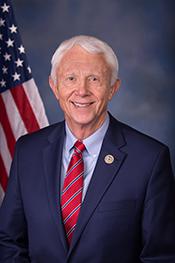
Jack Bergman
RRepublicanMI-1 · Representative
57
/ 100
Average
Attendance97
Avg: 96
Independence1
Avg: 4
Bipartisan Tone16
Avg: 15
Ethics Record100
Avg: 99
Transparency63
Avg: 53
Accountability Score — composite of attendance, independence, bipartisan tone, ethics record & transparency.
Methodology23
Bills Sponsored
1
Enacted into Law
0
Passed a Chamber
21
In Committee
Bills That Became Law
All Sponsored Bills
HR7683In Committee
VA Fiscal Management Modernization Act
This bill would update how the Department of Veterans Affairs manages its finances and budgets, giving the agency more modern tools and flexibility to spend money efficiently on veteran services and benefits. The changes would likely streamline accounting practices and improve how the VA tracks and reports its spending to Congress and the public. Veterans and VA employees would potentially benefit from faster processing of claims and services due to improved financial management systems.
HR10751In Committee
Tribal Oral Health Sovereignty Act
HR6993In Committee
BEACON Act of 2026
The BEACON Act would establish new programs and policies related to military operations, defense capabilities, or national security matters, though the specific provisions are not detailed in the available information. The bill has advanced through a House or Senate subcommittee with a narrow vote and now awaits consideration by the full committee. Without access to the bill's text, the exact impact on military personnel, defense contractors, or national security operations cannot be determined.
HR10510In Committee
CERI Act of 2026
HRES1558In Committee
Expressing the sense of the House of Representatives that, to maintain the health care safety net, Federally Qualified Health Centers should continue to operate under their longstanding single patient definition for delivery of all services, including prescription drugs.
HR10419In Committee
SMILE for Veterans Act
HR6835In Committee
Veterans STAND Act
The Veterans STAND Act would likely improve healthcare services or benefits for military veterans, based on its referral to the health subcommittee. The bill probably addresses specific gaps or challenges in how the Department of Veterans Affairs delivers medical care, mental health services, or other health-related support to former service members. Without seeing the full bill text, the exact changes aren't clear, but the focus suggests it aims to strengthen the veteran healthcare system.
HR6549In Committee
VA Contracting and Procurement Act
This bill would likely change how the Department of Veterans Affairs buys goods and services, possibly by streamlining the contracting process, setting aside more contracts for veteran-owned or small businesses, or adjusting rules about which companies can bid on VA work. The changes would affect veterans seeking VA benefits and services, the companies that supply the VA, and potentially veteran entrepreneurs looking to do business with the government. The bill is currently being reviewed by a congressional committee.
HR8782In Committee
PLOW Storms Act
The proposal would change air pollution rules to treat snow removal trucks and equipment used by cities and towns as emergency vehicles, which could give them exemptions or special treatment under federal clean air standards. This would affect municipalities that operate snow removal fleets, potentially allowing them more flexibility in meeting emission requirements during winter operations. The change would need to go through the House Committee on Energy and Commerce before it could become law.
HR7747In Committee
State Veterans Homes Inspection Simplification Act
This bill would streamline the inspection process for state-run nursing homes that care for veterans, likely reducing paperwork and bureaucratic requirements while maintaining safety standards. The changes would affect state veterans homes, the veterans living in them, and the staff who work there by making inspections more efficient. The bill is currently being reviewed by a House subcommittee focused on health policy.
HR7815In Committee
Red Star Service Banner Act
This bill would establish or regulate the use of red star service banners to honor military members and their families, likely creating an official symbol or program similar to the gold star banner system that recognizes fallen service members. The measure affects military families, veterans, and potentially the Department of Defense or military branches that would oversee the program. The bill is currently under review by the House Judiciary Committee to determine its legal and practical implications.
HR7682In Committee
Closing the Workforce Gap Act of 2026
Based on the title and committee referrals, this bill likely aims to address labor shortages by making changes to immigration policy, education programs, or job training initiatives that affect how workers enter the U.S. job market or develop skills for available positions. The referral to both Judiciary and Education committees suggests it may involve reforms to visa programs, worker certification requirements, or workforce development funding that would impact employers seeking to fill open positions and workers trying to access training or employment opportunities.
HR7391In Committee
Community Health Center Drug Pricing Protection Act
This bill would allow community health centers—clinics that serve low-income and uninsured patients—to negotiate directly with drug manufacturers for lower medication prices, similar to how large hospitals and pharmacy chains do now. The goal is to reduce the cost of prescription drugs for patients who rely on these centers for affordable healthcare. The measure affects both the health centers themselves and the patients they serve, particularly those without insurance or with limited income.
HR7091In Committee
Expanding Veterans’ Access to Emerging Treatments Act
This bill would allow veterans to access newer medical treatments that haven't yet been fully approved by the FDA, giving them options beyond standard care for serious conditions. The change would affect veterans receiving care through the VA health system and could help them try experimental therapies that might otherwise be unavailable to them. The proposal is currently being reviewed by the congressional subcommittee that oversees veterans' health matters.
HR7199In Committee
Gerald’s Law Act
Gerald's Law Act This bill requires the Department of Veterans Affairs (VA) to provide a burial and funeral allowance for a veteran who dies in a home or other setting at which the veteran was receiving VA hospice care (if such care was directly preceded by VA hospital or nursing home care).
HR1823Enacted
VA Budget Shortfall Accountability Act
VA Budget Shortfall Accountability Act This act requires the Government Accountability Office (GAO) to review and report on the circumstances and causes of the shortfall in funding of the Veterans Benefits Administration for FY2024 and the expected shortfall in funding of the Veterans Health Administration in FY2025. The Department of Veterans Affairs must submit such GAO report to Congress. For each of the five fiscal years following the date of enactment of this act, GAO must conduct subsequent reviews and reports regarding the funding of the VA.
HR748In Committee
RELIEVE Act
Removing Extraneous Loopholes Insuring Every Veteran Emergency Act or the RELIEVE Act This bill expands eligibility for Department of Veterans Affairs (VA) reimbursement of emergency treatment for veterans who are treated in a non-VA facility. Specifically, the bill waives the requirement that a veteran must have received VA care within the 24-month period preceding the furnishing of emergency treatment if the veteran receives such emergency treatment within the 60-day period following their enrollment in the VA health care system.
HR411In Committee
Keweenaw Bay Indian Community Land Claim Settlement Act of 2025
Keweenaw Bay Indian Community Land Claim Settlement Act of 2025 This bill directs the Department of the Interior to transfer funds to the Keweenaw Bay Indian Community (KBIC) in Baraga County, Michigan, in order to settle the KBIC's land claims and clear title to those lands. The KBIC may use these funds for any lawful purpose except to acquire land for gaming.
HR3132Reported
CHOICE for Veterans Act of 2025
This bill would expand healthcare options for veterans by allowing them to seek medical treatment at private facilities and have the Department of Veterans Affairs cover the costs, rather than requiring them to use VA hospitals and clinics. The measure aims to give veterans more flexibility in choosing their healthcare providers while potentially reducing wait times at VA facilities. Veterans and the VA healthcare system would be the primary groups affected by these changes.
HR1656In Committee
PLUS for Veterans Act of 2025
This bill would expand or improve benefits and services available to veterans, likely focusing on disability assistance, healthcare, or memorial programs based on which subcommittee is reviewing it. The changes would affect millions of veterans and their families who rely on federal support for medical care, disability compensation, or other veteran services. The specific details of what benefits would be added or improved are still being developed as the bill moves through the legislative process.
HR412In Committee
To authorize the Bay Mills Indian Community of the State of Michigan to convey land and interests in land owned by the Tribe.
This bill allows the Bay Mills Indian Community of Michigan to transfer, lease, encumber, or otherwise convey its real property that is not held in trust by the United States. The United States shall not be held liable for any loss resulting from a transfer of real property by the tribe.
HR44In Committee
Rural 340B Access Act of 2025
Rural 340B Access Act of 2025 This bill makes rural emergency hospitals (REHs) eligible to purchase drugs from manufacturers at discounted prices by participating in the Health Resources and Services Administration’s (HRSA’s) 340B drug pricing program. HRSA’s 340B program requires drug manufacturers that participate in the Medicaid program to sell certain outpatient drugs at discounted prices to entities listed as eligible under current law. Additionally, in 2020, Congress established REHs as a new Medicare provider designation for hospitals in rural areas providing emergency department services, observation care, and other outpatient medical and health services for which the annual per patient average length of stay does not exceed 24 hours. The bill adds qualifying REHs to the list of entities that are eligible to participate in the 340B program.
HR45In Committee
FIND Act
Firearm Industry Non-Discrimination Act or the FIND Act This bill prohibits the federal government from entering into contracts with an entity that discriminates against firearm trade associations or businesses that deal in firearms, ammunition, or related products. Specifically, the bill requires a federal agency to include in each contract for the procurement of goods or services awarded by the agency a clause requiring the prime contractor to certify that it (1) has no policy, practice, guidance, or directive that discriminates against a firearm entity or firearm trade association; and (2) will not adopt a policy, practice, guidance, or directive that discriminates against a firearm entity or firearm trade association during the term of the contract. The bill establishes (1) a similar requirement with respect to subcontracts, and (2) penalties for violations. The bill makes such prohibition inapplicable to a contract for the procurement of goods or services that is a sole-source contract.