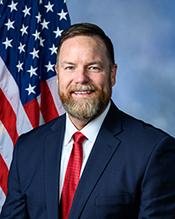
Aaron Bean
RRepublicanFL-4 · Representative
56
/ 100
Average
Attendance100
Avg: 96
Independence8
Avg: 4
Bipartisan Tone10
Avg: 15
Ethics Record100
Avg: 99
Transparency52
Avg: 53
Accountability Score — composite of attendance, independence, bipartisan tone, ethics record & transparency.
Methodology16
Bills Sponsored
0
Enacted into Law
1
Passed a Chamber
15
In Committee
All Sponsored Bills
HR4093In Committee
Apples to Apples Comparison Act of 2025
The bill would require health insurance plans to present their costs and coverage options in a standardized, easy-to-compare format so consumers can directly evaluate different plans side-by-side. This would help patients and workers shopping for health insurance understand what they're paying for and make better decisions about which plan works best for their needs. The measure affects insurance companies, employers who offer health benefits, and anyone purchasing or comparing health insurance plans.
HR9895In Committee
American Dream Accounts Act of 2026
The proposal would create a new type of savings account that allows individuals to set aside money for major life goals like buying a home, starting a business, or paying for education, with special tax benefits to help the savings grow faster. These accounts would work similarly to existing retirement accounts but would be more flexible, letting people withdraw money for their stated goals without the penalties that normally apply to early withdrawals. The accounts would primarily benefit working people and families looking to save for significant expenses beyond retirement.
HR9455In Committee
SMOOTH Payments Act
This bill would change who can get tax credits to help pay for health insurance by requiring that insurance companies offer at least one health plan with a monthly payment option for out-of-pocket costs like deductibles and copays. Only people who buy insurance from companies meeting this requirement would be eligible for the federal tax credits that help make premiums more affordable. The change would affect millions of Americans who currently receive financial assistance to purchase health insurance through the marketplace.
HR9174In Committee
Digital Assets Voluntary Disclosure Program Act
The legislation would create a program allowing people who own digital assets like cryptocurrency to voluntarily report their holdings and any unpaid taxes to the IRS without facing criminal prosecution. Participants would pay back taxes, interest, and penalties, but would avoid the harsher consequences normally applied to tax evasion cases. This program is designed to help the government collect taxes from cryptocurrency owners while giving people a chance to get right with the IRS.
HR8871In Committee
DME Scammer Prevention Act of 2026
DME Scammer Prevention Act of 2026 This bill establishes requirements relating to potentially fraudulent billing for certain durable medical equipment under Medicare. Specifically, the bill establishes requirements relating to billing for items that are on the Master List of Durable Medical Equipment, Prosthetics, Orthotics and Supplies. (The master list includes items that the Centers for Medicare & Medicaid Services has identified as posing certain fiscal vulnerabilities and therefore require additional conditions for payments to be made, such as prior authorization.) The bill requires claims for such items to be filed electronically and within 90 days of when the items were furnished. The Government Accountability Office must report on the technology used by Medicare administrative contractors to identify fraudulent claims with respect to such items.
HR8293In Committee
Abolish the CMMI Act
This bill would shut down the Center for Medicare and Medicaid Innovation, a federal agency that tests new ways to deliver healthcare and control costs within the Medicare and Medicaid programs. The proposal would affect millions of Medicare and Medicaid beneficiaries, healthcare providers, and researchers who currently participate in or benefit from the center's pilot programs and studies. Eliminating this agency would end ongoing experiments designed to improve patient care and reduce government healthcare spending.
HR7681In Committee
HSA’s For All Act
This bill would expand access to Health Savings Accounts (HSAs) by allowing more people to open and use them, potentially removing restrictions that currently limit who can participate in these tax-advantaged savings accounts for medical expenses. Workers and individuals would benefit by having greater flexibility to save money tax-free for healthcare costs like doctor visits, prescriptions, and medical equipment. The changes would likely affect how people pay for healthcare out of pocket and could reduce the tax revenue collected by the federal government.
HR7569In Committee
Punishing Health Care Fraudsters Act
This bill would increase criminal penalties for people and companies that commit fraud in the health care system, such as billing for services that were never provided or overcharging insurance programs. The stricter punishments would apply to doctors, hospitals, insurance companies, and other health care providers caught cheating the system. The goal is to deter health care fraud and protect patients and taxpayers from losing money to dishonest practices.
HR1049Passed House
Transparency in Reporting of Adversarial Contributions to Education Act
Transparency in Reporting of Adversarial Contributions to Education Act This bill requires each local educational agency (LEA), as a condition of receiving federal elementary and secondary education funds, to ensure that each elementary and secondary school served by the LEA notifies parents of their rights to request and receive information regarding foreign influence (e.g., influence by China) in schools. These rights include the right to review (and make copies of at no cost) any curricular or professional development material used at the school that was obtained using funds received from a foreign government or a foreign entity of concern; know, by written response, how many school personnel are compensated using funds received from a foreign government or a foreign entity of concern; and know, by written response, information about funding from or agreements (e.g., contracts) with a foreign country or a foreign entity of concern. Parents must submit a written request for this information. Each school must post on a publicly accessible website (or otherwise widely disseminate to the public) a summary notice of parental rights under the bill. The bill requires the Department of Education to notify state educational agencies (SEAs) about the bill's requirements. Each SEA must, as a condition of receiving federal elementary and secondary education funds, notify LEAs about the bill's requirements.
HR4755In Committee
LEO K9 Protection Act
The LEO K9 Protection Act would provide legal protections and potentially enhanced penalties for harming police dogs used in law enforcement operations. The legislation aims to safeguard these working animals by treating attacks or injuries against them more seriously under federal law, affecting how law enforcement agencies train and deploy their canine units. Police departments and their K9 units would benefit from stronger legal deterrents against animal abuse.
HR4311In Committee
Delivering On Government Efficiency in Spending Act
This bill aims to reduce wasteful spending across federal government agencies by requiring them to find cost savings and operate more efficiently. It would likely establish new oversight mechanisms or requirements for how agencies budget and spend taxpayer money, affecting both government employees and the public services they provide. The bill has been sent to multiple committees to review different aspects of government spending and operations.
HR3057In Committee
National POW/MIA Memorial and Museum Act
This bill would establish a national memorial and museum dedicated to American prisoners of war and service members missing in action throughout U.S. military history. The facility would serve as a place for the public to learn about and honor the experiences of these service members and their families. Veterans, military families, and the general public would be the primary groups affected by this new institution.
HR2925In Committee
Maritime Fuel Tax Parity Act
This bill would make the federal fuel tax rules the same for ships and boats as they are for trucks and cars on highways. Currently, maritime vessels pay different fuel taxes than land-based transportation, and this legislation aims to create equal treatment across all transportation types. The change would affect shipping companies, barge operators, and other maritime businesses that use fuel for commercial purposes.
HR2667In Committee
Flexible Savings Arrangements for a Healthy Robust America Act
This bill would likely expand or modify tax-advantaged savings accounts that help people set aside money for healthcare and other expenses without paying taxes on those savings. The changes would probably make these accounts more flexible by allowing people to use the money for a broader range of purposes or to contribute more money each year. Workers and families would benefit by having more ways to save money on a tax-free basis for their health and financial needs.
HRES178In Committee
Put Your Money Where Your Mouth Is Resolution
HR1554In Committee
Freedom from Government Competition Act of 2025
This bill would restrict federal agencies from competing with private businesses by requiring the government to stop or reduce certain commercial activities it currently operates. The legislation aims to protect private companies from having to compete against government-run services, affecting federal employees who work in these commercial operations and businesses in industries like printing, data processing, and other services the government currently provides. The bill has been sent to the House Committee on Oversight and Government Reform for review.