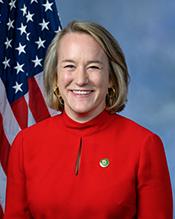
Nikki Budzinski
DDemocratIL-13 · Representative
56
/ 100
Average
Attendance100
Avg: 96
Independence5
Avg: 4
Bipartisan Tone13
Avg: 15
Ethics Record100
Avg: 99
Transparency48
Avg: 53
Accountability Score — composite of attendance, independence, bipartisan tone, ethics record & transparency.
Methodology17
Bills Sponsored
0
Enacted into Law
1
Passed a Chamber
16
In Committee
All Sponsored Bills
HR3183In Committee
SAFE STEPS for Veterans Act of 2025
Supporting Access to Falls Education and prevention and Strengthening Training Efforts and Promoting Safety initiatives for Veterans Act of 2025 or the SAFE STEPS for Veterans Act of 2025 This bill addresses certain mobility and aging care and services provided by the Department of Veterans Affairs (VA). First, the bill requires the establishment and operation of the Office of Falls Prevention within the Veterans Health Administration (VHA) for purposes of providing, evaluating, and improving VA health care services related to falls prevention. Among other duties, the office must oversee and support a national education campaign for veterans, their families, and health care providers that focuses on reducing falls and increases awareness of available benefits or services provided by the VA to reduce falls. The bill also expands membership of the Interagency Coordinating Committee on Healthy Aging and Age-Friendly Communities by including the VA. The VA must issue or update directives of the VHA for facilities and providers relating to safe patient handling and mobility policies. Additionally, the VA must determine the feasibility and advisability of implementing a pilot program to provide home improvements and structural alterations to prevent falls for veterans who are eligible for such services under VA laws. Finally, the bill requires the VA to ensure certain veterans receive a falls risk assessment from a licensed physical therapist or occupational therapist.
HR3863In Committee
VA Mental Health Outreach and Engagement Act
VA Mental Health Outreach and Engagement Act This bill requires the Department of Veterans Affairs (VA) to offer an annual mental health consultation to veterans who are receiving compensation for a service-connected disability relating to a mental health diagnosis. Additionally, the VA must conduct outreach regarding the availability of such consultations and other mental health services unless a veteran opts out of outreach. The bill requires the VA to utilize specified methods in its outreach efforts and to provide annual reports for the four years following the enactment of the bill regarding the outreach methods used to inform veterans about mental health consultations and services. The Government Accountability Office must report on the effect of this bill, including by reporting on the number of veterans who received mental health consultations and which outreach methods were most successful in reaching such veterans. The bill also extends certain higher loan fee rates through May 12, 2035, under the VA's home loan program. Such rates currently last through June 9, 2034.
HR7280In Committee
Veteran DATA Act
The bill would require the Department of Veterans Affairs to improve how it collects, manages, and shares data about veterans' health, benefits, and services. This would help the VA better track outcomes, identify gaps in care, and make it easier for veterans to access the benefits and medical treatment they're entitled to. The changes aim to modernize the VA's outdated data systems so veterans receive faster, more coordinated support.
HR7938In Committee
Grocery, Farm, and Food Worker Stabilization Grant Program Act of 2026
Grocery, Farm, and Food Worker Stabilization Grant Program Act of 2026 This bill directs the Agricultural Marketing Service (AMS) to establish a grant program to provide farmworkers, meat processing workers, and grocery workers stabilization payments in the case of a natural disaster or other disaster. Specifically, AMS must provide funding to membership organizations or labor unions representing farmworkers, meat processing workers, and grocery workers for the payments.
HR8076In Committee
PREDICT Act
Without access to the bill's specific text, this legislation likely addresses government operations and administration based on its referral to committees overseeing government reform, House administration, and judicial matters. The bill's name suggests it may focus on prediction, forecasting, or planning within federal government functions, though the exact policy changes would depend on the bill's detailed provisions. Once the committees review it, they will determine whether the proposed changes should move forward for a vote.
HR7864In Committee
Gateway Arch National Park Boundary Revision Act of 2026
This bill would adjust the boundaries of Gateway Arch National Park in St. Louis, Missouri, likely to expand or modify the park's protected land area. The changes would affect how much federal land is managed as part of the park and could impact local property owners, visitors, and the National Park Service's management of the site. The specific boundary adjustments would need to be approved by Congress before taking effect.
HR7241In Committee
Protect Veterans from the THIEF Act
This bill aims to protect military veterans from identity theft and fraud by strengthening security measures for their personal information held by the Department of Veterans Affairs and other federal agencies. The legislation would likely require better safeguards, faster notification if veterans' data is compromised, and potentially provide credit monitoring or other protections to affected veterans. Veterans and their families would be the primary beneficiaries of these enhanced privacy and security protections.
HR7324In Committee
More Behavioral Health Providers Act of 2026
More Behavioral Health Providers Act of 2026 This bill provides for additional Medicare payments to health care practitioners who provide services in mental health professional shortage areas for individuals with mental health or substance use disorders. The bill applies to physicians, physician assistants, nurse practitioners, clinical nurse specialists, clinical social workers, clinical psychologists, marriage and family therapists, and mental health counselors.
HR3578In Committee
Improving Veterans’ Experience Act of 2025
Improving Veterans’ Experience Act of 2025 This bill establishes the Veterans Experience Office within the Department of Veterans Affairs (VA) to carry out the key customer experience initiatives of the VA relating to veterans’ and beneficiaries’ satisfaction with and usage of VA benefits and services. Additionally, the office must require the heads of other organizations and offices within the VA to report regularly on customer experience metrics, action plans, and other customer experience improvement efforts; collect veteran-derived data to determine satisfaction and for use in policymaking; provide strategic guidance and strategies to VA entities for engaging with veterans and beneficiaries; assess and advise the VA on the accuracy and helpfulness of websites and customer-facing information of the VA; and assess and advise the VA on the status and opportunities for improvement of the customer service efforts of the VA. The requirements of this bill terminate on September 30, 2028. The Government Accountability Office must analyze and report on the methodology, effectiveness, and implementation of the VA’s approach to improving veteran and beneficiary customer experience and satisfaction.
HR5841In Committee
Boosting Benefits and COLAs for Seniors Act
The proposal would increase Social Security benefits and cost-of-living adjustments (COLAs) for seniors, meaning retirees would receive larger monthly payments to help keep up with inflation and rising expenses. This would primarily affect older Americans who depend on Social Security income, potentially improving their financial security in retirement. The bill is currently being reviewed by congressional committees to determine how it would be funded and what specific benefit increases would look like.
HR2034Passed House
Edith Nourse Rogers STEM Scholarship Opportunity Act
Edith Nourse Rogers STEM Scholarship Opportunity Act This bill expands eligibility for and modifies administration of the Edith Nourse Rogers STEM Scholarship. The scholarship allows individuals who are entitled to Post-9/11 GI Bill educational assistance and are pursuing eligible degrees in science, technology, engineering, mathematics, or health care to receive up to nine additional months of benefits (capped at $30,000). The bill eliminates the requirement that an individual must have less than 180 days of remaining educational assistance entitlement (or no entitlement remaining) to be eligible for the scholarship. Additionally, the bill reduces by 25% the number of credits an individual must have completed in order to be eligible for the scholarship. In situations where there are insufficient funds available in a fiscal year, the bill authorizes the Department of Veterans Affairs to give priority to individuals who have used the most months of their educational assistance entitlement and those who are using their entitlement to pursue a program of post-secondary education in specified fields (e.g., engineering). The bill specifies that individuals who receive the scholarship benefit may only use the benefit after they have used all of their educational assistance entitlement under the Post-9/11 GI Bill.
HR4159In Committee
To require the Secretary of Defense to issue regulations requiring that optional combat boots worn by members of the Armed Forces wear be made in America, and for other purposes.
The military would be required to ensure that optional combat boots available to service members are manufactured in the United States rather than imported from other countries. This would affect defense contractors and manufacturers who supply equipment to the Armed Forces, potentially increasing costs but supporting American manufacturing jobs. The proposal is currently under review by the House Committee on Armed Services.
HR2536In Committee
New Producer Economic Security Act
New Producer Economic Security Act This bill establishes the New Producer Economic Security Program within the Farm Service Agency (FSA) to provide funding and grants to help new farmers, ranchers, and forest owners. Specifically, the FSA must make competitive grants to, enter into cooperative agreements with, or provide other capital support to eligible entities (e.g., state or local governments, Indian tribes, nonprofit organizations, and institutions of higher education). These entities must provide direct assistance to qualified farmers, ranchers, and forest owners (e.g., those who have not operated a farm or ranch for more than 10 consecutive years or are economically disadvantaged). The bill specifically excludes from assistance any foreign-based or foreign-owned corporation. The direct assistance may include payments to qualified beneficiaries to acquire real property (including air rights and water rights), secure clear title on heirs' property, and improve or remediate land, water, and soil. Eligible entities may also use grants (1) to provide direct assistance to qualified beneficiaries in assessing, purchasing, acquiring, or retaining eligible land; (2) for activities designed to support farm establishment and long-term viability; and (3) to provide technical assistance. The FSA must establish a stakeholder committee, and in collaboration with the committee, develop a process for evaluating and selecting applications submitted by eligible entities. The stakeholder committee must include perspectives reflecting the complexity of the rural and urban U.S. agricultural landscapes and the wide variety of agricultural production models.
HR1906In Committee
Rural Wellness Act
Rural Wellness Act This bill prioritizes behavioral and mental health treatment services under certain rural development grant and loan programs. The bill also reauthorizes through FY2029 the set-asides and prioritizations for substance use disorder treatment services under the Department of Agriculture's (1) Community Facilities Direct Loan and Grant Program, (2) Rural Health and Safety Education Competitive Grants Program, and (3) Distance Learning and Telemedicine Grant Program. Under the community facilities program, the bill prioritizes direct loans and grants for the development of behavioral and mental health services facilities, including facilities that provide treatment services. Further, loans and grants provided under the program may be used to develop facilities and systems to provide telehealth services for behavioral and mental health treatment. Under the Rural Health and Safety Education Competitive Grants Program, the bill prioritizes grants for behavioral and mental health education and treatment. Under the Distance Learning and Telemedicine Grants Program, the bill includes a 17% set-aside for telemedicine projects that provide substance use disorder treatment services (currently a 20% set-aside).
HR2173In Committee
Tools Tax Deduction Act
Small business owners and self-employed workers would be able to deduct the cost of tools they purchase for their work from their taxes, reducing the amount of income they owe taxes on. This would apply to hand tools, power tools, and similar equipment used in trades like construction, plumbing, and carpentry. The change would help tradespeople and small business owners keep more of their earnings by lowering their overall tax burden.
HR2103In Committee
Protect Postal Performance Act
This bill would establish new standards and oversight measures for the U.S. Postal Service to improve mail delivery performance and accountability. It likely aims to address concerns about delayed mail delivery and service reliability by setting specific performance targets and giving Congress or oversight bodies better tools to monitor whether the Postal Service meets those goals. The changes would affect both postal workers and the millions of Americans who depend on mail delivery for bills, packages, and important documents.
HR1662In Committee
LEAP Act
The LEAP Act would change how the federal government taxes certain types of income or business activities, though the specific tax changes would depend on the bill's detailed provisions. The proposal has been sent to two congressional committees—Ways and Means and Oversight and Government Reform—to review which parts fall under each committee's authority before moving forward. Depending on what the bill actually contains, it could affect how individuals, businesses, or both pay federal taxes.