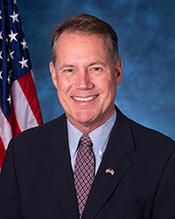
Ed Case
DDemocratHI-1 · Representative
60
/ 100
Average
Attendance99
Avg: 96
Independence3
Avg: 4
Bipartisan Tone28
Avg: 15
Ethics Record100
Avg: 99
Transparency61
Avg: 53
Accountability Score — composite of attendance, independence, bipartisan tone, ethics record & transparency.
Methodology22
Bills Sponsored
0
Enacted into Law
2
Passed a Chamber
20
In Committee
All Sponsored Bills
HRES1593In Committee
Recognizing the month of October 2026 as Filipino American History Month and celebrating the history and culture of Filipino Americans and their immense contributions to the United States.
HR10378In Committee
Problem Solvers TRUST Act
HR4219Passed House
National Wildlife Refuge System Invasive Species Strike Team Act of 2025
National Wildlife Refuge System Invasive Species Strike Team Act of 2025 This bill provides statutory authority for the Invasive Species Strike Team program carried out by the National Wildlife Refuge System within the U.S. Fish and Wildlife Service (FWS). This program operates teams in each FWS region that coordinate with public and private entities to address invasive species and related conservation issues in and around the National Wildlife Refuge System. The bill requires FWS to report to Congress on the program's work and progress towards addressing invasive species that pose a major concern to the environment, human health, or the economy.
HRES1492In Committee
Reaffirming the enduring partnership between the Pacific Islands Forum (PIF) and its eighteen members and the United States toward stability, prosperity, and peace in the Pacific, and expressing the sense of the House of Representatives that the United States will continue to remain a strong, reliable, and active partner in advancing a peaceful, resilient, and prosperous Blue Pacific.
HR9543In Committee
To amend the Act of July 5, 1884, to permit the imposition of taxes on vessels operating as tourist accommodations, and for other purposes.
The proposal would allow states and local governments to collect taxes on boats and ships that operate as tourist accommodations, such as cruise ships or floating hotels. Currently, an old 1884 law prevents these taxes from being imposed on vessels, so this change would give communities the ability to generate tax revenue from the tourism industry that uses their waters. This would affect cruise ship companies, boat tour operators, and local governments that depend on tourism revenue.
HR9508In Committee
Pacific Islands Liaison Initiative Act
The federal government would create a new Pacific Islands Liaison Initiative within Homeland Security Investigations to strengthen relationships with Pacific island nations and help combat international criminal organizations operating in that region. This program would assign officials to work directly with Pacific island governments to coordinate efforts against smuggling, trafficking, and other transnational crimes. The initiative aims to improve the U.S. government's ability to address security threats in the Pacific while supporting these island nations' law enforcement capabilities.
HR6921In Committee
Hawai‘i National Cemetery Act
This bill would establish a new national cemetery in Hawaii to provide burial and memorial services for veterans and their eligible family members. Currently, Hawaii has limited cemetery space for veterans, so this legislation aims to create a dedicated facility to honor military service members and ensure their families have a proper place to be laid to rest. The bill is focused on improving veteran services and memorials in the state.
HR9267In Committee
Transit Oriented Development Act of 2026
The proposal would change tax credits that developers use to build affordable housing, offering bigger incentives for projects located near public transportation or in areas that are hard to develop. This would encourage builders to construct more affordable apartments and homes in places where people can easily access buses and trains, while also supporting development in economically struggling neighborhoods. The changes would affect real estate developers, housing nonprofits, and low-income renters looking for affordable places to live.
HR9013In Committee
Fireworks Trafficking and Money Laundering Prevention Act
The proposal would make it a federal money laundering crime to transport fireworks illegally across state lines, treating such transportation the same way the law treats other serious crimes when money is involved. Currently, illegal fireworks trafficking can be prosecuted, but this change would add stricter penalties if someone tries to hide money earned from that illegal activity. This would primarily affect people involved in smuggling fireworks across state borders and those who profit from such operations.
HRES1284In Committee
Congratulating the University of Hawaii men's volleyball team for winning the 2026 National Collegiate Athletic Association Men's Volleyball Championship.
The University of Hawaii men's volleyball team won the 2026 NCAA Men's Volleyball Championship, and Congress is issuing an official congratulations to recognize this achievement. This is a ceremonial measure that honors the team's athletic accomplishment and the university's success in collegiate sports. The recognition has been referred to the House Committee on Education and Workforce for consideration.
HR6619In Committee
PROSPER in the Pacific Act
This bill aims to strengthen economic relationships and trade with Pacific island nations through improved trade agreements and financial support. It likely focuses on helping American businesses expand into Pacific markets while supporting economic development in island countries that are strategically important to the U.S. The measure would affect American exporters, Pacific island economies, and U.S. foreign trade policy in the region.
HR6517In Committee
To modify the appointment process for the Librarian of Congress, the Comptroller General, and the Director of the Government Publishing Office, and for other purposes.
This bill revises the procedures for appointing and removing the Librarian of Congress, the Director of the Government Publishing Office (GPO), and the Comptroller General by giving Congress the sole authority to appoint and remove these positions. Specifically, the bill requires the Librarian and the Director of GPO to each be selected by a bipartisan congressional commission (as established by the bill) and appointed by Congress through the adoption of a concurrent resolution. (Currently, these positions are appointed by the President with the advice and consent of the Senate.) The Librarian and the Director of GPO may only be removed from office by an affirmative three-fifths vote in each chamber. Additionally, the bill revises the appointment process for the Comptroller General. (Currently, the Comptroller General is appointed by the President with the advice and consent of the Senate. A bipartisan congressional commission recommends at least three individuals to the President, who may ask the commission to recommend additional individuals.) This bill instead requires the bipartisan congressional commission to recommend one individual to Congress, and Congress may ask the commission to recommend additional individuals. Congress must then appoint the selected individual through the adoption of a concurrent resolution. Further, the bill revises the removal process for the Comptroller General. (Currently, the Comptroller General may be removed from office by impeachment or by joint resolution of Congress.) This bill changes the removal process so the individual may only be removed by impeachment or by concurrent (instead of joint) resolution of Congress.
HR4276In Committee
To amend the Native American Tourism and Improving Visitor Experience Act to authorize grants to Indian tribes, tribal organizations, and Native Hawaiian organizations, and for other purposes.
This bill authorizes grants to Indian tribes, tribal organizations, and Native Hawaiian organizations for activities related to recreational travel and tourism. Specifically, the bill authorizes (1) the Bureau of Indian Affairs to make these grants to and enter into agreements with Indian tribes and tribal organizations; (2) the Office of Native Hawaiian Relations to make these grants to and enter into agreements with Native Hawaiian organizations; and (3) other federal agencies to make these grants to and enter into agreements with tribes, tribal organizations, and Native Hawaiian organizations.
HRES774In Committee
Expressing support for the recognition of the month of October 2025 as Filipino American History Month and celebrating the history and culture of Filipino Americans and their immense contributions to the United States.
HR4839In Committee
Merchant Marine Allies Partnership Act
The legislation would strengthen partnerships between the U.S. merchant marine industry and allied nations to improve international shipping and trade cooperation. It aims to support American shipping companies and maritime workers by coordinating with friendly countries on maritime policies and potentially expanding opportunities for U.S. vessels in global trade. The bill affects shipping companies, maritime workers, and international trade relationships.
HCONRES24Passed House
Authorizing the use of Emancipation Hall in the Capitol Visitor Center for an event to celebrate the birthday of King Kamehameha I.
This concurrent resolution authorizes the Capitol Visitor Center to be used on June 8, 2025, for an event to celebrate the birthday of King Kamehameha I.
HRES233In Committee
Supporting the designation of April 2025 as "National Native Plant Month".
This resolution supports the designation of National Native Plant.
HR2176In Committee
Saving NEMO Act of 2025
Based on the title and referral to natural resources committees, this bill likely aims to protect marine environments or manage ocean resources, possibly by establishing new conservation areas or changing how the government oversees fishing and coastal activities. The involvement of the Ways and Means Committee suggests it may include funding mechanisms or tax provisions related to ocean conservation, while the Foreign Affairs referral indicates it could address international agreements or cross-border marine issues. The bill would affect fishing industries, coastal communities, environmental organizations, and potentially American interests in international waters.
HR663In Committee
To oppose the permitting of deep seabed mining and exploration for deep seabed mining, and for other purposes.
This bill would prevent the U.S. government from issuing permits for companies to mine or explore for minerals in the deep ocean floor. The legislation aims to protect deep ocean ecosystems and marine life from the environmental damage that mining operations could cause, while also opposing international agreements that would allow such mining activities.
HR664In Committee
American Seabed Protection Act
This bill would likely restrict or regulate energy development activities on the ocean floor off the U.S. coast, potentially protecting marine ecosystems from drilling or mining operations. The measure would affect energy companies, fishing industries, and coastal communities by determining what types of resource extraction are allowed in federal ocean waters.
HR380In Committee
Affordable Shipping for All Act
Affordable Shipping for All Act This bill limits shipping services from excluding service or charging higher prices to noncontiguous areas of the United States. Specifically, private shipping services (e.g., FedEx) and the U.S. Postal Service are prohibited from charging a higher rate to ship a consumer product or producer good (e.g., raw material) to a noncontiguous area of the United States than they charge to ship the same product to and from a location within the contiguous United States. Under the bill, a noncontiguous area includes Alaska and Hawaii and any commonwealth, territory, or possession of the United States (including Puerto Rico, Guam, the U.S. Virgin Islands, American Samoa, and the Northern Mariana Islands). Additionally, such shipping services may not exclude services to such a noncontiguous location. Consumer products or producer goods valued at more than $10,000 are exempt from the requirements of this bill.
HR222In Committee
Sustainable Budget Act of 2025
Sustainable Budget Act of 2025 This bill establishes the National Commission on Fiscal Responsibility and Reform within the legislative branch to identify policies to improve the fiscal situation in the medium term and achieve fiscal sustainability over the long term. The commission must propose recommendations that (1) are designed to balance the budget, excluding interest payments on the debt, within 10 years; and (2) meaningfully improve the long-term fiscal outlook, including changes to address the growth of entitlement spending and the gap between projected federal revenues and expenditures. Congress must consider the commission's recommendations using specified expedited legislative procedures.